Timo Specht runs an 11-person SEO and GEO agency in Munich and has over 15 years in the business under his belt. As his agency took off, Timo ran into a common challenge: creating content at scale for customers across industries while hitting goals and maintaining top-notch quality. Plus, he needed to easily show clients his progress and results and grow his own platform. After all, an agency's website is its best case study.
In 2023, Timo's site pulled about 10K monthly traffic.
Three years later, with hundreds of Surfer-powered pieces of content published, it's at 1.4 million and counting.
And a little spoiler before we go into detail: many of the articles published in 2023 haven't been updated since, but still perform strongly. And generate AI visibility, too.
Now, let's see how Surfer helps Timo get the results for his agency and his clients.
The challenge: how to scale content while working with freelancers and 70+ clients?
Timo and his brother have been doing SEO since 2010, well before starting the agency.
Their first projects relied on using exact-match keywords in URLs and headings, and solid backlink work. But as clients piled up, more and more sites turned out to need at-scale content publication.
Timo faced the classic agency problem: how to deliver large volumes of content while still maintaining top-notch quality within the copywriting team (combining in-house writers and freelancers), and how to clearly prove his hard work to the clients.
In his search for the right tool, Timo found Surfer. And it was an instant match.
Timo admits that what made him choose Surfer over competitors was the clear UI. From the get-go, he knew Surfer was convenient to show to the clients and help them understand what they're looking at. The Content Score in the Content Editor proved Timo's hard optimization work and that the content surpassed top competitors. Plus, the shareable links (with no extra seats in the platform required) made it easy to share with freelancers and clients. As Timo puts it:
We never compared features or pricing tables. We just had a gut feeling that Surfer is our tool. It's easy to handle, and I've always felt Surfer has the best UX. Surfer also felt professional and internally measurable for our clients, much more than a Google Sheet.
Building a content loop for agency clients: from strategy to publication (and high visibility)
Since starting with Surfer six years ago, Timo has pinned down a process for using Surfer for both client work and his own site. He shared his process with us, so now we will share it with you:
1. Getting the strategy down with Topical Map
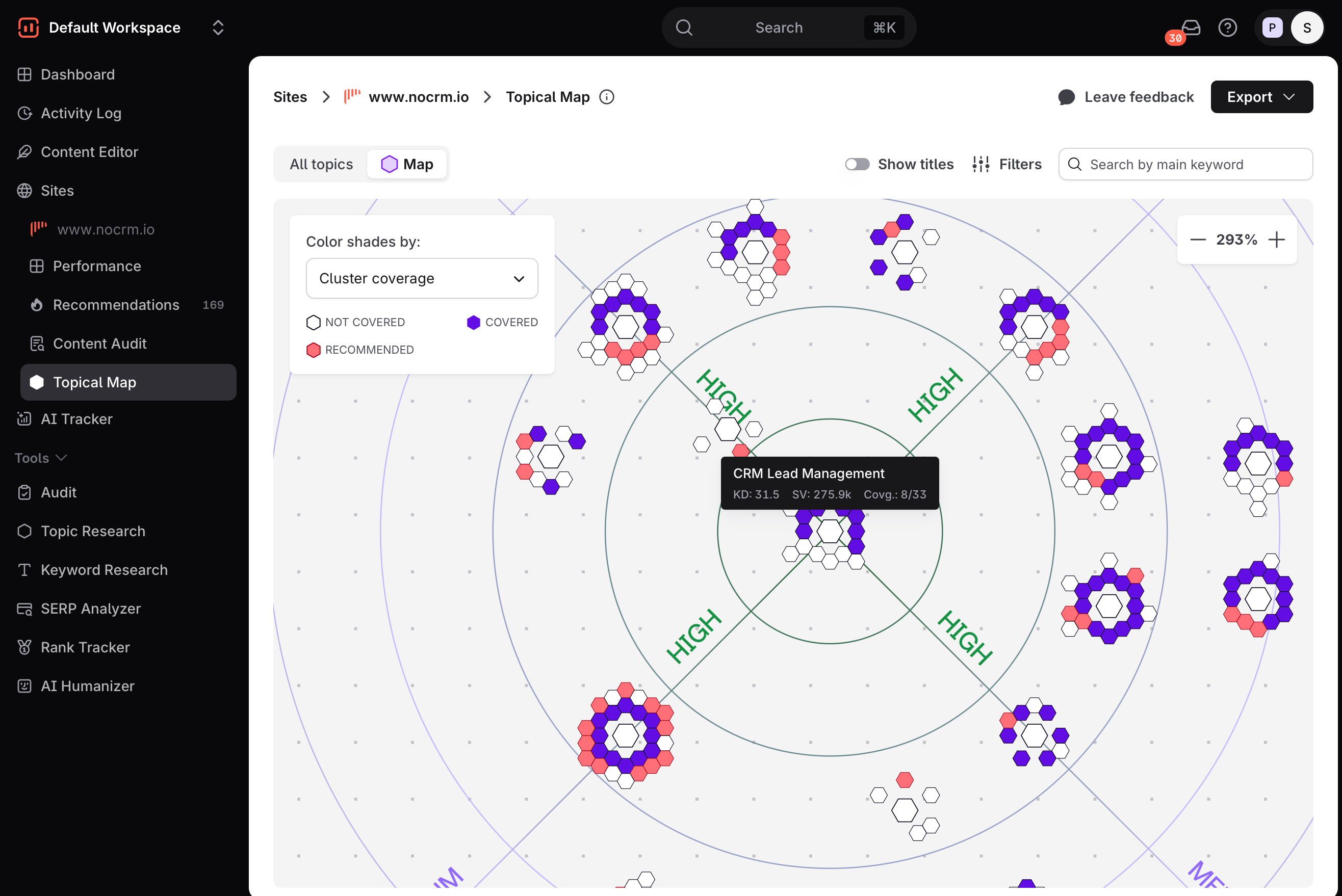
Timo and his team's workflow starts with Topical Map, Surfer's clustering tool that builds topic hubs with all the articles a site needs to cover to become an authority in its niche. The team uses it to see the client's current topical coverage and discover the most pressing gaps.
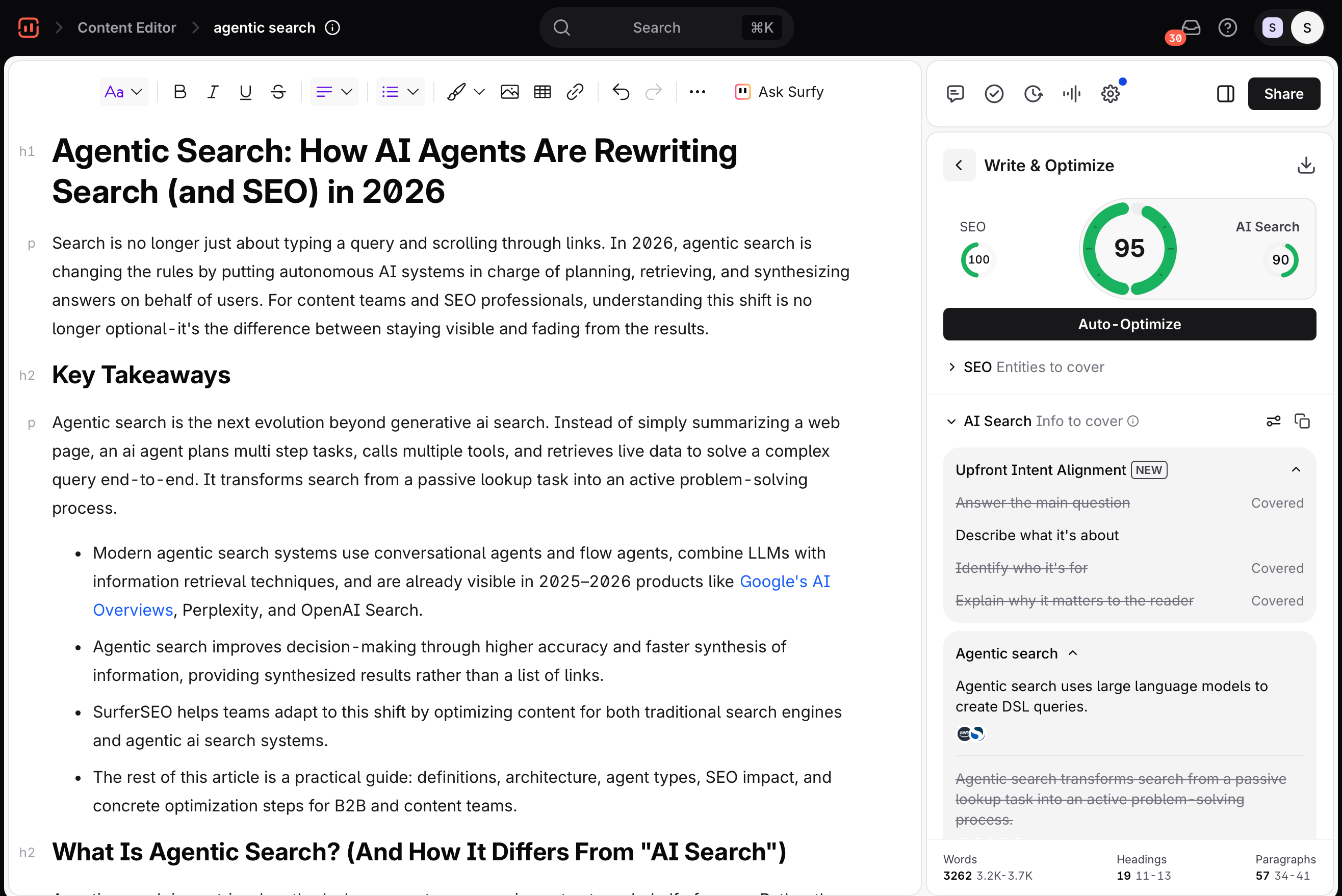
They build Content Editors for all the missing keywords, and then auto-generate Content Editor outlines based on Surfer's guidelines. After an internal quality check, each Content Editor is assigned to a writer, whose task is to create a high-quality piece that surpasses the top competitors. Since the Content Score is now split between traditional SEO and AI visibility, it's easy to create content optimized for both.
2. Letting Surfer write the draft
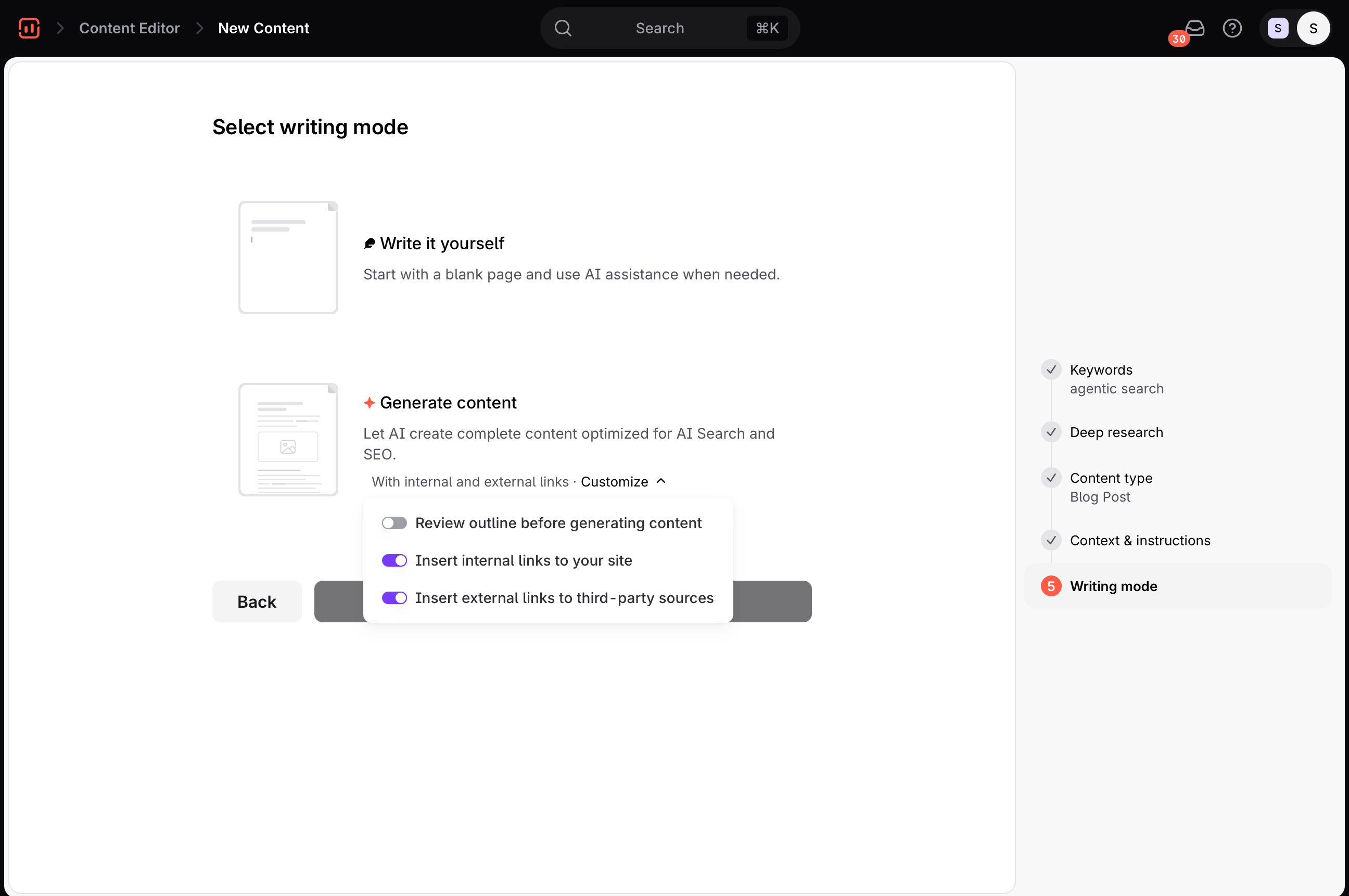
Timo's team also uses Surfer's content generation power to create new articles. To achieve satisfying quality and business relevance, they add brand knowledge to the client's dedicated workspace. They use their Claude setup to analyze brand, voice, and buyer personas, plus copywriting rules in German, if applicable. Then, they bring the results into Surfer.
Brand knowledge ensures all generated content fits the brand and is publication-ready. While every piece still goes through a human editor, AI saves the team a lot of time.
3. Tracking visibility gaps and outreach opportunities with AI Search Analytics
Since AI Search Analytics launched in Surfer, Timo's team has been using it to track AI visibility.
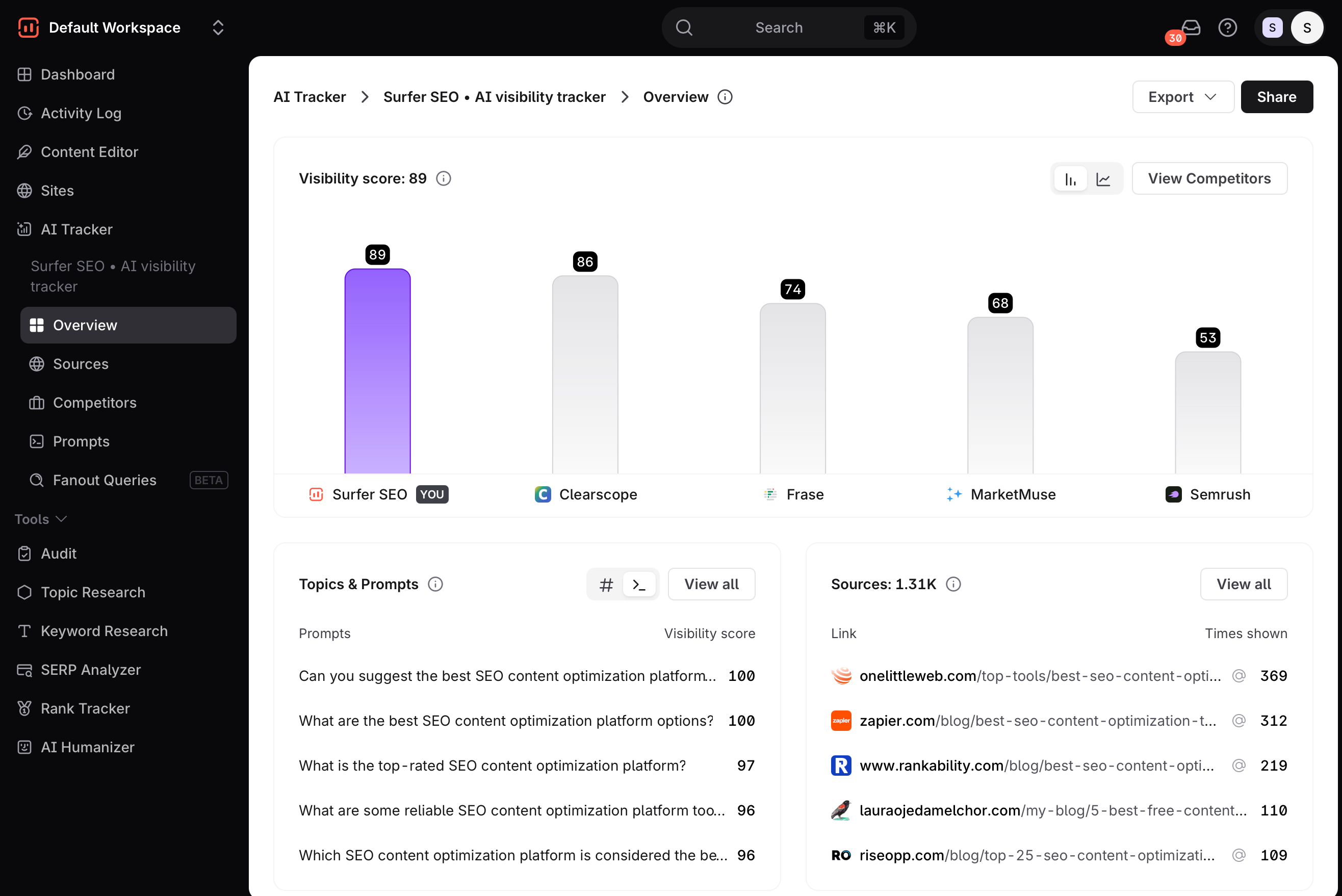
They use it to investigate the clients' visibility gaps and decide how to close them: whether by creating new content or reaching out to external sources for mentions. They do this through the Prompts Dashboard, which shows the brand's current coverage of the most relevant prompts, along with the cited sources for each.
For new topics, Timo and the team add them to their content strategy, following the familiar process of working with the Content Editor. Then, they monitor the brand's performance for the most business-critical topics.
For outreach, the Sources tab shows which publications are most often cited in the client's niche. If you filter for top pages that mention competitors but not a client—that's a ready outreach list. The team then does the outreach themselves, out of a portfolio of about 30,000 sites. Interestingly, the top sources aren't always those Timo would expect. Sometimes, the biggest names don't appear in the Sources tab at all. As Timo notes,
To be honest, I went for some links that I never would have thought of pursuing. But with Surfer, I have a sense of what AI wants without relying on guesswork, so I invest in the right sources.
High SEO rankings = good AI visibility?
And here's one more thing about the AI visibility of Timo's agency site:
When the rest of the industry got obsessed with LLM optimization, Timo did nothing at first. Instead of blindly rushing to follow the next best practice, he started by setting up AI tracking in Surfer. He wanted to check if Specht GmbH was showing up as the top SEO agency in Munich, Germany.
And it turned out that even without taking action, the Specht GmbH site still showed up very highly for business-critical prompts. The good SEO groundwork the team did over the years was enough to get it there. Timo told us:
This gave us the confidence that the good SEO fundamentals from years back are moving the needle with AI visibility. It's because it's still SEO, and it's never changed.
The results: from 10K to 1.4 million traffic in three years
Timo became one of the leading voices in his niche and helped many of his clients rank at the top of SERPs and AI mentions.
But his biggest positioning success comes from his own site, where, with the help of Surfer, he decided to run a bold experiment:
What happens if you mass-publish hundreds of pages that cover all the topics you want to become an authority for?
Back in fall 2023, Timo's website was at around 10K traffic. Which wasn't bad, but didn't fill Timo's pipeline. Or ambitions.
Timo decided to treat his agency's site as an experiment in growing visibility. His strategy was to push out all the content suggested by Surfer's Topical Map to cover every topic relevant to his niche, across all intents and funnel stages.
His team started publishing 150 to 200 new pages per month, including blog posts, landing pages, glossary, SEO tactics, and so on. Some pages were written from scratch by copywriters, some auto-generated with Surfer, and some were a mix of both methods.
Then, the team bulk-translated the whole site into 10 languages. That amounted to around 2,000 pages.
So, what happened?
The traffic crossed 100K on the first peak, which was a 10x jump. After an initial dip caused by an authority gap (a lot of pages published at once with no external links proving their value), the traffic soared again, and by October 2025, it far surpassed the initial spike.
And now, the site has reached a 1.4 million high in Ahrefs.
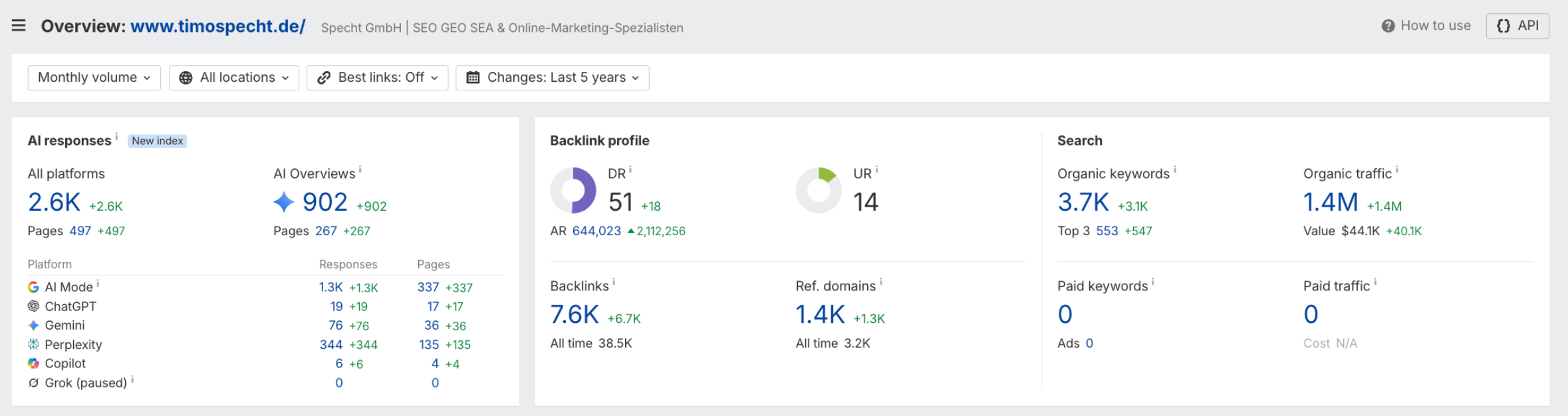
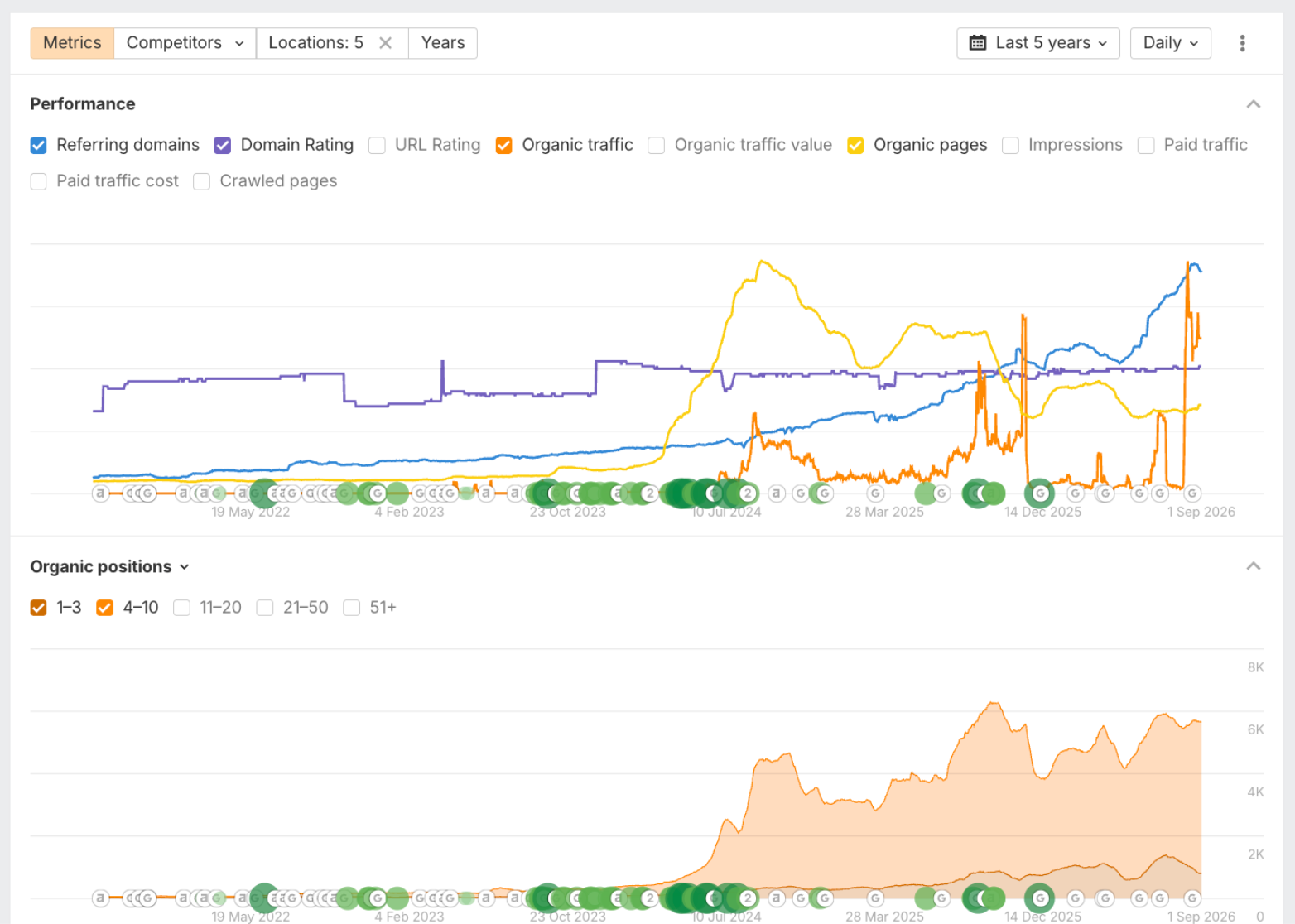
But the important thing is, Timo hasn't really updated any of the content—and still hasn't experienced significant traffic dips, including the turbulent era of algorithm changes and penalties that hit even the smartest players. For example, their 2023 educational article about ChatGPT, built with Surfer, still ranks as well today as when it was first written!
But that doesn't mean updates have no value. Timo's team is now optimizing and prioritizing old pages, and he imagines this move will bring in even more traffic.
As Timo told us,
The informational content is helping us to get brand searches, internal links, and strengthen the foundation. It still performs well. So imagine if we were to auto-update all that content: we would probably max out at two million or more.
Scaling safely and crushing the visibility game
Timo's work with Surfer lets him scale at a sometimes breakneck pace any agency is all too familiar with. At the same time, he never sacrifices quality or consistency. The fact that even older Surfer-optimized content brings great AI visibility results and pulls traffic without updates proves it.
But, since you're probably here to learn from others' successes, let's recap what you can take from Timo's story and try out for yourself:
- Build the topical map first. Especially when you start working for new clients in niches you're not 100% familiar with. That will help you ensure full topical coverage with no repetitions. Create Content Editors for all missing topics and hand them to your writers.
- Always load the brand voice. Never write without uploading brand guidelines. You will know your auto-generated content is publication-ready, and you can create or optimize in bulk when you need it.
- Check your AI visibility before you rush to optimize. If your fundamentals are solid, you may already be cited. Don't just use best practices for AI visibility; always check your data first! Don't fix what's not broken, and focus on lower-performing content.
- Use AI Search Analytics to find which sources the models pull from. It may not be what you expected. The niche you're working in may not care about YouTube, Reddit, or other big fish. It may just as well be smaller sites. Reach out to the top sources that don't mention you or your client.
- Use Content Editor links as reports. If you work for an agency, the Content Score is a handy visualization to show clients that their publications are ready to compete in SERPs and LLM results. It looks nice when you can see all the metrics are green, doesn't it?
As Timo puts it:
I'd recommend it to anyone, whether an agency or a business, to create content with Surfer only. It will help you publish valuable things that will be cited and ranked for years and years.
Not a Surfer user yet? Check it out with our free trial, and see how you can strategize, create, and publish at scale, and track AI visibility from the same hub—for your whole client portfolio, and yourself.