Rouba Tachach is the Marketing Programs Coordinator at SHELT Global Ltd., a cybersecurity-as-a-service provider. Tasked with growing SHELT's online presence, she quickly noticed a major gap: the company had no Google or AI search visibility and published content only on LinkedIn. But one platform wasn't enough to attract as many qualified buyers as Rouba wanted. So she looked for a tool that would help her improve SHELT's AI visibility as a team of one. That's how she found Surfer.
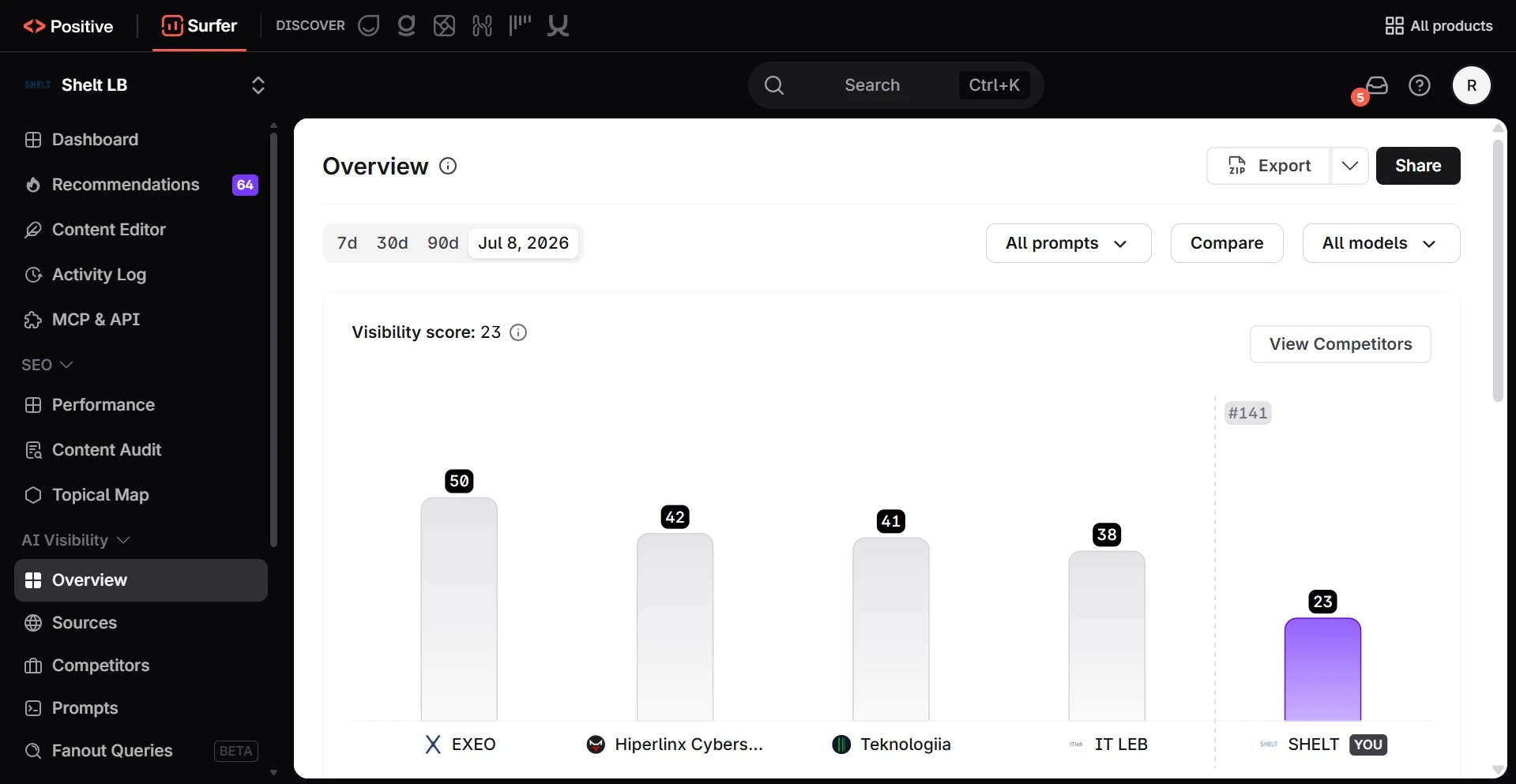
In July 2026, SHELT ranked #141 in AI visibility for its tracked prompts in Lebanon.
Less than four months and about 50 Surfer-powered blog posts later, it's #3. And website sessions are up 71%.
And here's a spoiler before we go into detail: SHELT didn't have a blog before Surfer. The results come from one built from scratch, with a little help from Surfer's customer success team.
Now, let's see how Surfer helps Rouba grow SHELT's online visibility.
The challenge: how do you get found in AI search when all you have is LinkedIn?
SHELT operates globally, with an on-the-ground network across Europe and Africa. Rouba started as a freelance graphic designer for the company, then moved into marketing, where she now handles everything herself: digital, print, social media, and events.
For organic content, the company focused on LinkedIn, hoping to reach potential buyers. But Rouba soon realized that this strategy didn't get them into AI search, where SHELT wasn't showing up for the most crucial prompts.
With no dedicated SEO specialist on board, Rouba wanted a tool that would let her automate visibility ops: plan and create without having to jump through a dozen dashboards and spreadsheets.
Surfer came up right away. But before committing, Rouba and her colleague compared it with other tools.
Surfer won on two grounds: it was easy to learn for someone new to the field, and the plan they chose covered everything they needed, while the other tools required too many add-ons. As Rouba puts it:
We found Surfer very user friendly. And it's very easy to learn [...] The subscription we chose includes all what we need. For other tools, getting a full AI SEO package demanded yet another subscription.
Building a content loop for a one-person team: from prompts to publication
SHELT doesn't have a content team. There are no hired writers and no freelancers.
Rouba runs Surfer herself, with a little help from Mo, a colleague with a technical background, who picks the topics and writes articles on more complex subjects. That's the whole team.
Along the way, Sandra, SHELT's Customer Success Manager at Surfer, helped shape the setup and the content plan.
Rouba shared her process with us, so now we will share it with you.
1. Setting the targets with AI Search Analytics
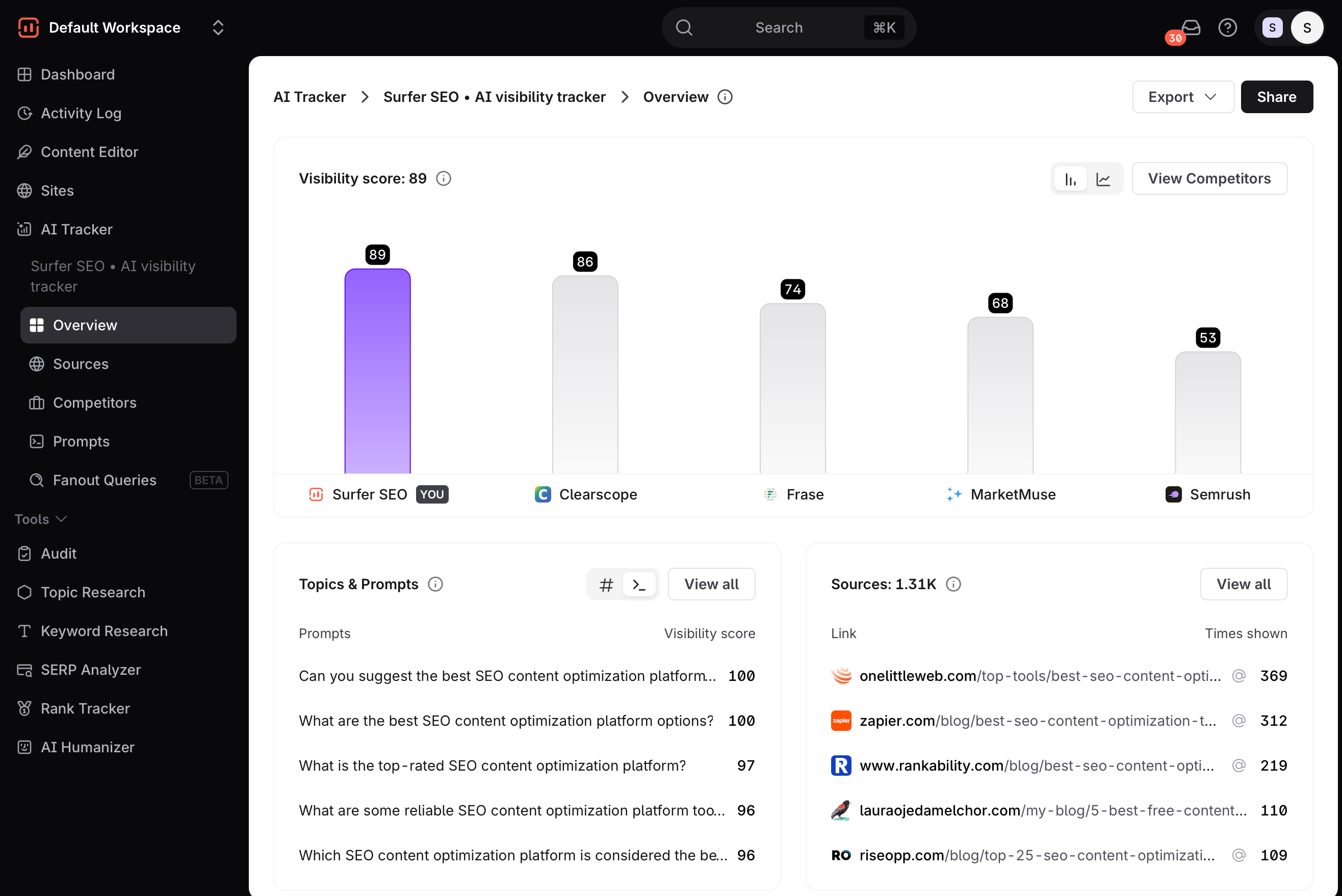
Rouba's workflow starts in AI Search Analytics, Surfer's tool for tracking how AI assistants like ChatGPT, Perplexity, and Gemini talk about your brand across the prompts you choose.
She set up a separate workspace for each of SHELT's two markets, Lebanon and Nigeria. In each one, she added prompts based on the questions buyers ask most often about cybersecurity.
That's where Rouba gets her targets: she checks which crucial prompts SHELT is still missing from, and where the competition is taking away its visibility.
2. Picking topics that move AI visibility
Based on the topics and prompts from AI Search Analytics, Rouba chooses what to write about next.
To kick things off, Sandra advised Rouba to turn the scripts of SHELT's LinkedIn carousels into blog posts. So the content the team had already prepared for social media got a second life on the website. The initial topics had already been battle-tested: the posts that earned the most engagement became the priority for repurposing.
After a month, Sandra suggested adding new topics, chosen by someone technical who stays up to date on cybersecurity news and knows what the audience wants to read. Now, Mo prepares a list of topics for Rouba, matching them with the top prompts SHELT needs to cover.
If you work in a technical niche, that's an easy move to copy: a weekly topic list from your in-house expert keeps your blog in step with what your buyers are reading about right now.
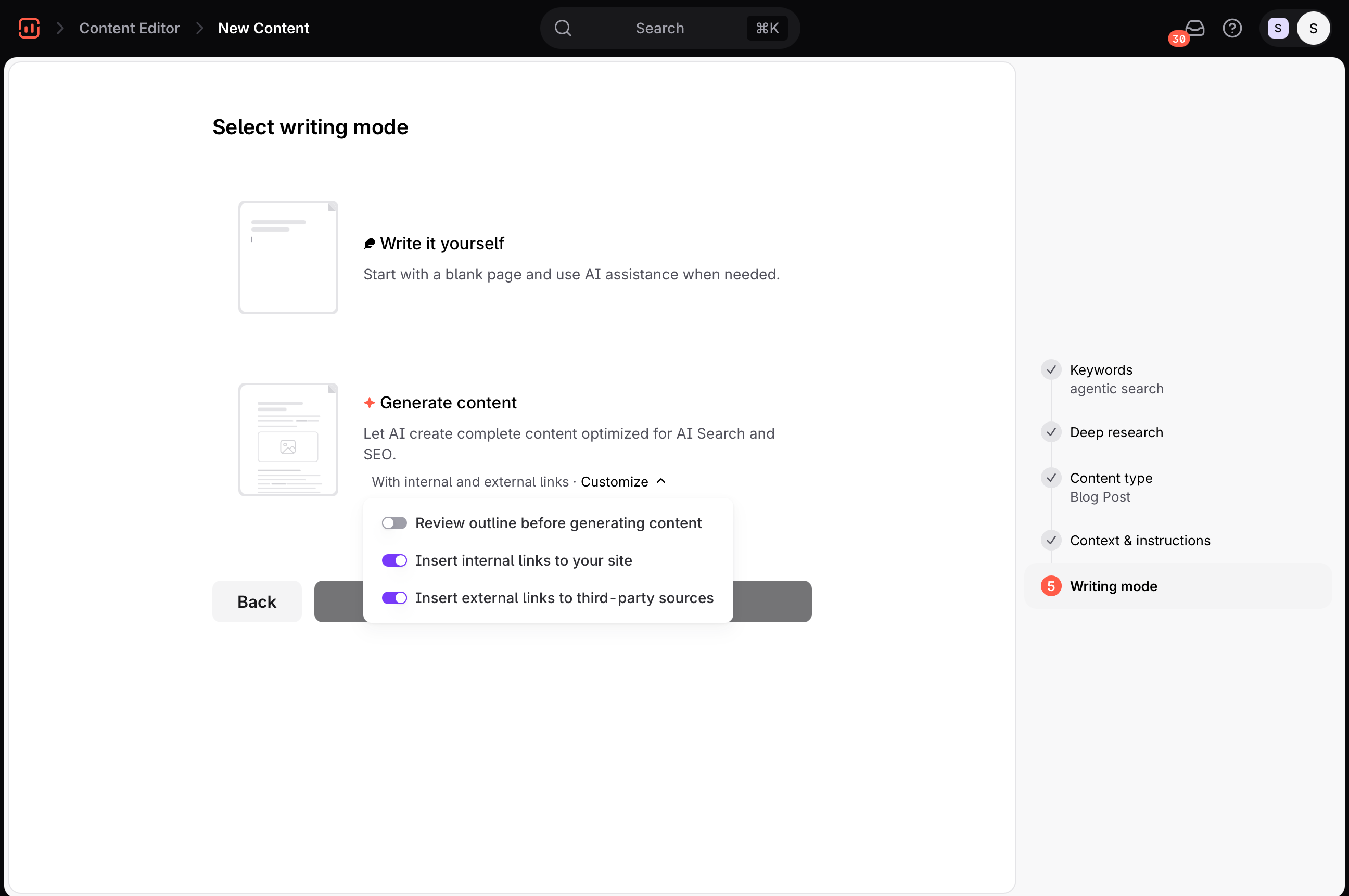
3. Scaling the writing with Surfer AI
So how have two people managed to scale up to 50 posts? Surfer does a lot of the writing.
Rouba's first nine or so articles came from just a single keyword idea. She gave Surfer the topic she wanted to cover, and Surfer AI, Surfer's article generator, wrote the whole piece.
To make every article work for SHELT's business, she set up Brand Knowledge at the workspace level (the brand details Surfer uses whenever it generates content). That way, every draft presents SHELT as the go-to cybersecurity company in its target market.
Today, Mo picks the topics and covers them, and Rouba improves them in Content Editor. No extra writers needed.
4. Pushing every draft past a Content Score of 80 with Auto-Optimize
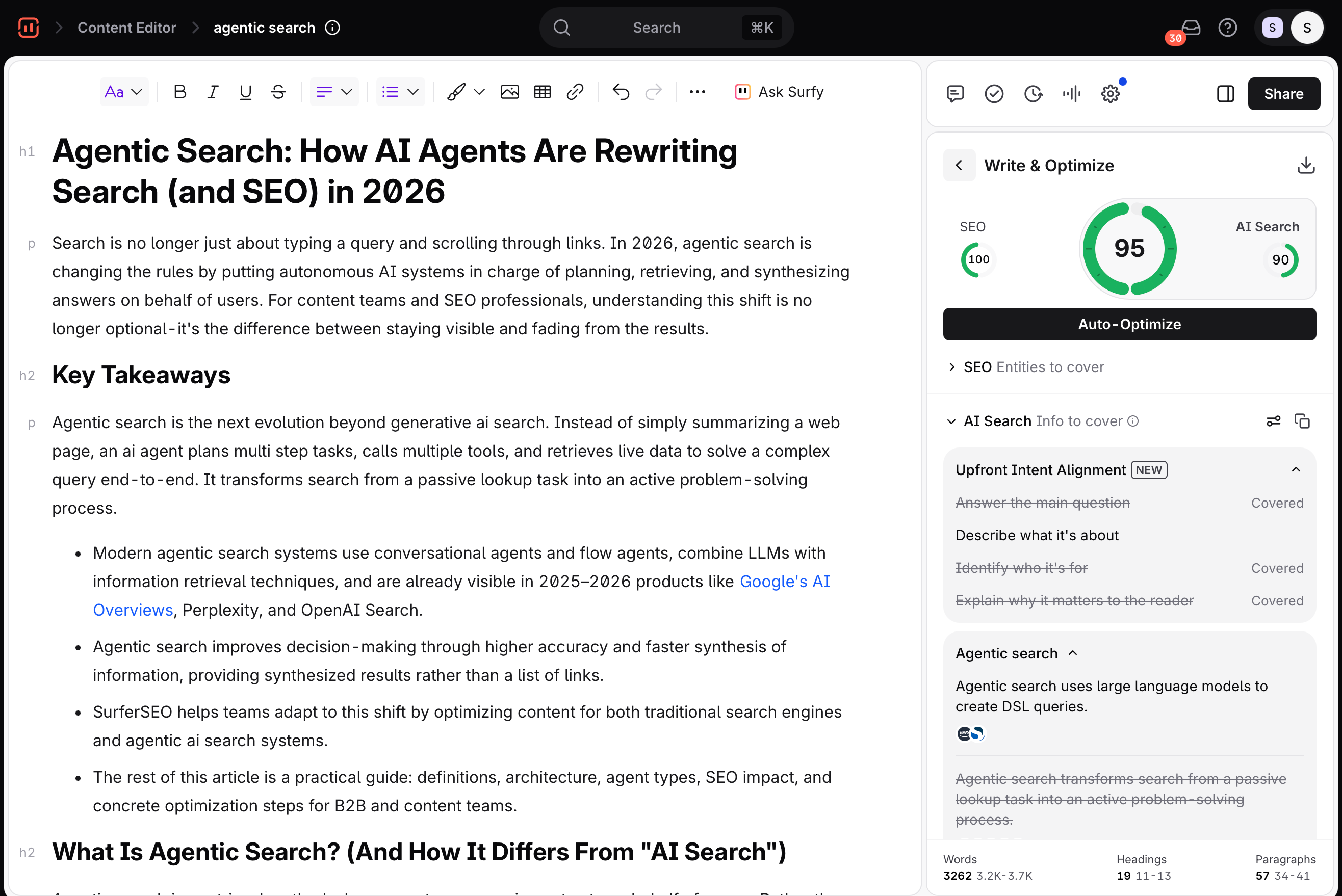
Every human-written draft lands in Content Editor, Surfer's writing and optimization workspace. It rates each draft with a Content Score, based on the top-ranking pages on Google and the top-cited pages in AI answers.
Then Rouba runs Auto-Optimize, which adds relevant terms and missing sections to raise the score:
I put a content draft in Surfer, and I optimize it to a higher score. And after that, I ask Surfer to optimize it more. If the Surfer score is initially 60, I'll make it 80 or more.
Since the Content Score covers both traditional SEO and AI visibility, one optimization pass prepares each post for Google and AI answers at once. Then Rouba publishes it on SHELT's blog.
5. Covering two markets with one English blog
SHELT's blog is in English for both markets. But Lebanon and Nigeria each get their own strategy.
Rouba creates separate Content Editors for each country, so the guidelines come from that market's search results. She targets keywords separately for each country and tracks each market in its own AI Search Analytics workspace.
And she's not the only one checking. SHELT's CEO tests AI assistants too, asking them about SHELT. These days, SHELT keeps showing up!
If you sell in several countries in one language, one blog can cover them all, as long as each market gets its own keywords and its own tracking.
The results: 71% more website sessions in 90 days, and from #141 to #3 in AI visibility
Here at Surfer, we were curious ourselves: how fast can a company that only posted on LinkedIn get found in Google and AI search with a blog built from scratch?
SHELT's example showed it was pretty fast, actually.
By late October 2026, SHELT's blog had about 50 posts, all created and optimized in Surfer by a two-person team.
So, what happened?
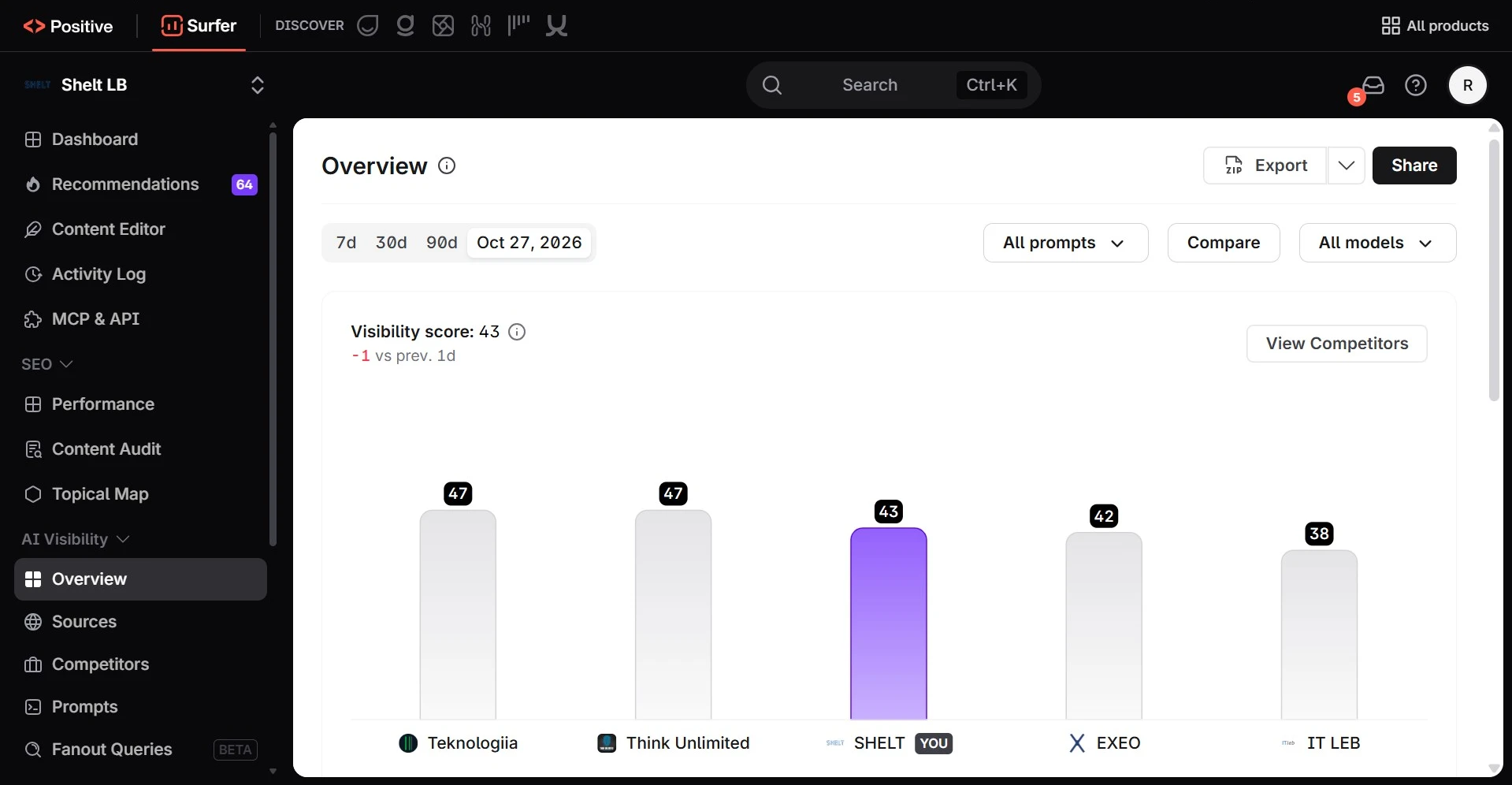
In Lebanon, SHELT's Visibility Score in AI Search Analytics went from 23 on July 8 to 43 on October 27, 2026. That took it from #141 to #3, ahead of the brand that topped the chart in July.
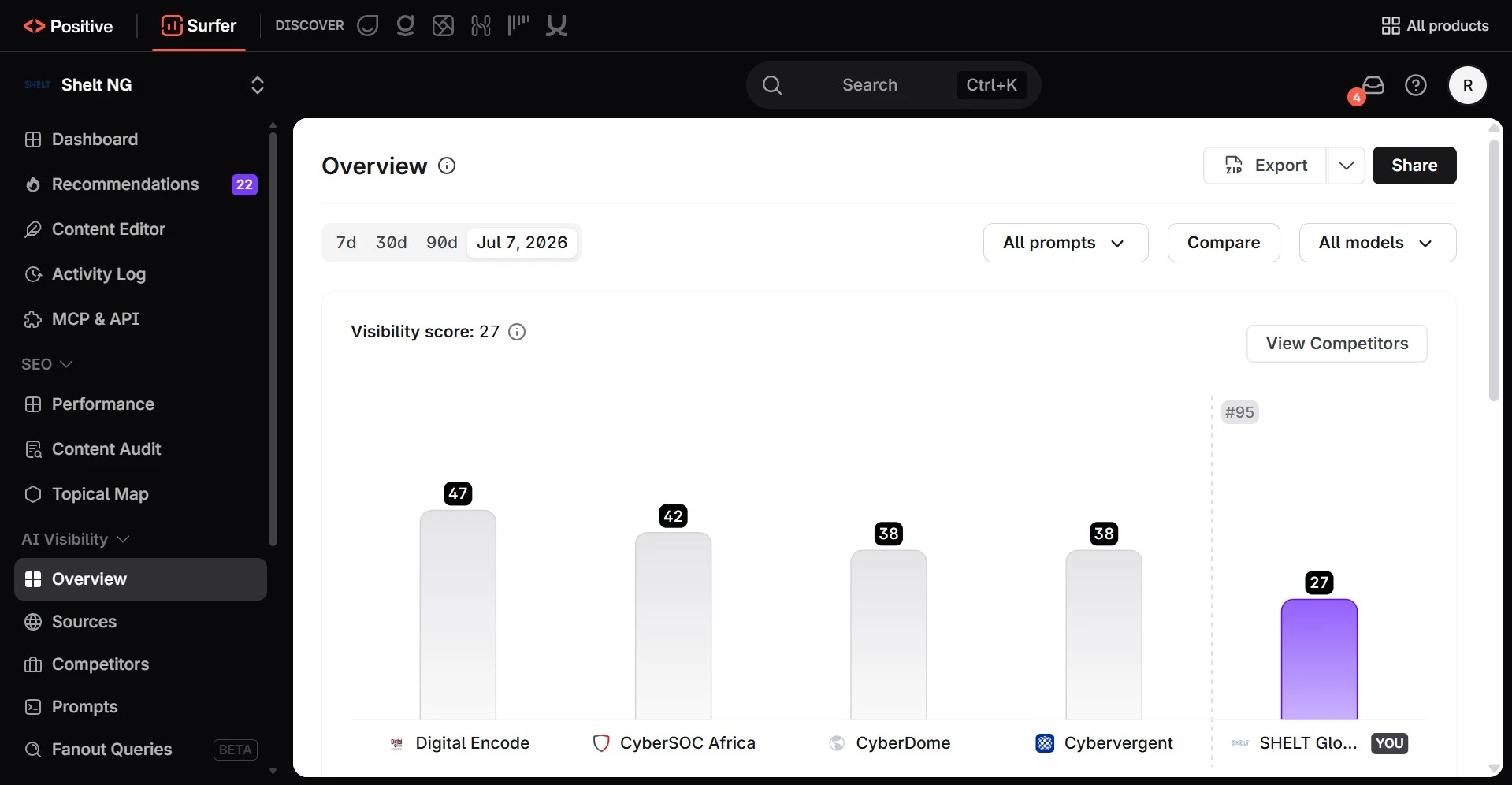
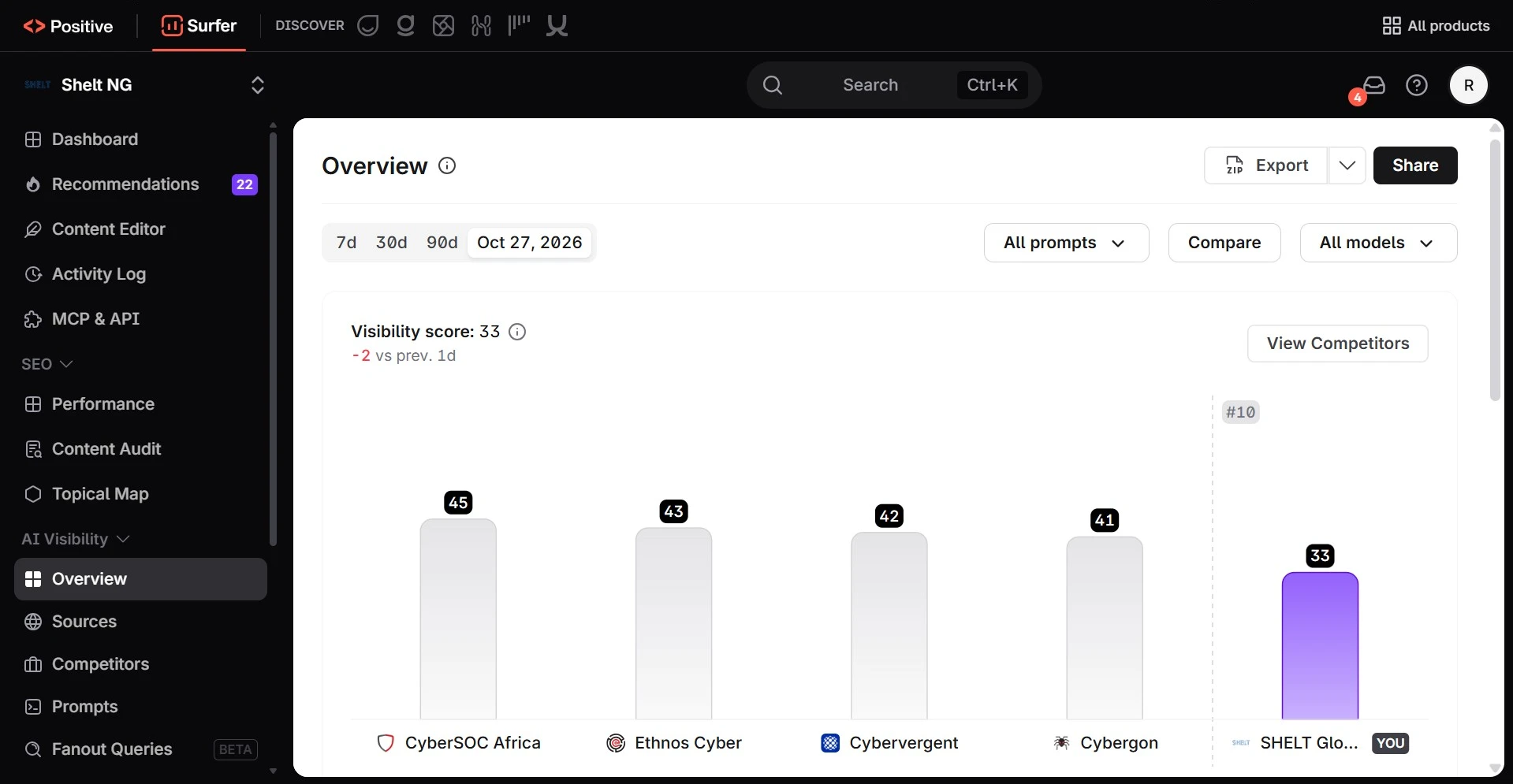
In Nigeria, the Visibility Score grew from 27 to 33 between July 7 and October 27, 2026. That moved SHELT from #95 to #10, into the top 10.
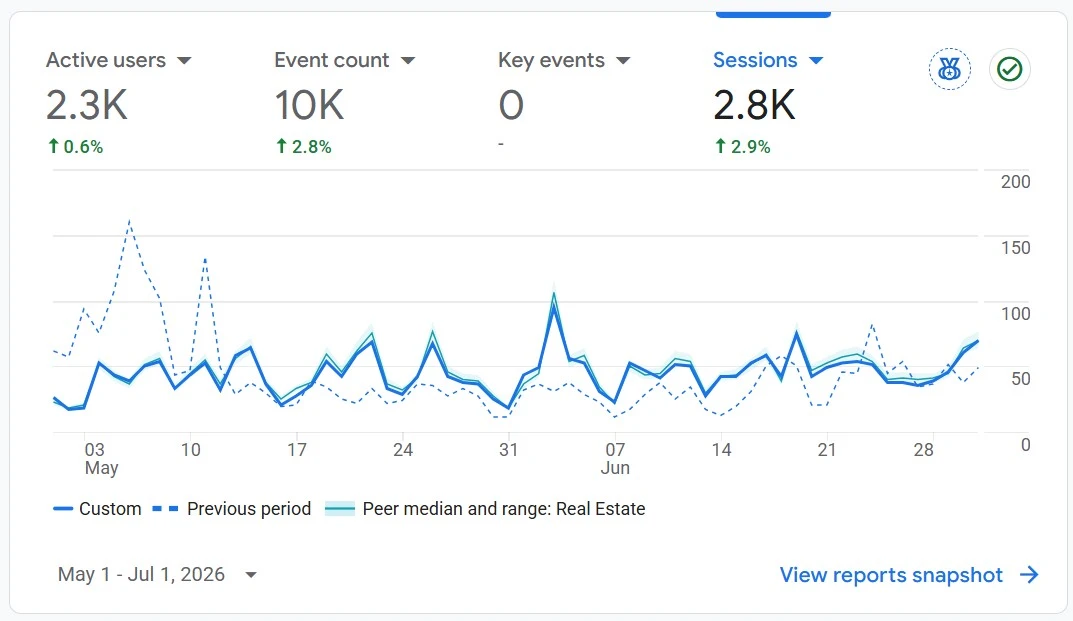
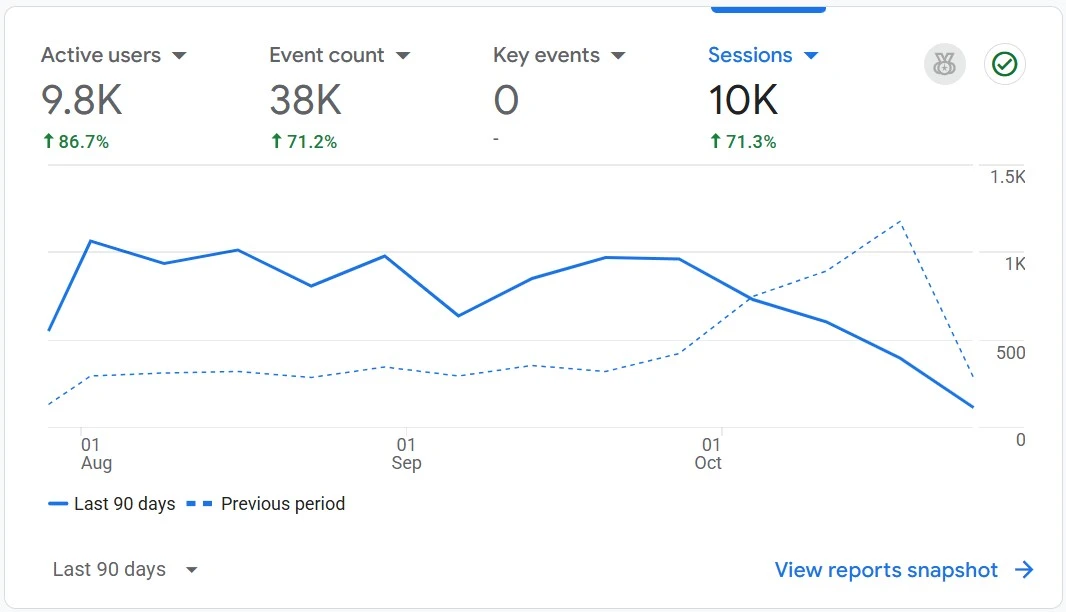
Website traffic grew right alongside AI visibility. In the last 90 days, SHELT's website got 10K sessions and 9.8K active users. That's 71.3% more sessions and 86.7% more active users than in the previous 90 days.
Sessions dipped in October, during expo season, when fewer new posts went live.
Highly targeted keywords (not generic top-of-funnel topics) ensured the traffic coming to the website was high-quality from the start. As Rouba told us:
We are noticing a very, very good result, especially for the website visits. People reaching out through the keywords that we started using for our business. It's helping us a lot rather than just posting on LinkedIn.
And that's with a blog that's only a few months old. Imagine where it goes as the archive keeps growing!
Scaling a one-person marketing team in AI search
Rouba went from LinkedIn-only to growing SHELT's traffic and AI visibility at the same time, with no content team and no SEO background.
So let's recap what you can take from Rouba's story and try out for yourself:
- Set up AI visibility tracking before you write. Your tracked prompts show you which topics your buyers talk about. From the start, you'll build topical authority, show up in the highest-demand answers, and attract the right audiences who actually want to buy what you sell.
- Start with content you already have. Turn your successful LinkedIn carousels and social media scripts into your first posts.
- Load Brand Knowledge, then let Surfer AI write. Every generated draft will present your brand the way you want it, and add information only you possess. Pair it with topics from someone technical if you work in a specialist niche.
- Don't publish if your Content Score is lower than your top three competitors. Run Auto-Optimize to hit the mark, and then all your posts will be ready for AI search and Google.
- Give every market its own strategy. One English blog can serve several countries, but localizing your research phase will help you determine which topics matter most for each market.
As Rouba puts it:
Surfer is a very helpful tool, and everyone should use it. Even if you post daily, if you're not actively working on the visibility for LLMs and SEO, this is not going to work. This is what we learned from working with Surfer.
Not a Surfer user yet? Check it out with our free trial, and see how you can track AI visibility, create and optimize content, and cover several markets from the same hub, even as a team of one.