The biggest AI SEO shift of 2027 is that ranking for a query, being cited, and being recommended have become three separate problems with different solutions and tactics. Retrieval has also widened through query fan-out, so the pages that get pulled into an answer are often no longer those that rank for the phrase you track.
Plenty of research (including our own) has outlined 12 major trends. In short:
- AI engines now run many related searches behind one prompt, so ranking for the head term no longer predicts a citation, and fresher pages enter the pool more often.
- Once a page is retrieved, fact coverage, evidence, and comparisons decide whether it gets cited. Reformatting, early keyword placement, and llms.txt show no measurable effect.
- Brands win recommendations through mentions on third-party listicles, reviews, and video, not through their own pages or backlinks.
- Each AI platform names different brands, so track them separately, judge AI search on conversions instead of sessions, and treat sentiment scores as too noisy to report.
What are the biggest AI SEO trends in 2027?
The most impactful AI SEO trends in 2027 are:
- Head-term rankings no longer predict citations
- Citations and mentions have split into separate metrics
- Recommendations are won off-site
- Reformatting a page shows no measurable effect on citations
We can summarize everything that's happening in a simple rule:
A page must be retrieved before it can be cited, a brand must be mentioned before it can be recommended, and each stage has different drivers.
Retrieval depends on covering the related searches behind a prompt, not on winning the one keyword in a rank tracker. Citation depends on completeness and evidence, not on heading polish or keyword placement.
Similarly, recommendations depend on being named in sources the engine already trusts, which are often third-party sites instead of your own.
The trends I'll share here underpin these AI search optimization shifts you should adapt to, and we can split them into categories based on their impact. So let's start with retrieval.
What changed about how AI engines retrieve pages?
Retrieval has widened significantly, so AI engines now pull from a much larger pool than the top ten results for the query you type. They run many related searches behind a single prompt, which we know as query fan-out.
While ranking still matters, targeting the head term is no longer what gets you retrieved. The pages that enter the citation pool are those that rank for the hidden sub-queries, often on fresher URLs, and sometimes on a different engine's index than the one you watch (e.g., a page shows up in ChatGPT but not Google's AI Mode).
1. Head-term rankings stopped predicting citations
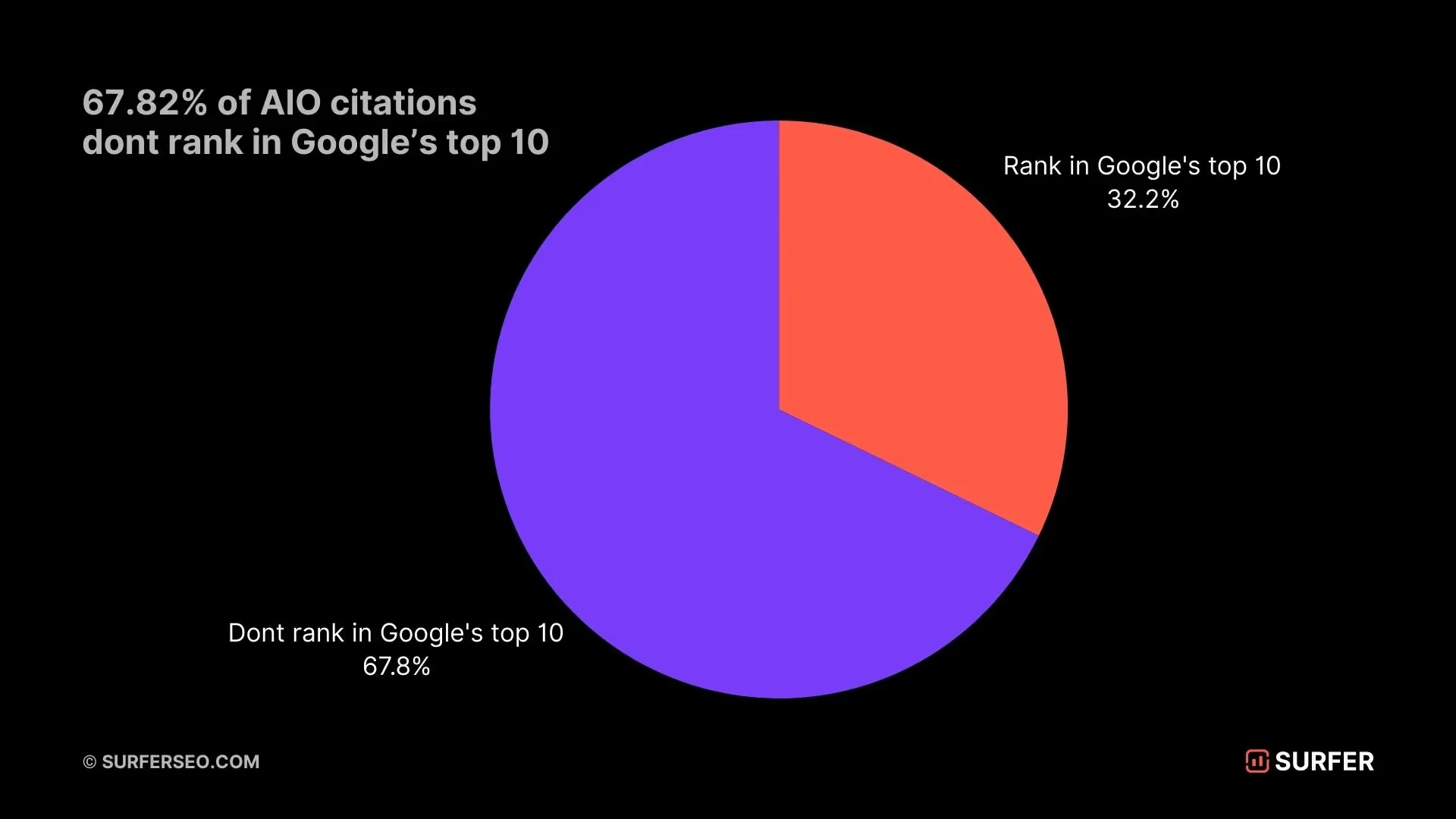
We analyzed the SERPs of 10,000 keywords and found that AI Overviews (Google's AI summaries of the answer for the related query) don't seem to reflect organic rankings. Among all the cited pages, 67.82% did not rank in the top 10.
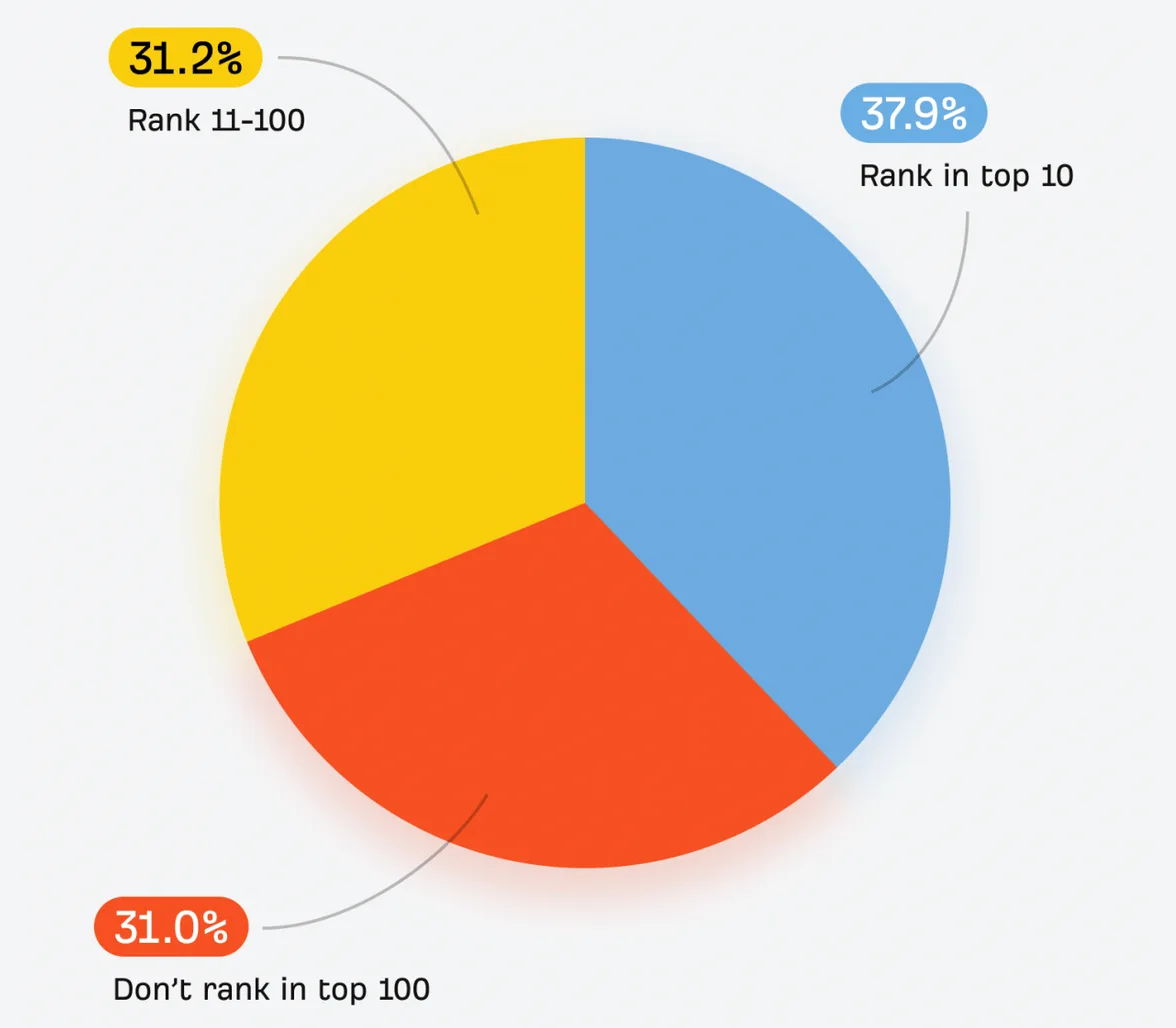
A separate study of 863,000 keyword SERPs and 4 million AI Overview URLs found the same movement at a larger scale. Top-10 citation share fell from about 76% in 2025 to 37.9% in January 2026. The rest of the cited URLs sat in positions 11 to 100, beyond the top 100, or in SERP features instead of blue links.
This doesn't mean that rankings no longer matter. Top-10 alignment jumps once you count the fan-out queries (sub-queries that the search engine generates and researches to provide a comprehensive answer). That means that the pool of cited sources widened instead of being completely disconnected from organic results.
You can see this trend in action across industries. In a study of 68 runs of "What are the best hotels in New York City?" the Baccarat Hotel appeared in ChatGPT just once (1.5% of runs) despite winning 3 of the 10 most-frequent Google pages across the fan-out.
Meanwhile, the Fifth Avenue Hotel, open only since 2023, appeared 13 times (20%) while winning 5 of 8 top Bing URLs.
I wanted to test this discrepancy, so I picked a keyword we rank in the top three for (best AI visibility tools).
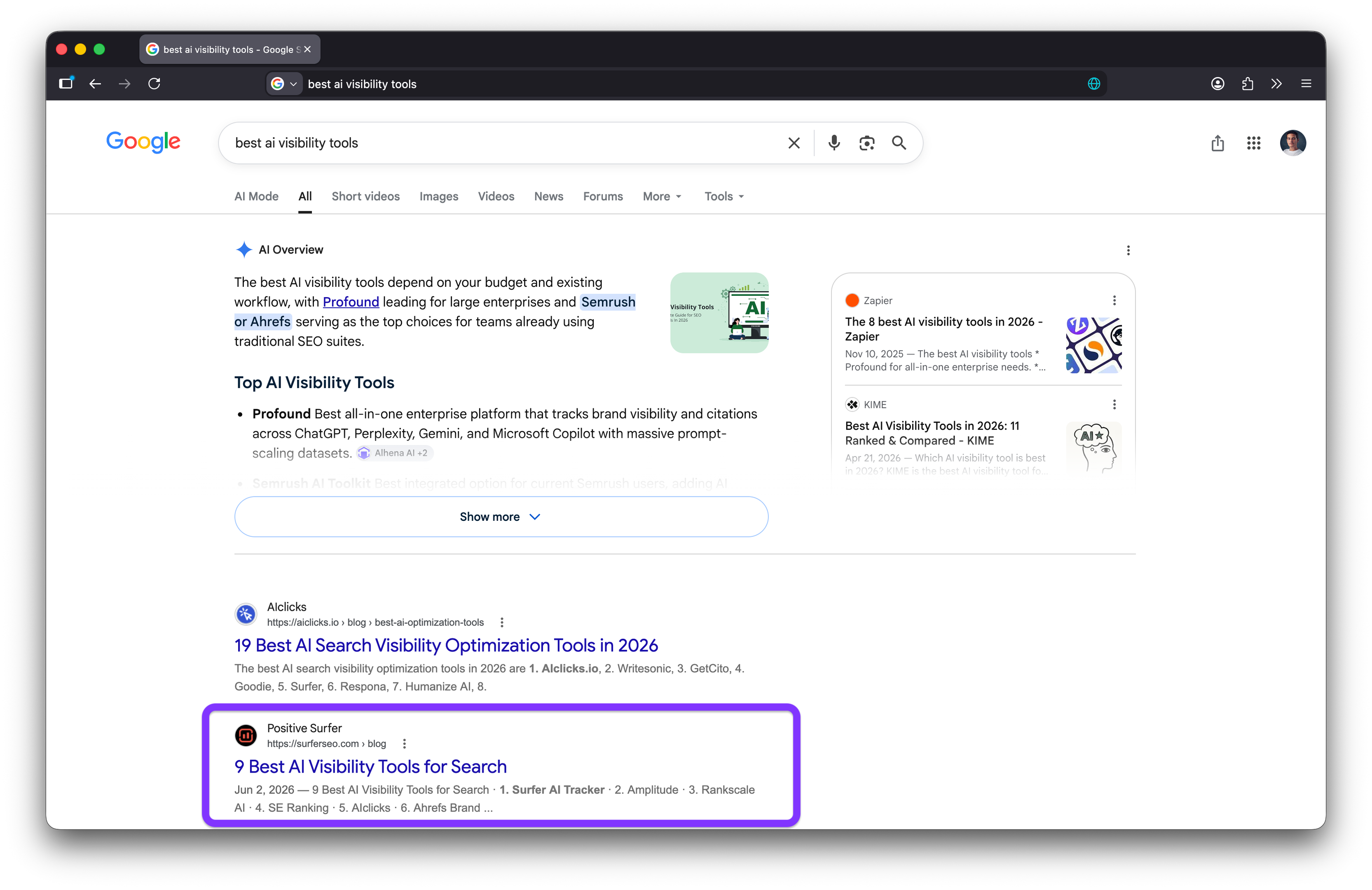
As you can see, your high rank didn't translate to a citation in the AI Overview.
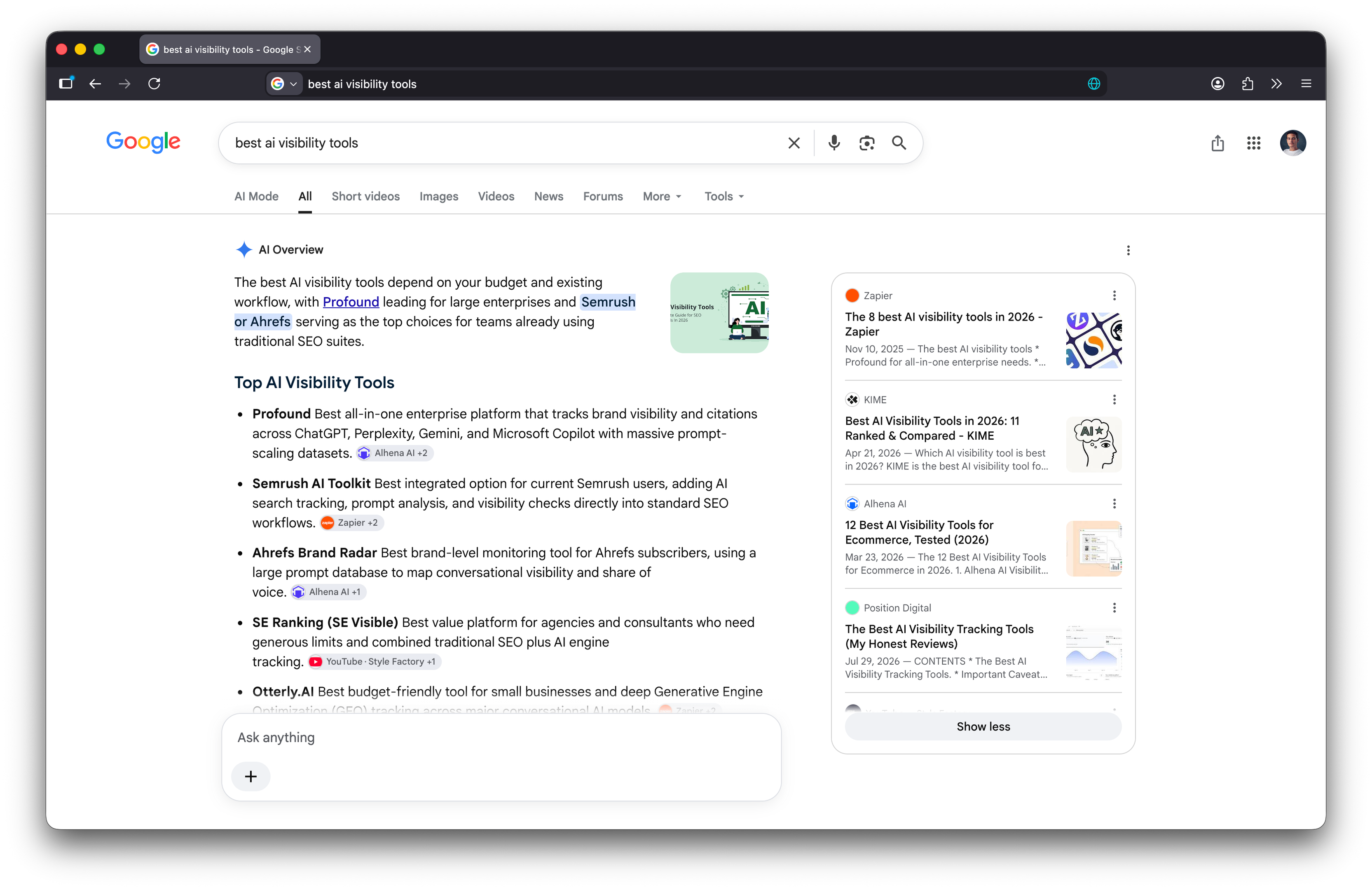
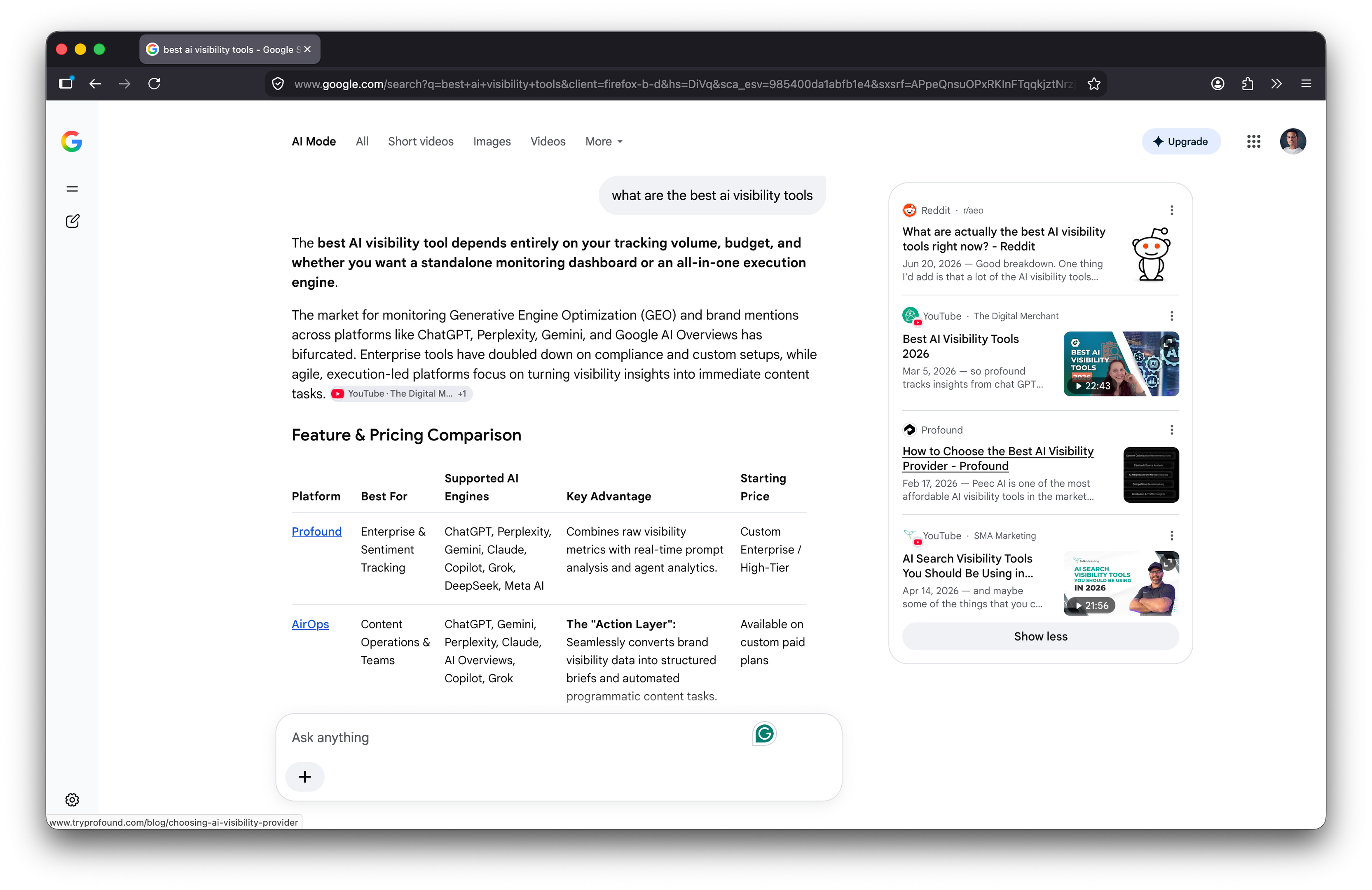
Even when I used a more conversational query in Google's AI Mode, the page still wasn't cited.
Where our page did appear was in a fanout of another query. Instead of being cited for the main question, it was used to cover the first fanout:
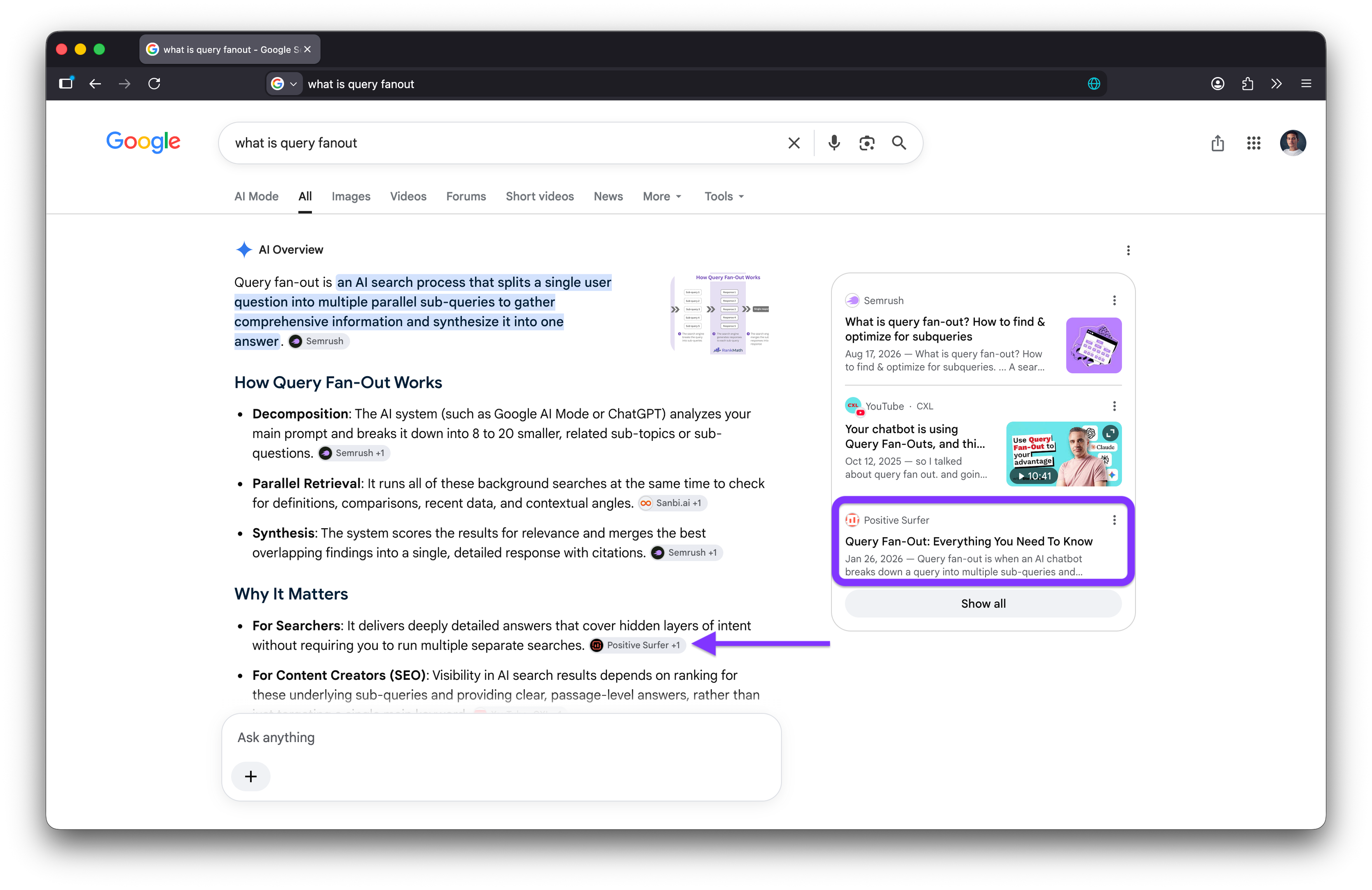
The takeaway is simple: stop treating head-term ranking alone as a proxy for AI visibility. Track the answer, the sources, and the sub-queries behind them.
2. Query fan-out turns one prompt into multiple searches
The fact that our page ranked in a fan-out in the above example is not an accident. Our research showed that ranking for both the main query and its fan-outs makes a page 161% more likely to be cited than ranking for the main query alone.
Of the cited pages that rank in organic search, 51.2% rank for both, 29.2% only for fan-outs, and just 19.6% only for the main query.
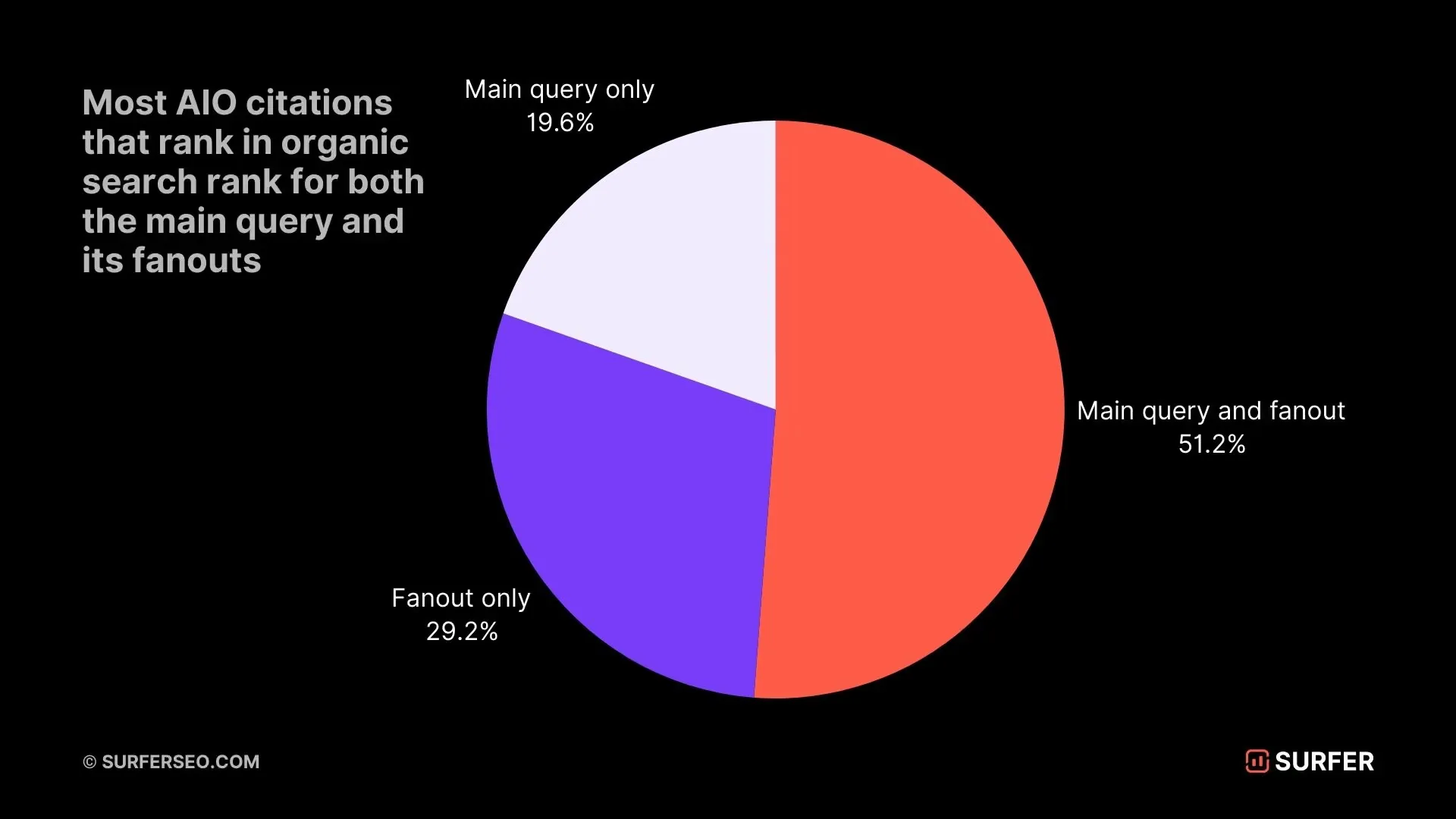
Our study showed that a typical query results in up to 5 fanouts. Targeting those sub-queries alongside the head term can drastically improve your citation potential.
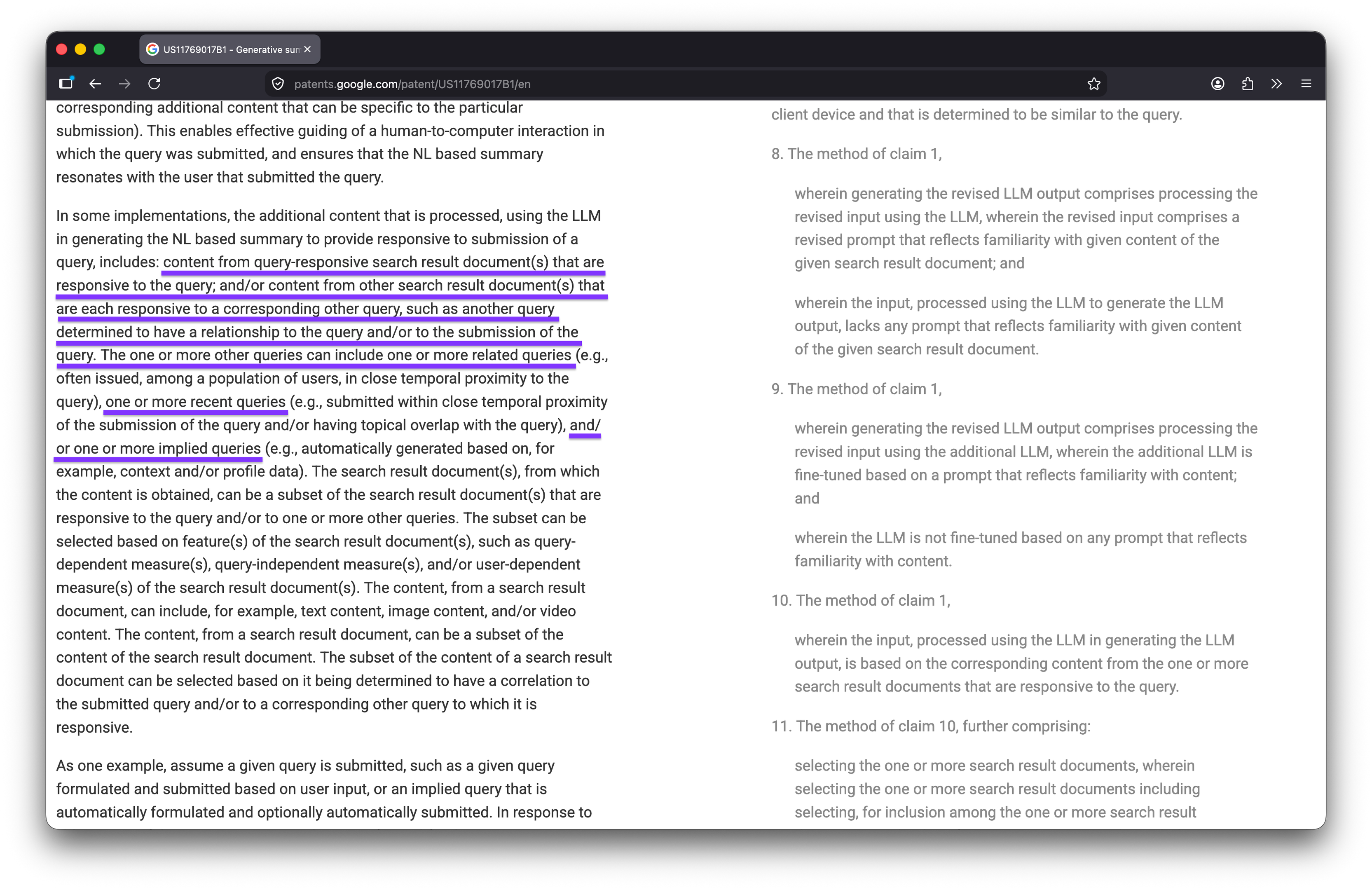
This isn't just an observation but patented behavior. Google's US11769017B1, "Generative summaries for search results," describes an LLM generating a summary from content drawn from documents responsive to the query, related queries, recent queries, and implied queries.
Because fan-out is invisible until you force it into the open, I ran a search to identify the sub-queries worth targeting. Here's how:
1. I picked a question in our niche and ran it in Google AI Mode to see which fan-outs it will generate.
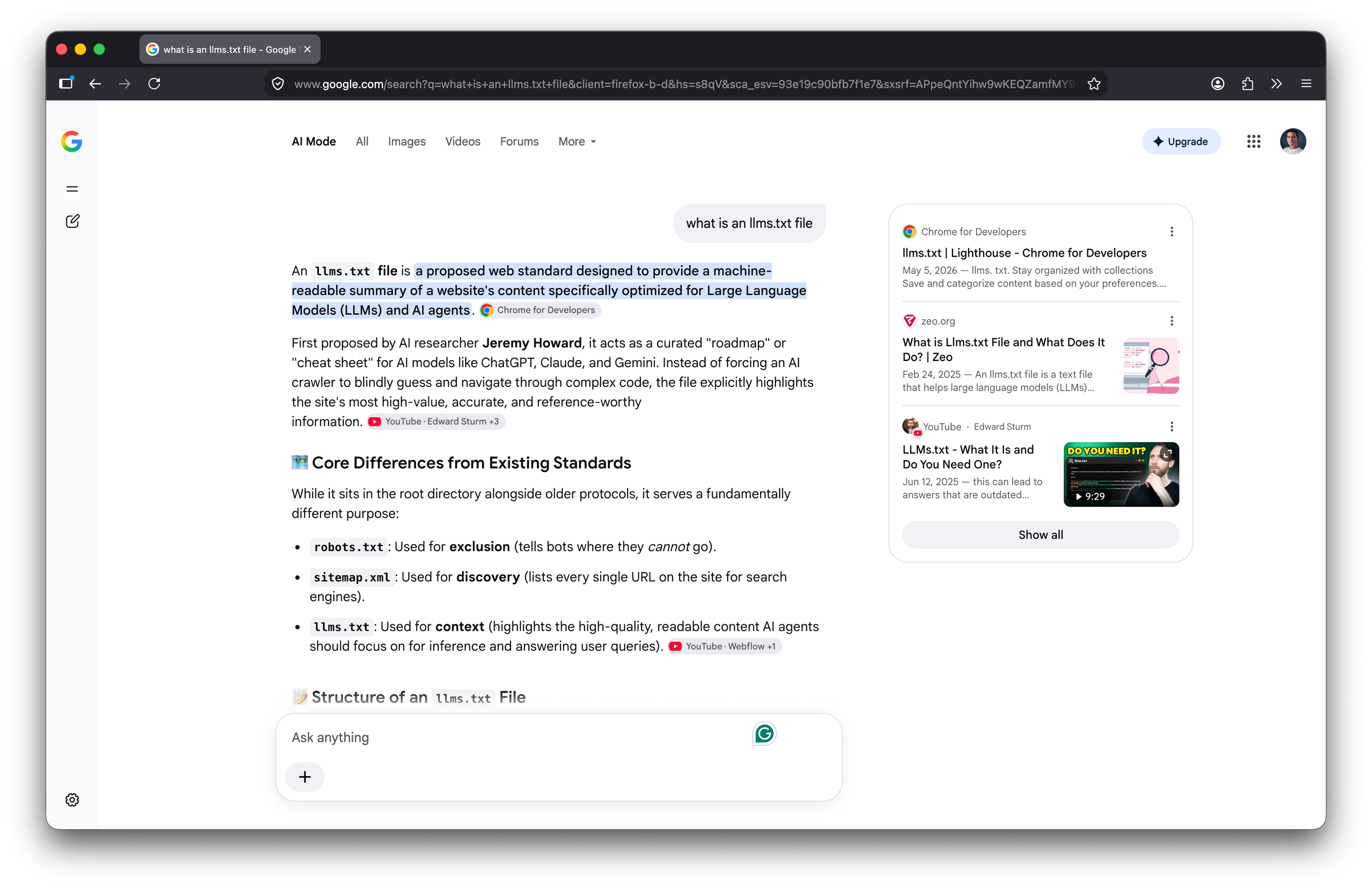
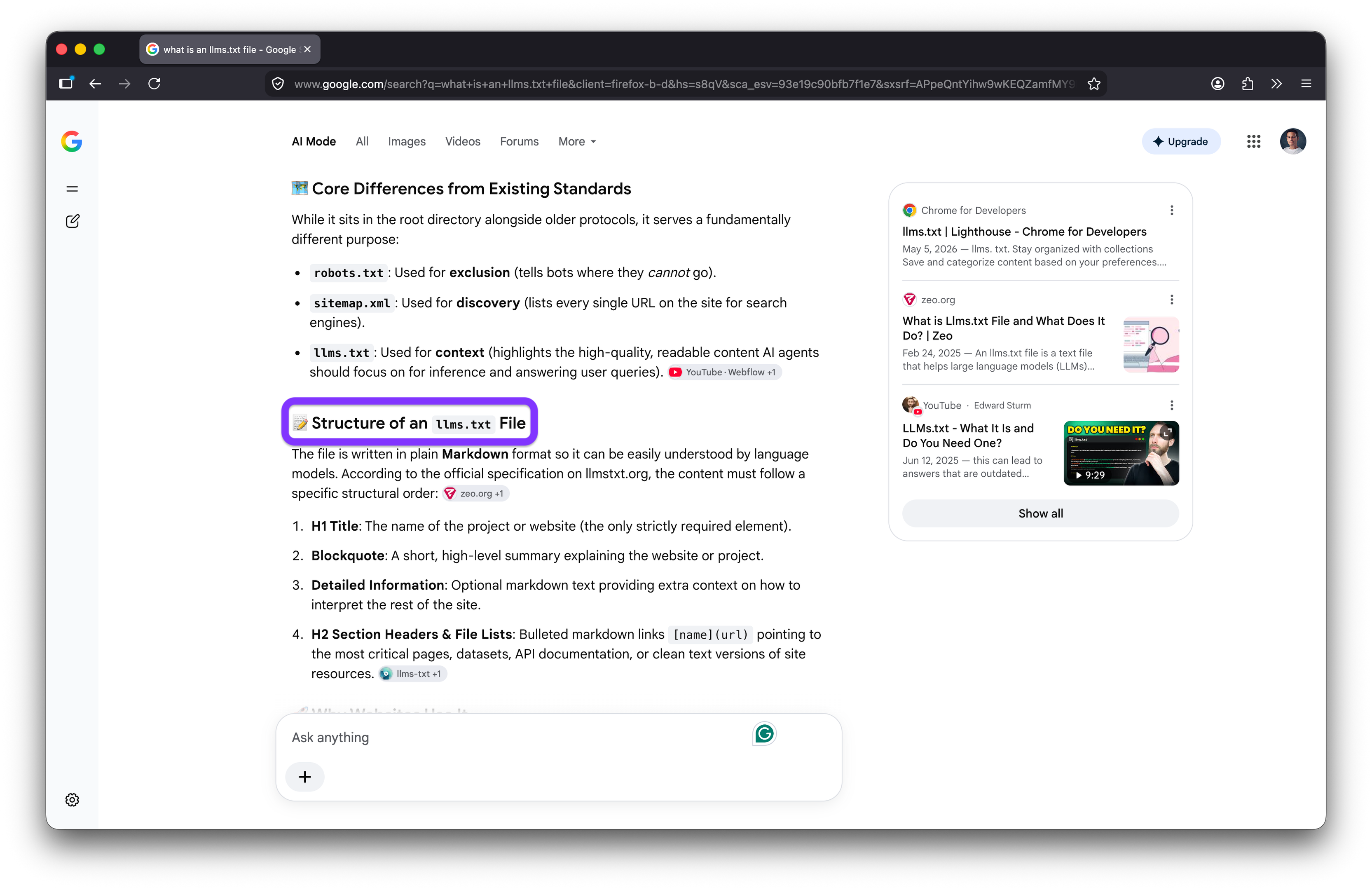
2. I captured the sub-queries the engine gave me (e.g., why websites use llms.txt, how it differs from other standards, and what its structure looks like).
3. I searched the sub-queries as ordinary Google queries and examined which pages ranked.
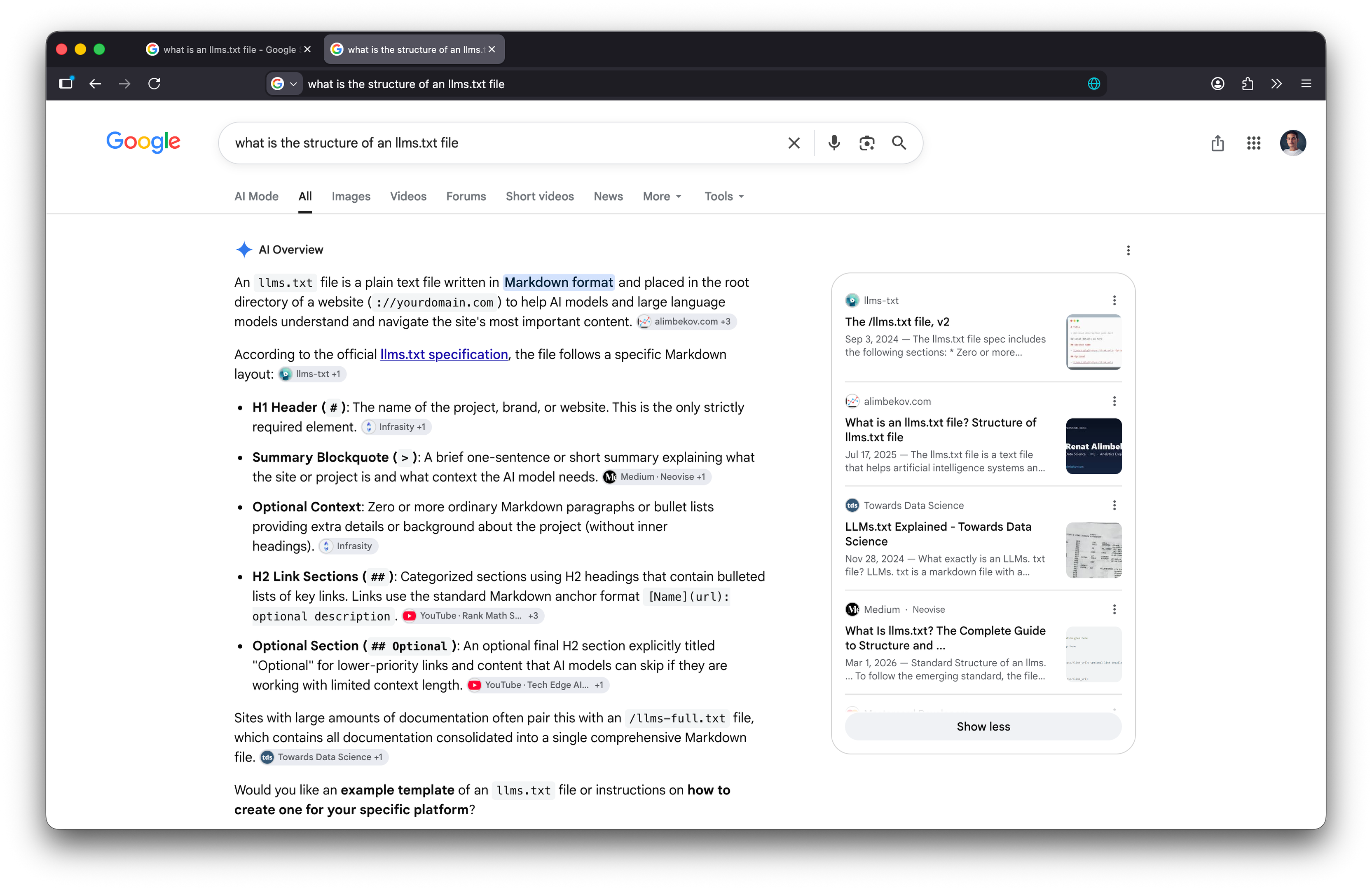
Those ranking pages are the citation pool. They're not the pages ranking for the original phrase, but they're still relevant to it because they feed the fan-outs.
An experiment on four blogs showed that targeting fan-outs this way can help boost citations. It identified 10–20 fan-out sub-queries per article and edited the content to answer them. After one month, those four articles went from 2 citations to 5 (a 150% increase).
On the flip side, overall brand mentions fell from 18 to 10 and share of voice from 23.4% to 20.0%, but the experiment attributed this to platform-side changes instead of the edits. Directionally, covering the cluster still moved citations.
So if I wanted to optimize our page, I would change it by covering the cluster that sub-queries point at instead of rewriting an H1 to match the head term more closely or targeting the main query in any other way.
You can find the sub-queries to target by hand as I did above, but that will only give you the citation pool for one head term and its fan-outs. At scale, when you need to explore dozens or hundreds of queries, you need the sub-queries listed for you.
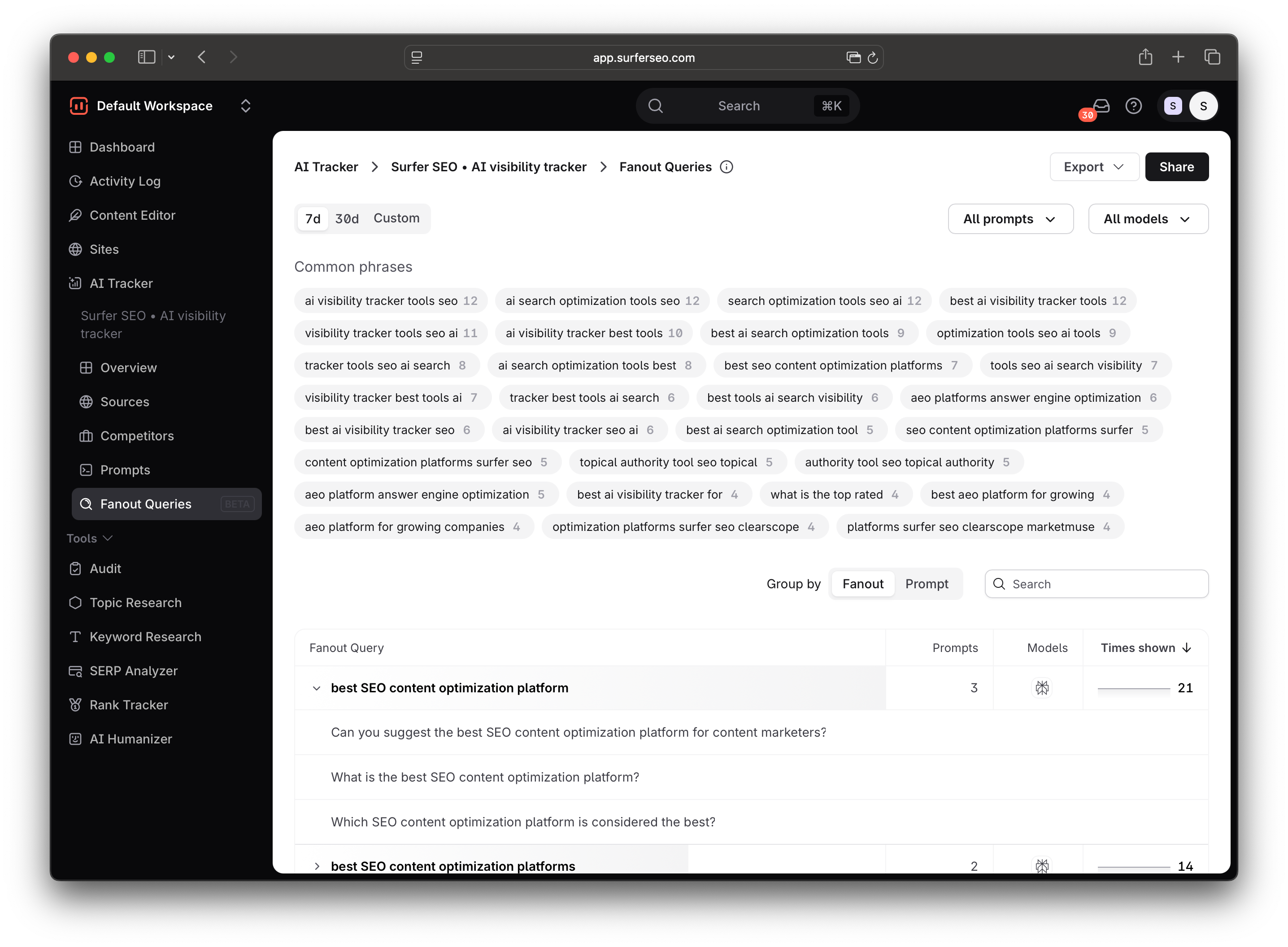
That's where Surfer's AI Tracker can save you a lot of time. Give it a query, and it will give you common phrases and fan-outs organized by prompts. You'll know exactly which sub-queries to target with your content to boost your chances of getting cited.
3. AI engines favor fresh content
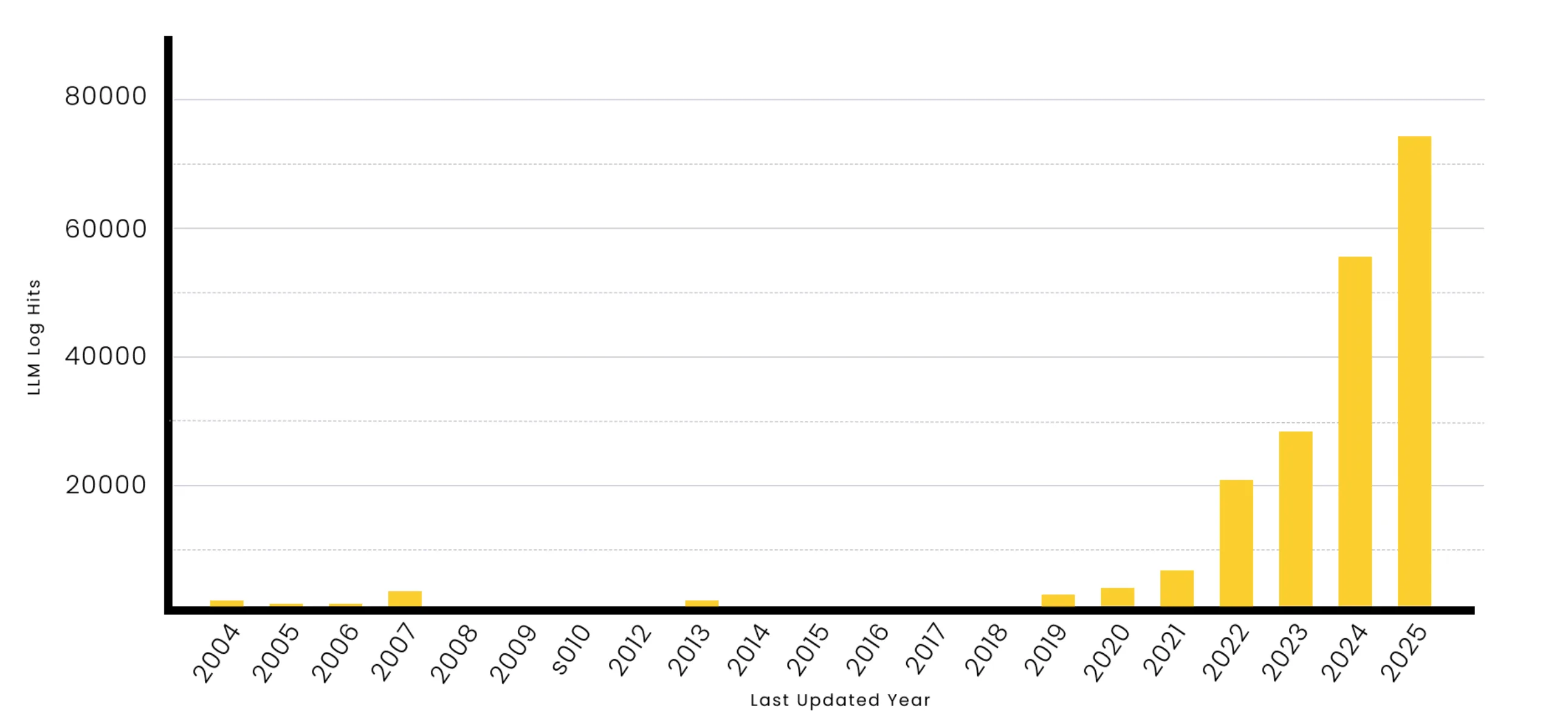
Across LLMs, AI search engines show a clear recency bias. A study of over 5,000 URLs showed that AI bot crawl hits run 65% on 2025 content and 94% on content from 2021 onward. Meanwhile, only 6% of hits involved content aged 6+ years.
AI Overviews seem to be particularly drawn to new content. They take 44% of citations from 2025-dated content and 30% from 2024. In total, the research showed that 85% of AIO citations were dated between 2023 and 2025.
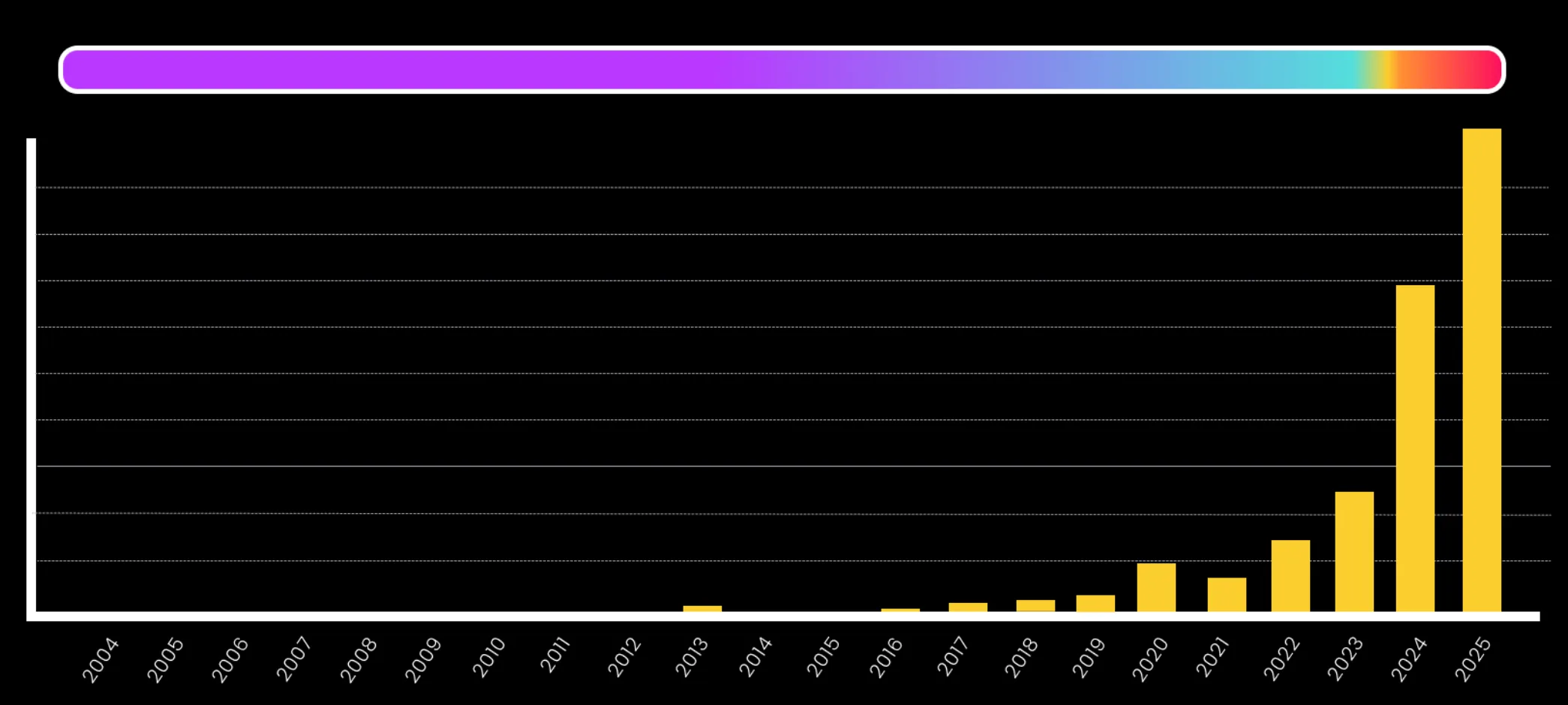
The fact that the study tracked crawler hits is particularly noteworthy here. It shows that the recency bias kicks in before the actual ranking happens. With that in mind, updating pages is the cornerstone of both traditional search rankings and AI search engine optimization.
This doesn't mean that you should update everything. A visible recent date matters most when you are competing against a visibly stale one, so prioritize pages that are both visibly dated (as shown on the page's date) and losing to fresher rivals.
If done well, a refresh can give your page a major citation boost. We've seen this happen across plenty of sites that update pages while adhering to the latest search optimization rules.
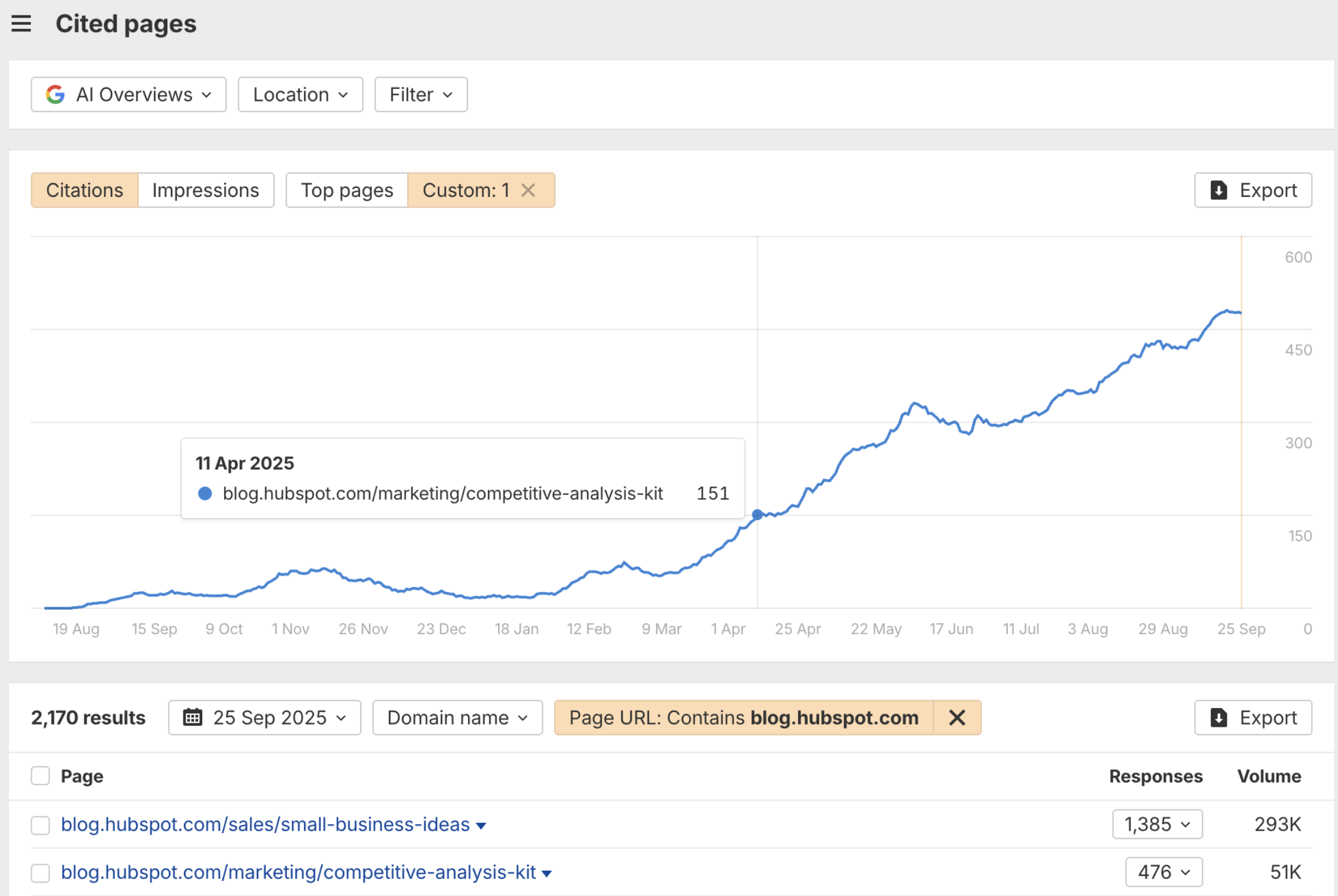
Take HubSpot as an example, which updated the Competitive Analysis blog post on 11 April 2025. Its AI citations grew from 151 to 476, which is roughly a 3x increase.
What makes a retrieved page get cited?
Once a page is retrieved, it earns the citation based on completeness and evidence, not presentation. Formatting and keyword placement have little to no impact, while fact coverage is a deciding factor.
This inverts a lot of 2025 advice, which treated early keyword inclusion, heading structure, and word count as the levers that would get a page selected. After quite a bit of testing, we can confidently say that's not the case.
Special files and markup do not help either, despite sounding like something you should focus on. What it really comes down to is the specifics a buyer would ask for: prices, specs, comparisons, and claims that carry evidence.
4. Reformatting a page shows no effect on citations
Our early-query-relevance study tested the most widely repeated on-page tactic of mentioning the search phrase earlier for increased citations. It found the tactic near-worthless for AI Overview selection. Across 30,000 unique pages and 1,000 AI Overview queries, pages included in AI Overviews score only 6.19% better on early query confirmation than non-included pages.
Over 55% of cited pages do not mention the main query in the first 100 words. Early keyword placement also shows under 0.2 correlation with citation likelihood.
All in all, out of 15 traits analysed for AI Overview selection, early query relevance ranked 14th.
The same pattern shows up in length. Across 1 million pages and 10,000 SERPs, we found content length is not a direct ranking factor. Once a page uses at least 50% of recommended terms, word count stops mattering entirely.
A causal test supports the low relevance of formatting in generative engine optimization. Across 252,000 trials and six LLMs, Vishwakarma, Kumar, and Jamidar found content structure and formatting produced an odds ratio of 0.79 to 1.68, statistically indistinguishable from no effect.
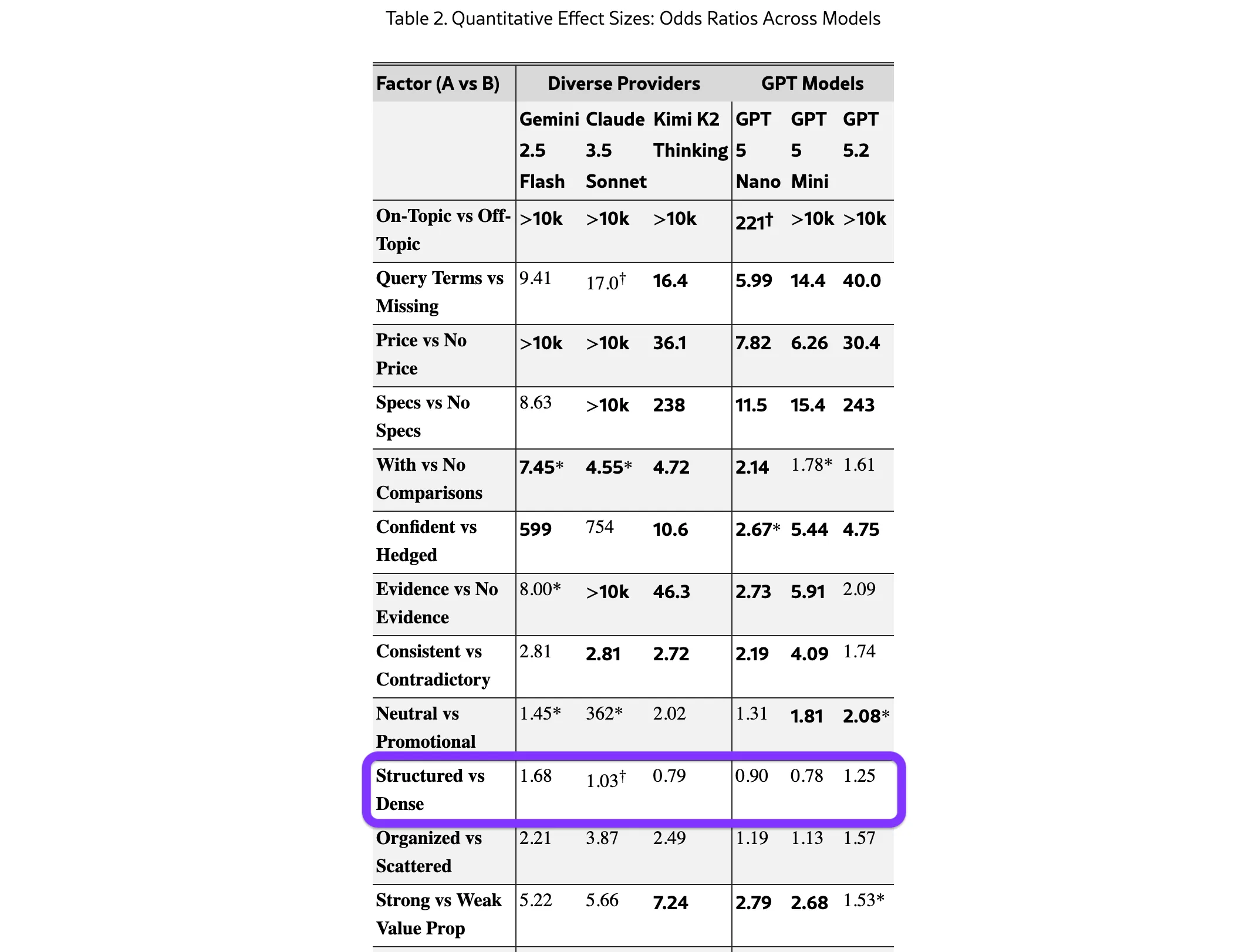
Now, that causal result rests on a single study where formatting shows no effect in testing. This doesn't prove that formatting "doesn't work" at all, especially since we also have some evidence that segmenting content can help citations indirectly by supporting retrieval.
Specifically, a 2026 chunking study found paragraph-boundary segmentation roughly doubles retrieval quality against fixed-size chunks (mean nDCG@5 ≈ 0.459 vs. < 0.244). This means that structure seems to matter at the retrieval stage even where it doesn't move citation once a page has already been retrieved.
5. Pages with specifics, evidence, and comparisons get cited more
The same body of research that found query placement and content length largely irrelevant for citations found fact coverage decisive. Our own research dedicated specifically to facts confirms this.
Across 57,253 pages, AIO-cited pages carry 31% fact coverage against 24% for non-cited pages. The typical cited article also covers 62% more facts than the typical non-cited one.
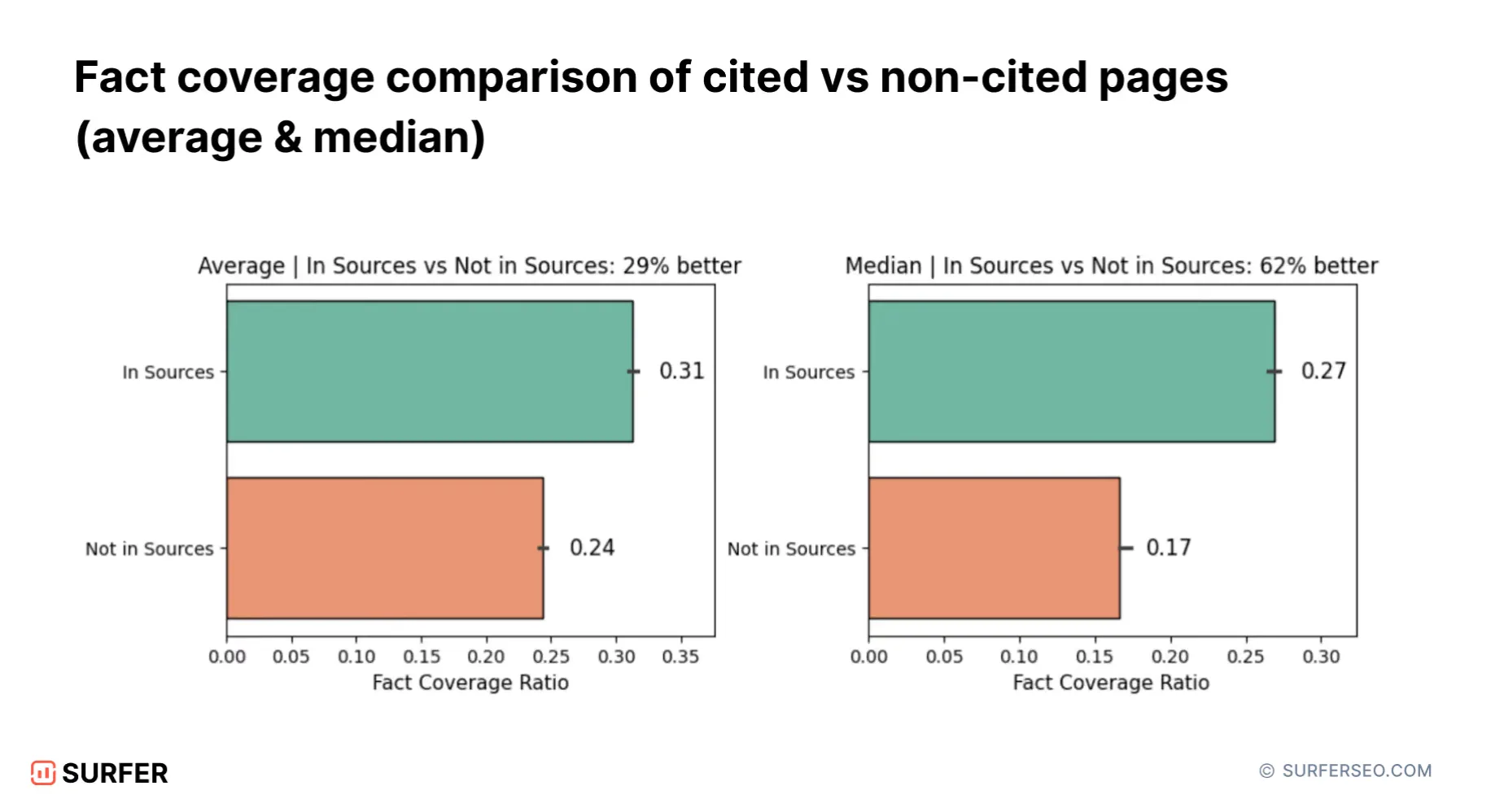
For a more detailed breakdown, we took a 110-keyword sample and found a strong correlation between citations and fact coverage:
The rule is clear: the more facts you can include, the more likely you are to get cited because AI tools will find you more reliable.
The arXiv study I mentioned in the last section also found fact coverage to be one of the key predictors of citations. The factors shown to move citations included:
- Specs present (OR 8.63 to 243)
- Price stated (OR 6.26 upward)
- Claims carrying evidence (OR 2.09 upward)
- Confident instead of hedged language (OR 2.67 to 754)
- Comparisons included (OR 1.61 to 7.45)
In practice, I could use this to rewrite a vague product passage like this one
The best SEO tools help you optimize content for search and AI. Our platform is powerful, easy to use, and trusted by teams worldwide. It can improve your visibility and save you time without exorbitant costs.
The improved version would look something like this:
"Surfer's Content Editor scores a draft against the terms and entities used by currently ranking pages, then flags missing facts. This is important because a typical cited page covers 62% more facts than the typical non-cited one. Compared to a keyword-density checker, the Editor measures coverage of facts and entities instead of just the repetition of the head term. Plans are available on the pricing page."
So I added a spec (what the product actually measures), a number from a study, a price pointer, and a comparison. Those are the factors with large odds ratios, and the vague version had none of them.
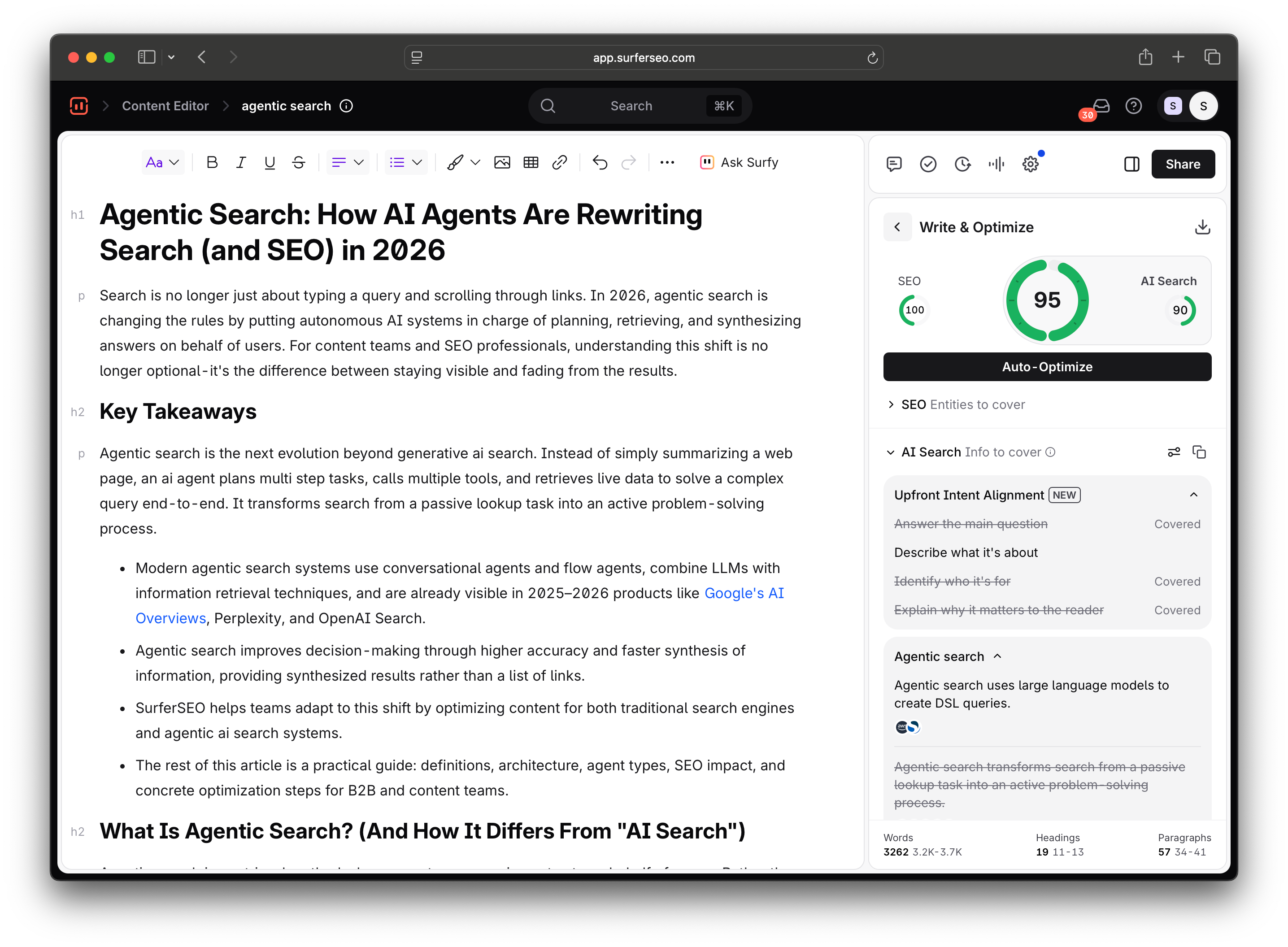
Speaking of Surfer's Content Editor, the entity and fact coverage helps with both traditional and AI search optimization. Give it a query, and you'll see all the entities your content should include to signal relevance, as well as the facts you should cover to make the content easier to retrieve and cite by AI platforms.
6. llms.txt and special markup are ignored
llms.txt is a file that points AI crawlers and assistants to essential pages, but it's ignored when it comes to the actual citations. Across 137,210 domains, 97% of llms.txt files received zero requests in May 2026, and there were zero AI bot requests to llms.txt paths that did not exist. Bots do not go looking for the file.
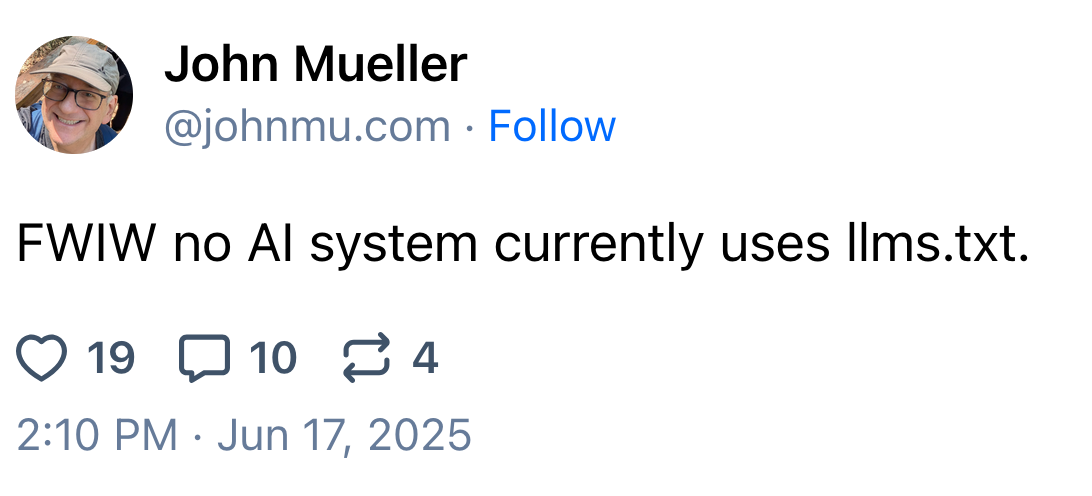
Google's John Mueller stated publicly that " no AI system currently uses llms.txt," adding that server logs show consumer LLMs fetch site pages but never retrieve the llms.txt file.
Google's own AI optimization guide states the same position as policy:
You don't need to create new machine readable files, AI text files, markup, or Markdown to appear in Google Search (including its generative AI capabilities), as Google Search itself doesn't use them.
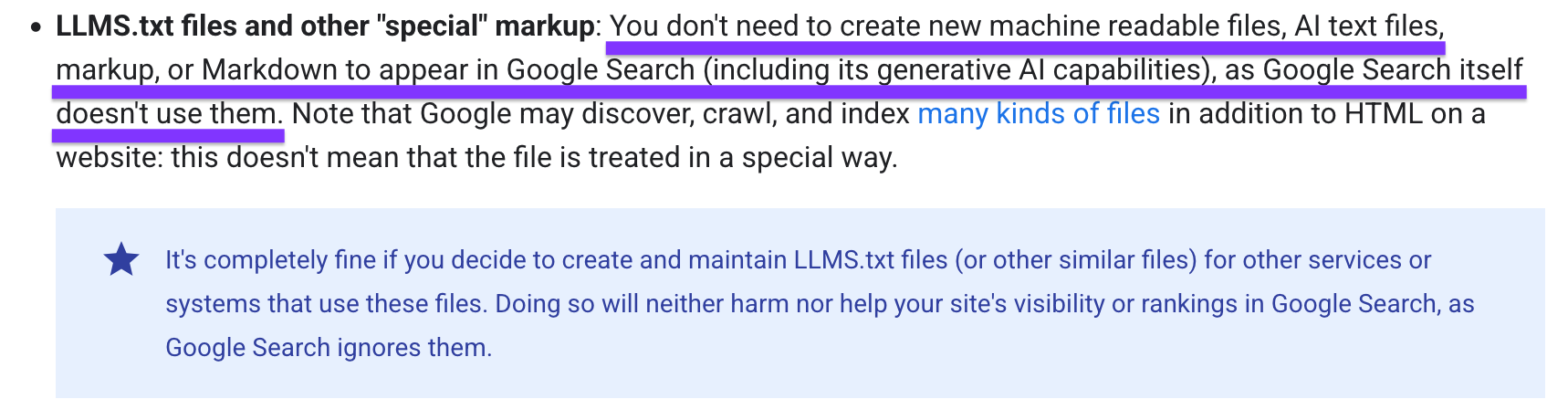
The same guide says there is no requirement to chunk pages into tiny pieces for AI, and no special schema.org markup is required for generative AI search. While structured data still helps with rich results, it's not a ticket into AI Overviews.
What decides which brands get recommended?
The main determinant of recommendations in AI search engine results is brand mentions on third-party sites. Your own website has little to do with it, which fundamentally changes how we optimize content for AI compared to traditional search.
We already have a lot of data that confirms this, so it might be time to reallocate some of the budget spent on internal optimization and focus on third-party sources. But first, we need to clarify the difference between being cited, mentioned, and recommended because these are completely separate metrics driven by different factors.
7. Citations and mentions split into separate metrics
A citation is a source link. A mention is the brand being named in the answer text. These events are not interchangeable, and most appearances in AI-generated answers are either one or the other.
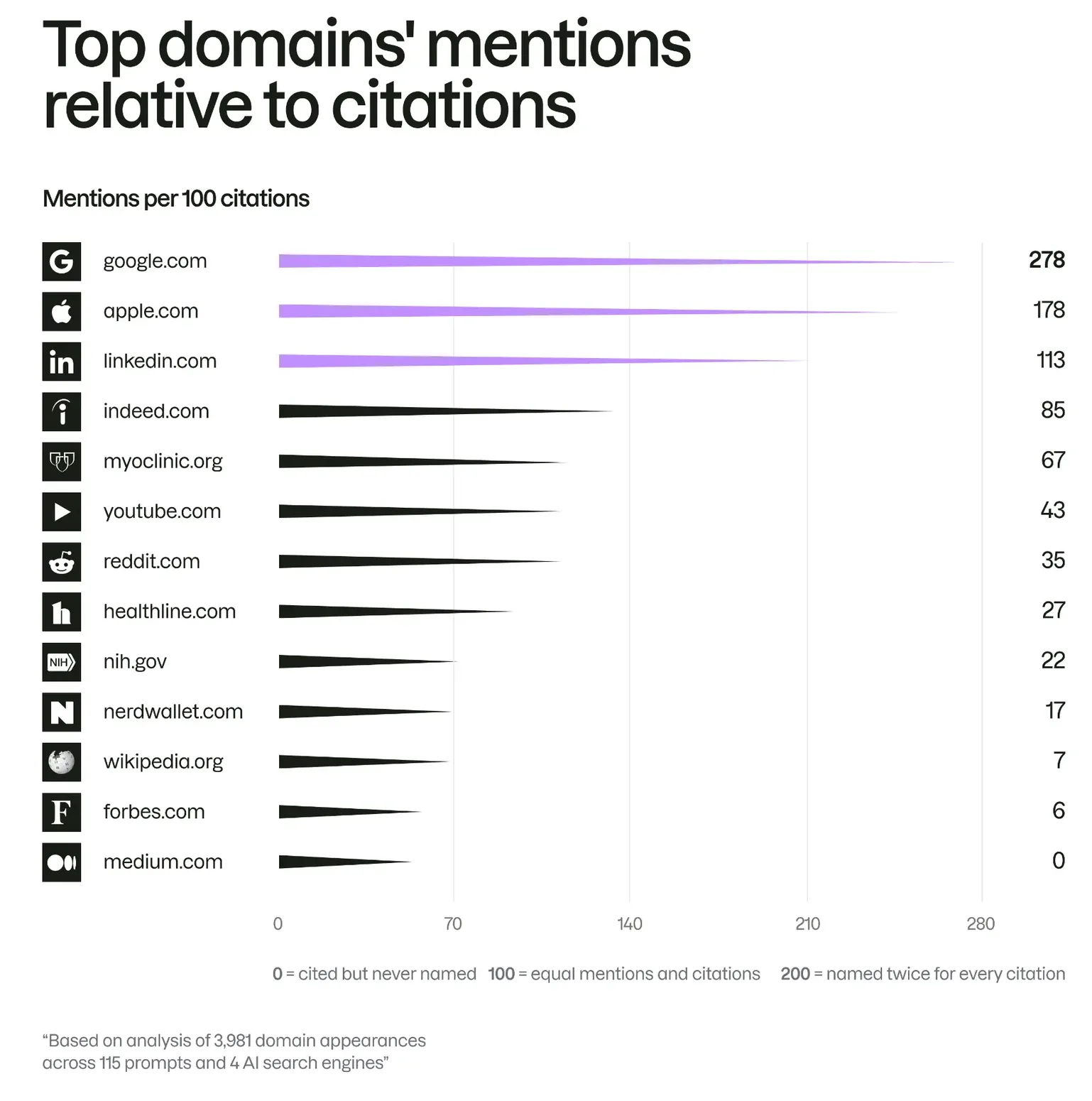
Unfortunately, most appearances involving citations are hidden because AI systems often conceal their sources. A study of 3,981 domain appearances (115 prompts, 14 countries, 4 engines) showed that 61.7% were "ghost citations": a source link with the brand never named.
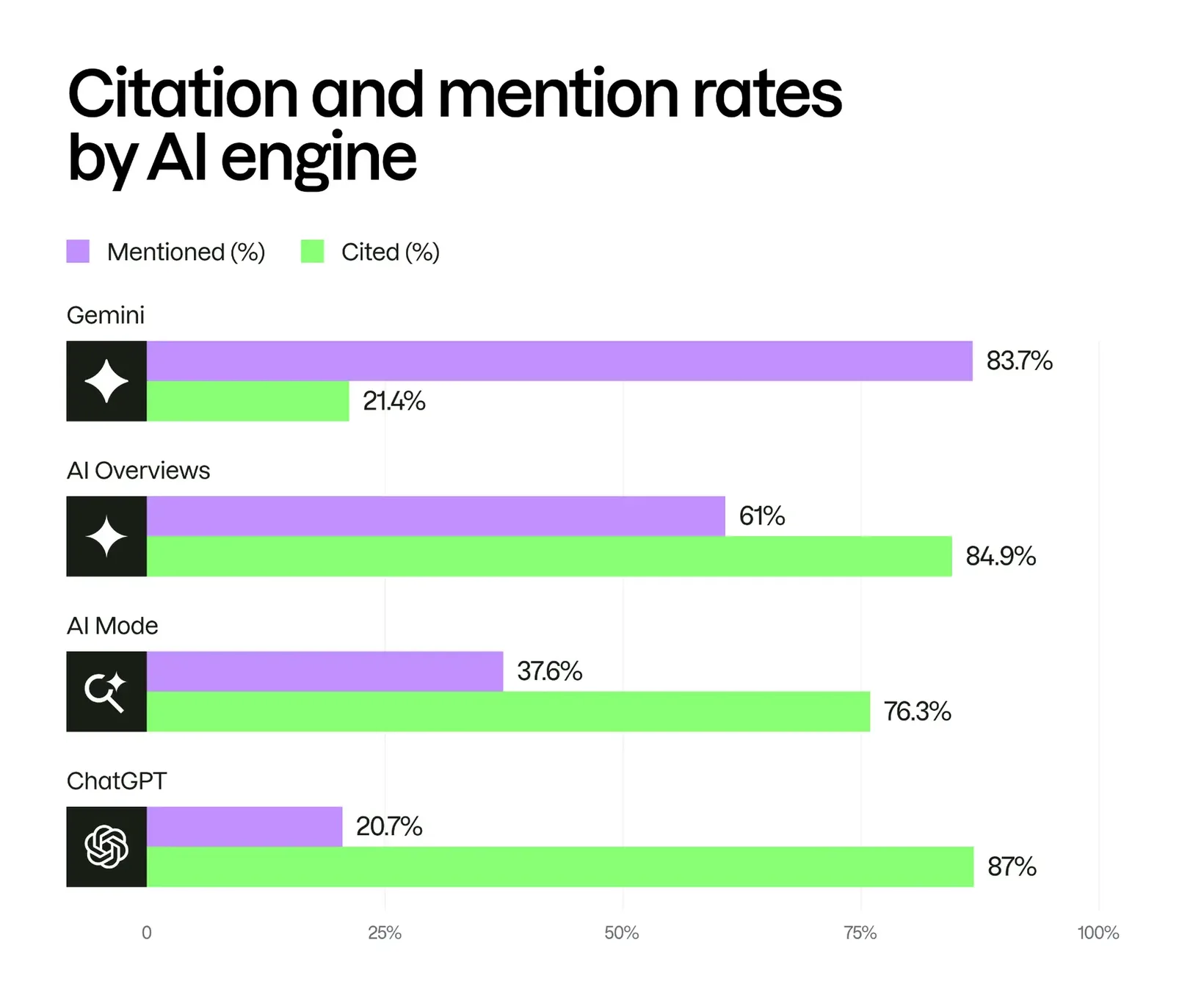
The ratio of citations versus mentions can vary greatly between platforms. For example, ChatGPT cites brands in 87% of appearances but names them in 20.7%. Gemini names brands 83.7% of the time but cites only 21.4%. They are near mirror images.
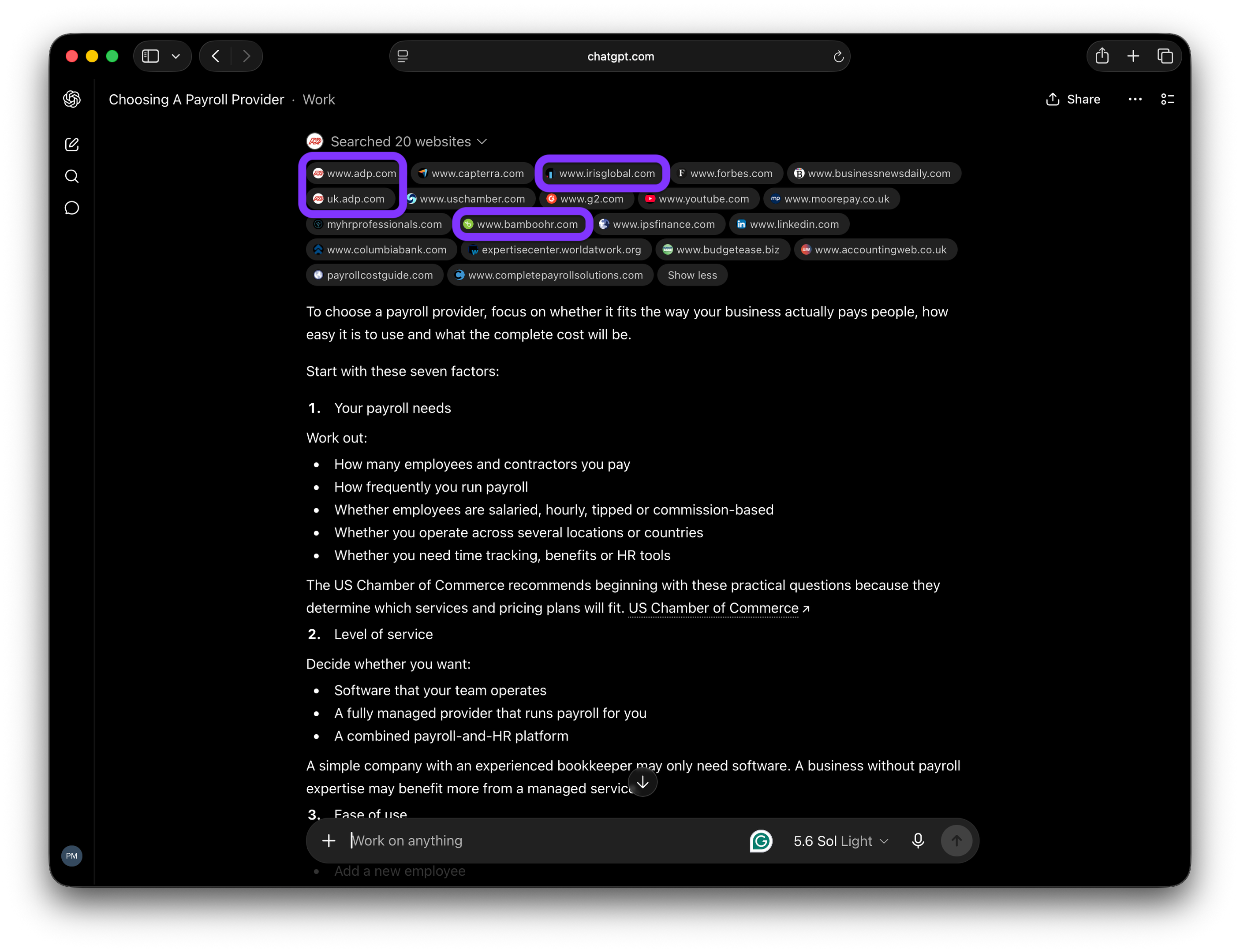
I tested this by running the same brand-relevant question in ChatGPT and in Gemini. When I asked about choosing a payroll provider for a small business, ChatGPT did the usual thing of writing an elaborate answer but not really mentioning any specific providers. Instead, it used those providers as a source for the response:
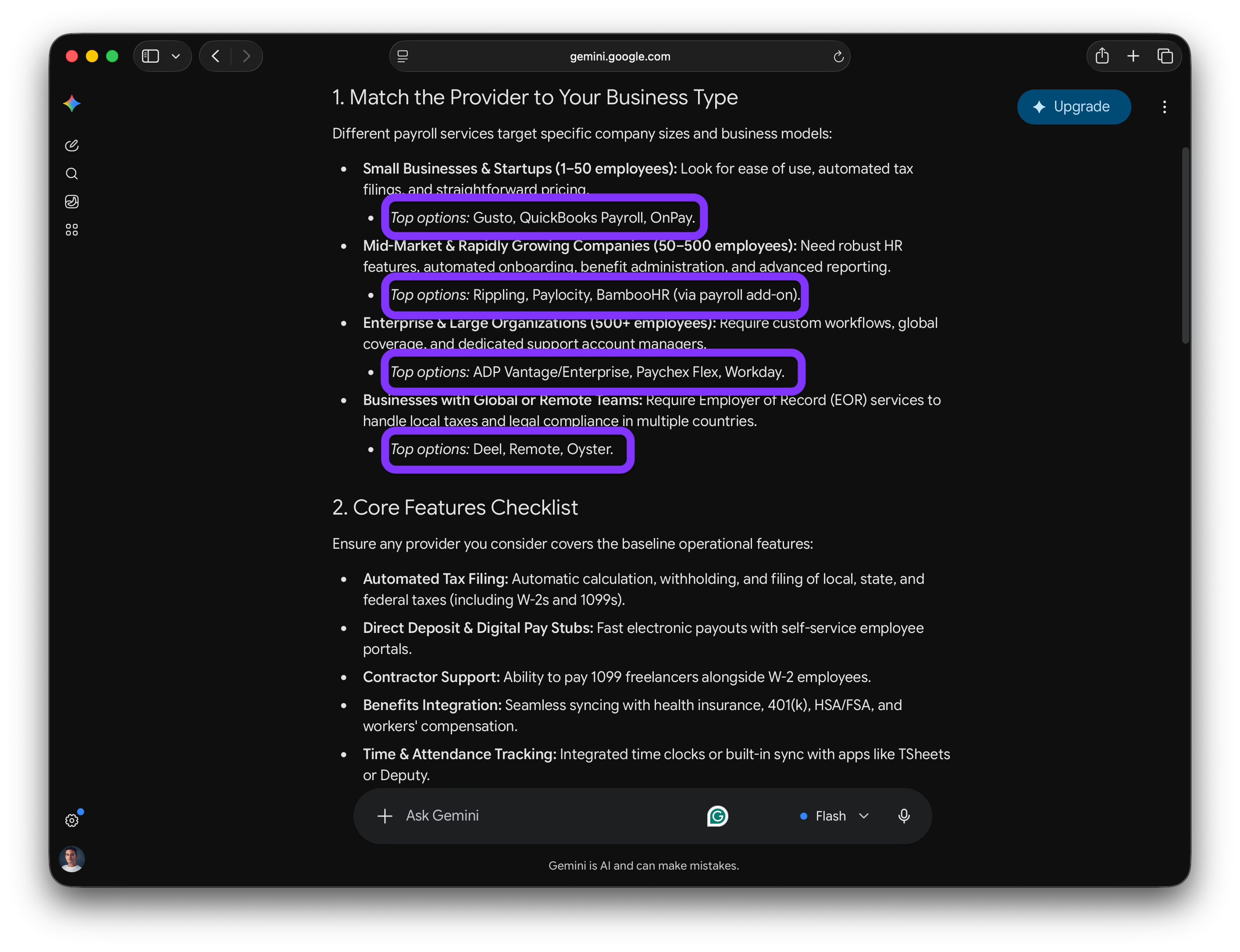
Meanwhile, Gemini sprinkled some brand names and mentioned specific providers, but it didn't link to any or otherwise cite them as a source:
You can also see the distinction in the AI Overviews, whose patent covers "linkifying" summary text to the documents that verify it. That's why a link can exist with no brand name in the sentence, which further proves that attribution and naming are separate steps.
In the same study I mentioned above, Medium.com was cited 16 times and never named once. Google was named nearly 3x more often than it was linked, and Apple nearly 2x. This shows that strong consumer brands get a shout-out, while publishers get footnoted.
8. Third-party listicles beat your own pages
AI recommendation tracks real-world presence in trusted third-party content instead of random selection or even your own efforts to position yourself, as shown by our study of brand mentions. Across 289,105 URLs and 922 prompts, brand mentions on the pages an AI cites correlate with how often that brand is recommended, at roughly 0.41.
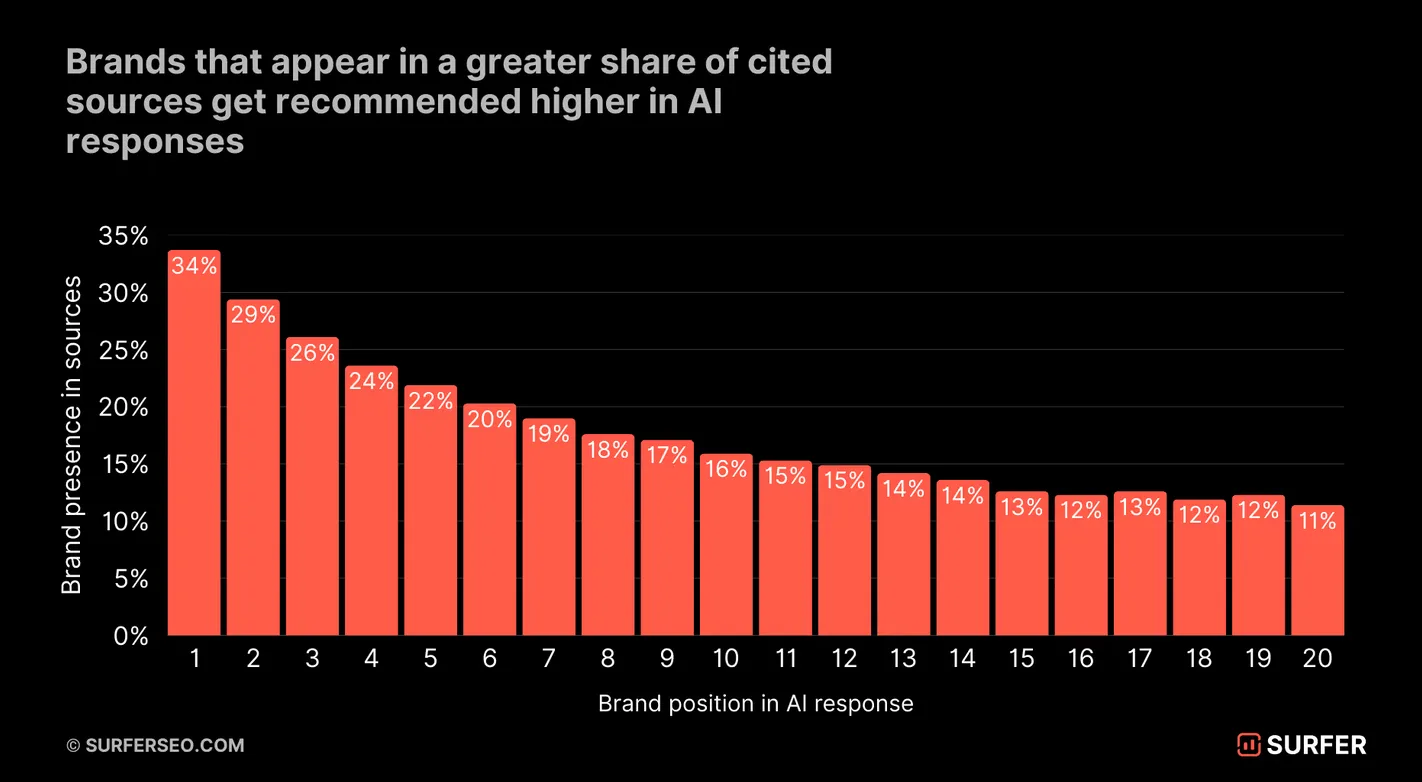
No matter how well you optimize your own content for the relevant search queries, AI tools will still rely on other sources for recommendations. Across 149,912 citations spanning five engines, Pratyush Kumar found a brand's own domain accounts for 2.9% of citations while third-party listicles account for 21%. The rest of the distribution is as follows:
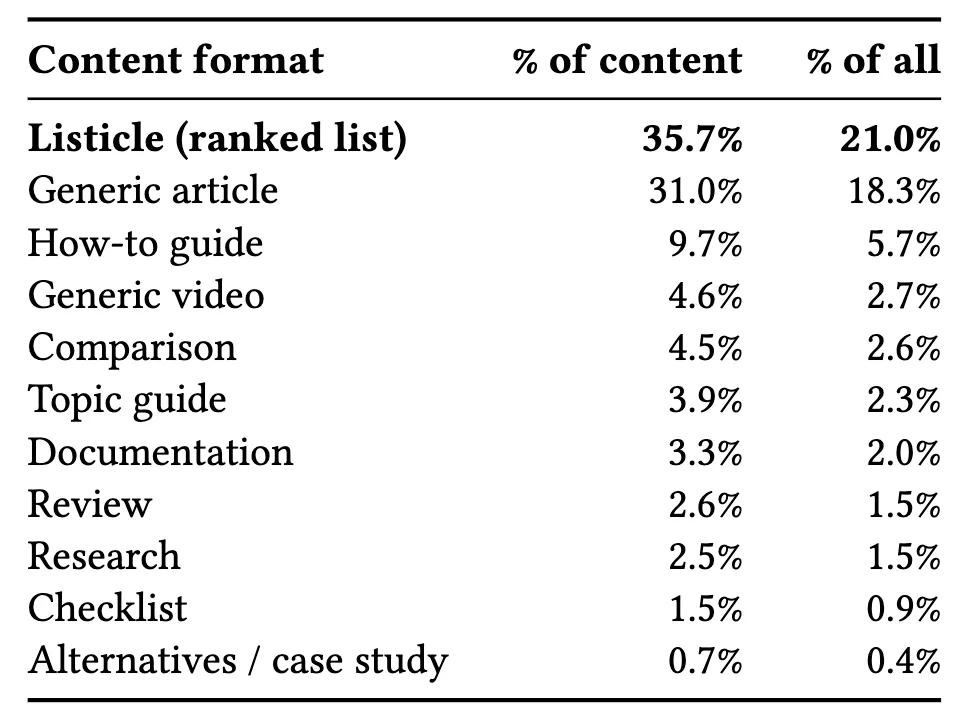
Share of citations by source type, including own domain versus listicles. Source: Kumar, arXiv
Because of this reliance on listicles, publishing a "best X" page can surface competitors listed inside it. The engine cites your roundup and recommends the names on it.
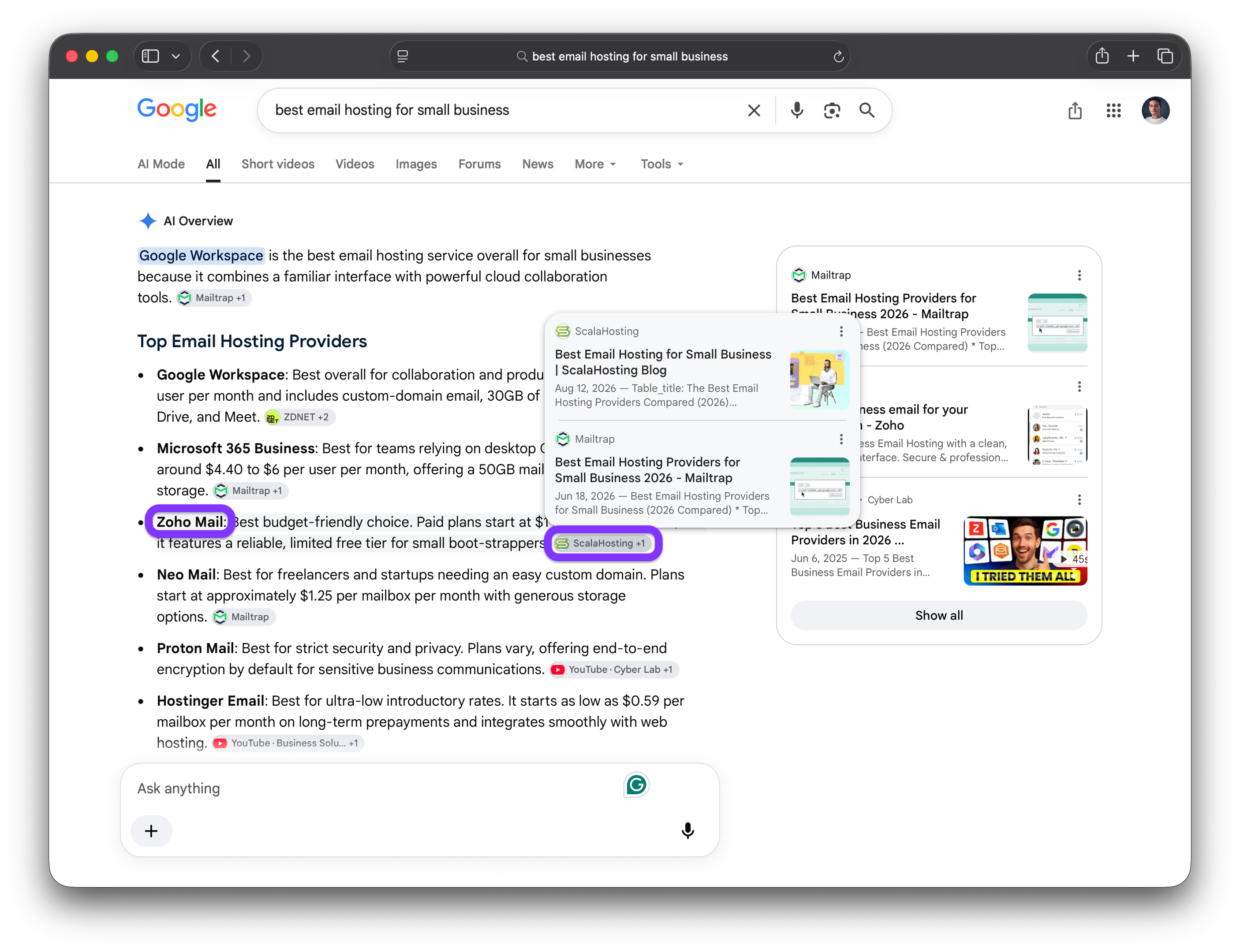
This happens often, so you'll probably run into it while researching "best [category] product" topics. For example, when I searched for the best email hosting for small businesses, a listicle by ScalaHosting recommended Zoho Mail, even though it's a direct competitor. Meanwhile, ScalaHosting wasn't among the recommendations.
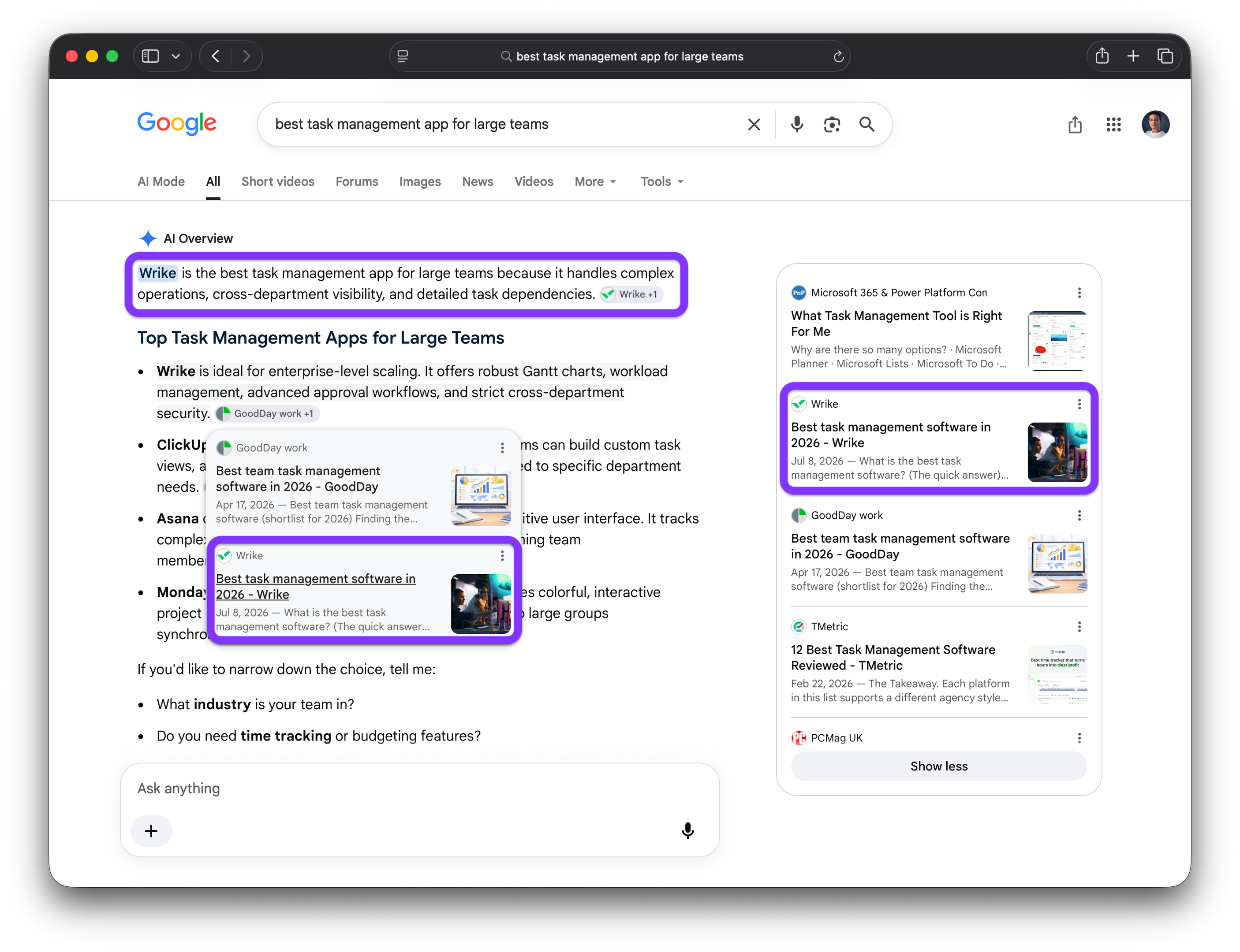
This doesn't mean you can't influence brand perception or boost your chances of getting recommended through owned content. When I asked about the best task management app for large teams, Wrike was both the top recommendation and one of the most cited sources across the AIO.
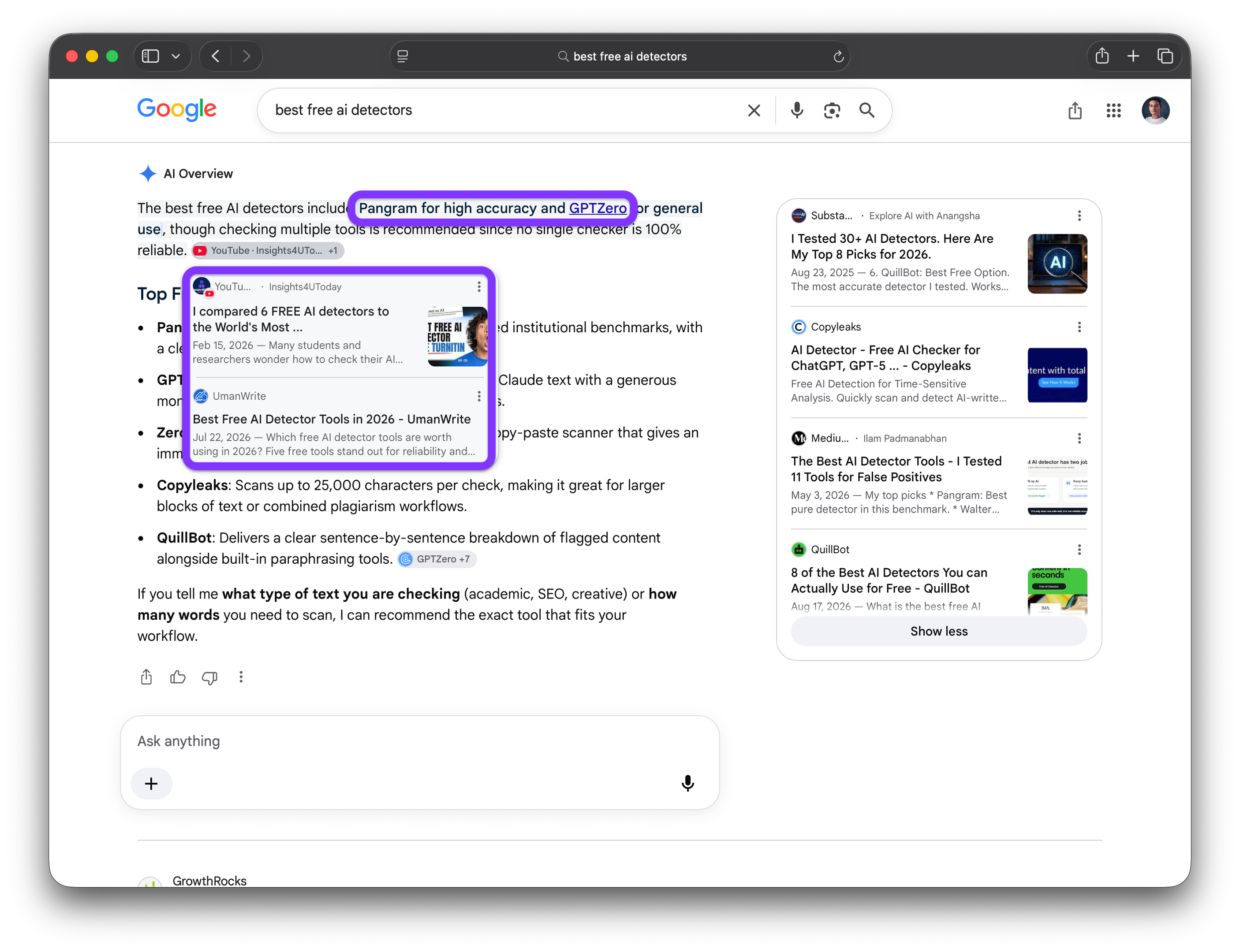
The neutral outcome is also possible (and pretty common): you can get recommended by an independent source. For example, the AIO recommended Pangram and GPTZero as the best AI detectors, and neither brand was cited as a response.
As so many different outcomes are possible, your best bet is to include both internal perception management through owned content and third-party mentions in your AI SEO strategy.
To remove guesswork from the process, you can use Surfer's AI Tracker. It tells you whether you are mentioned in sources cited for relevant queries and gives you additional insights such as:
- What other brands are mentioned
- How frequently the source appears in the response
- How many times it has appeared in total
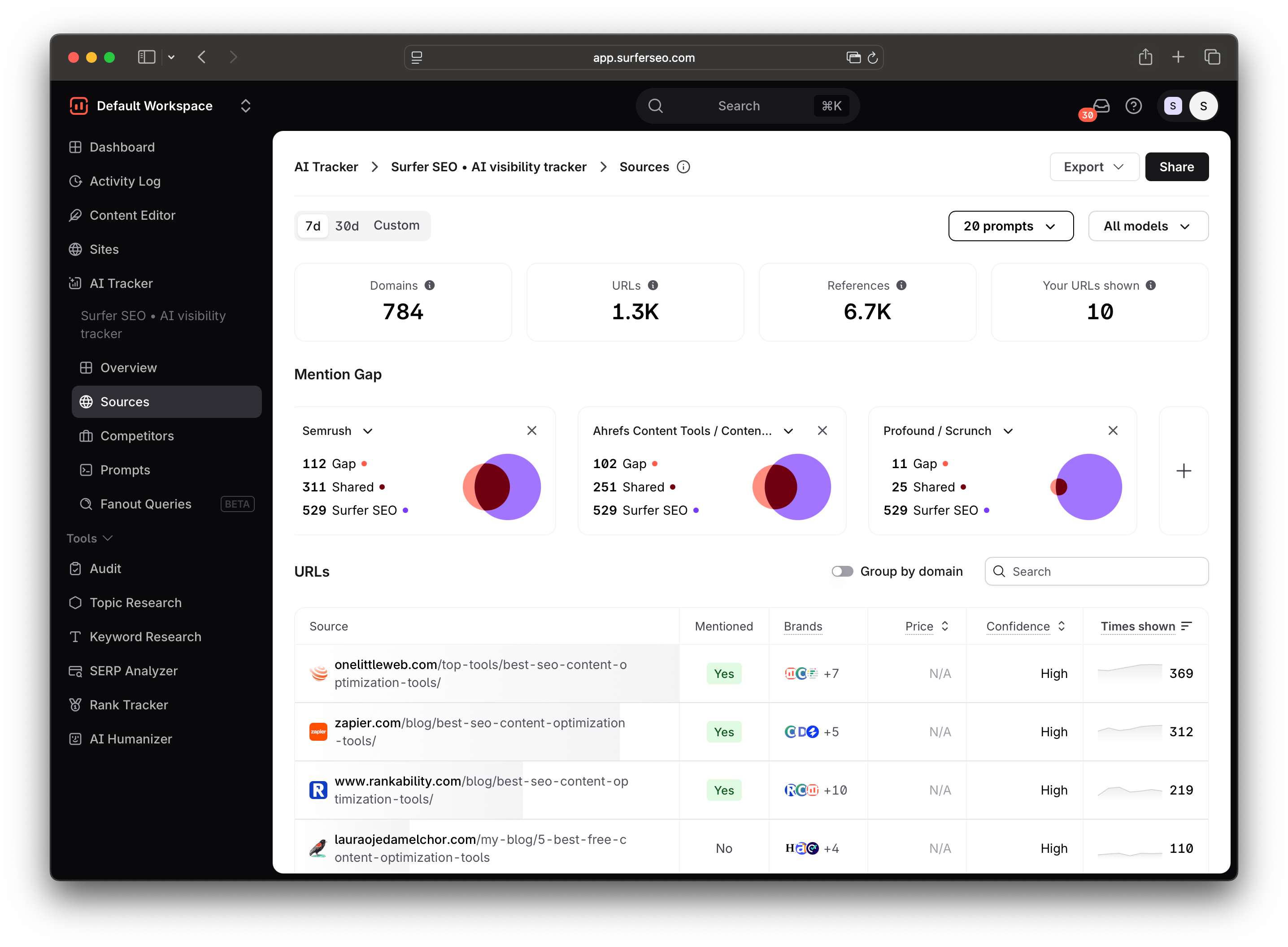
You can also set your competitors for a direct mention gap, which tells you where they're mentioned and you're not (and vice versa). This data helps you uncover new citation opportunities and tailor your strategy accordingly.
9. Reviews and video beat backlinks
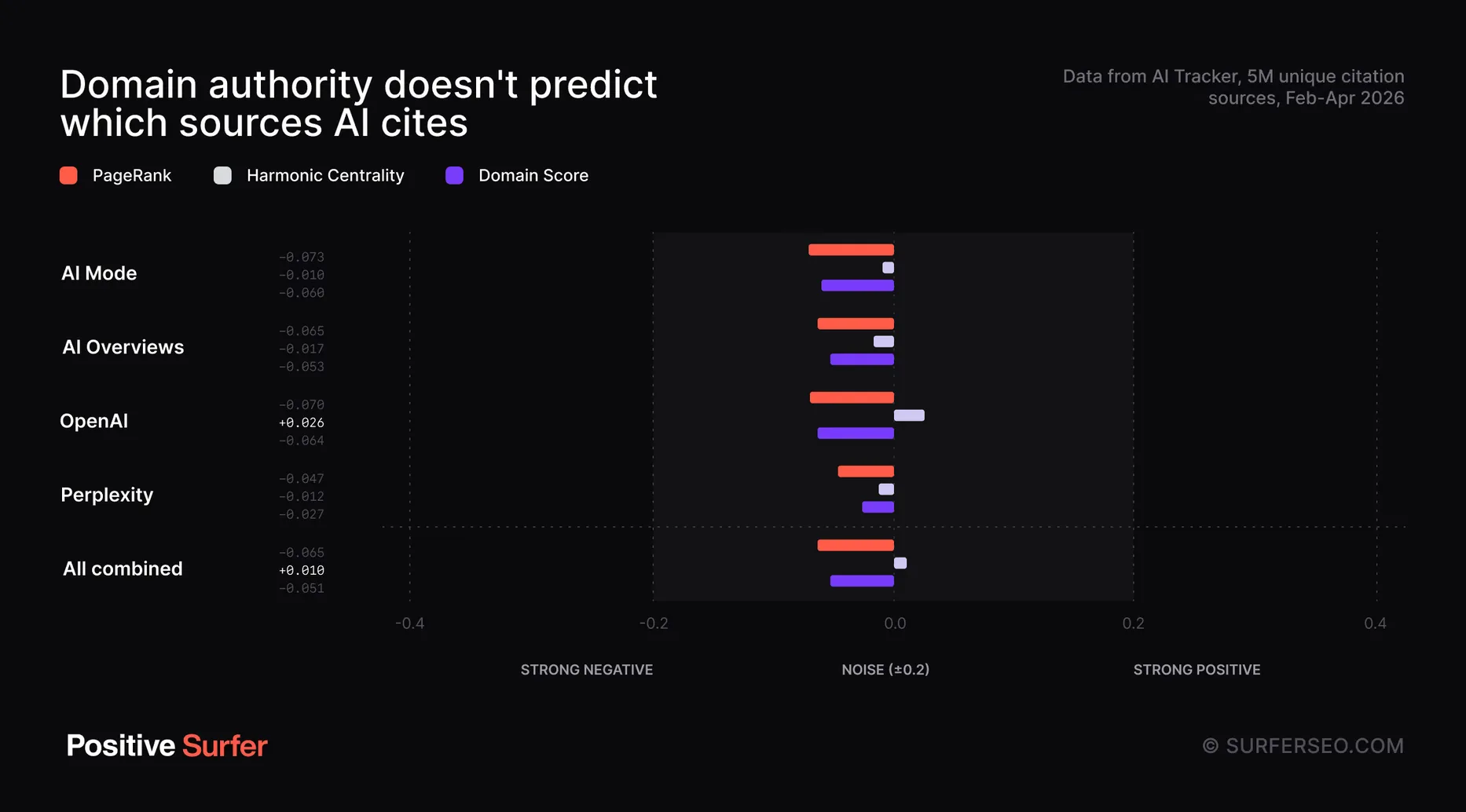
Backlinks and domain authority used to be a big part of showing up in traditional search engine results pages, but that's not the case with AI responses. Across three months of AI Tracker data spanning 20,000 prompts and roughly 5 million unique citation source URLs across Google AI Mode, AI Overviews, ChatGPT, and Perplexity, we found that domain authority did not predict citations.
Correlations were close to zero and slightly negative overall (Spearman about −0.065 for PageRank, −0.051 for Domain Score).
What does correlate is presence in reviews and video. Across 804,491 AI responses, Seer found a verified review profile moves median citation rate from 1% with no profile to 53.5% with even a minimal one. The jump is almost entirely from having no profile to having any profile, and it flattens after roughly 81 reviews.
Separately, an analysis of 75,000 brands found branded web mentions correlate with AI visibility at 0.676 and YouTube mentions at 0.737 on average across platforms, against 0.218 for raw backlink count.
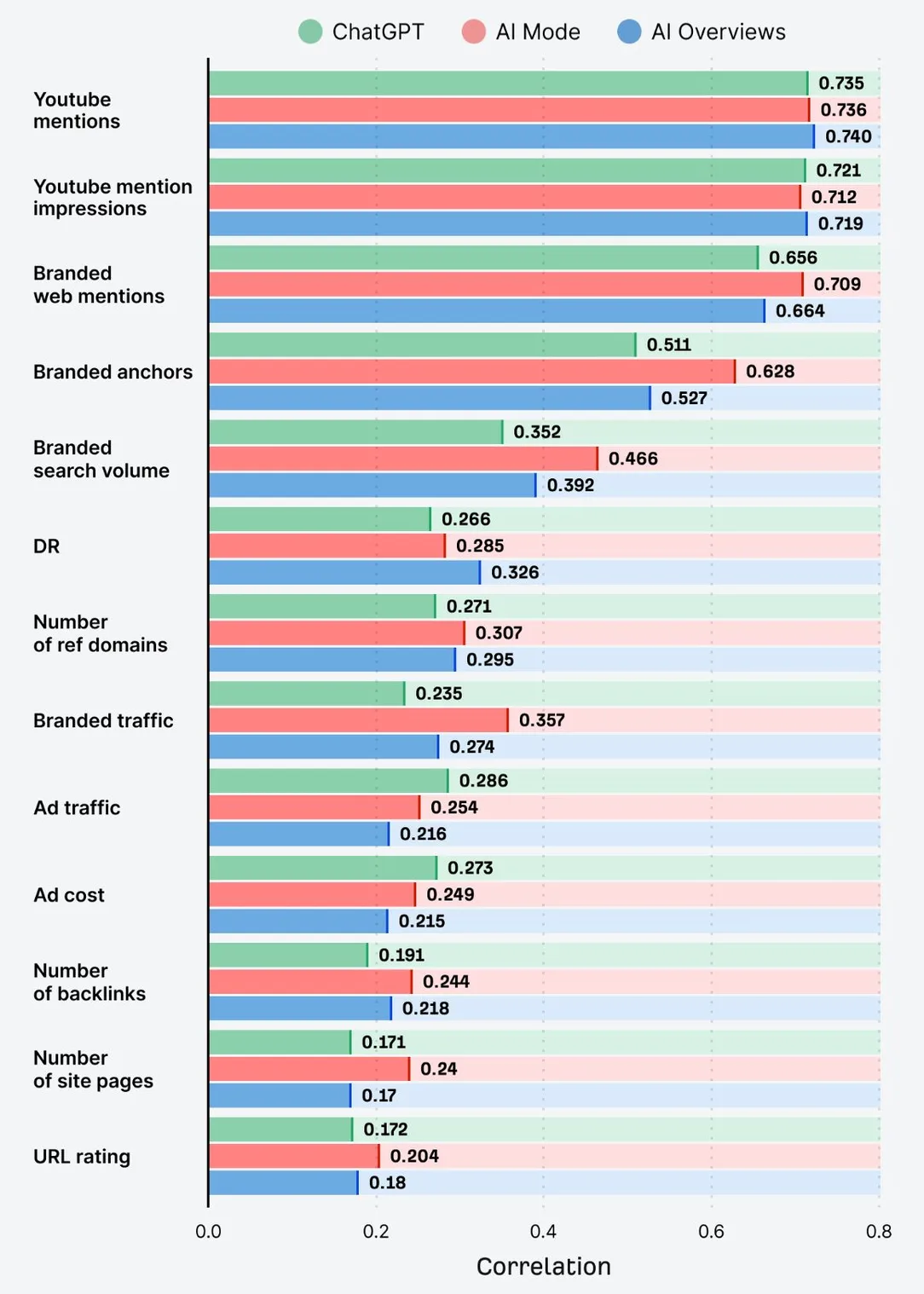
This doesn't mean that buying reviews or filming videos causes citations, but the correlations do show that link-based authority is the wrong proxy.
The impact of AI on buying decisions is probably among the main search trends that support the importance of reviews. G2 analysed 80,000+ product profiles for 180 days and found 80% of products get more AI citations than human pageviews, at an aggregate 4.9x citations per pageview. Some products were drastically above this average, including:
- DigitalOcean Spaces (97x)
- Weaviate (74x)
- AssemblyAI (67x)
- Mapbox (63x)
- Tailscale (56x)
This shows that structured review pages are being read by models more often than they are being clicked by people. So if you needed another reason to focus on reviews, this is surely a compelling one.
How should AI SEO be measured in 2027?
AI SEO should be measured by tracking your search visibility for the relevant prompts repeatedly and across different platforms. Averaging your presence into a specific score gives you a number that actually shows your performance now that the metrics that worked for organic search have become misleading.
Platforms disagree on which brands to name for the same prompt, organic traffic volume understates value, and the general sentiment is too unstable to act on. That's why you should move away from these figures and adapt monitoring to a few key AI search trends:
10. Brands track AI platforms separately
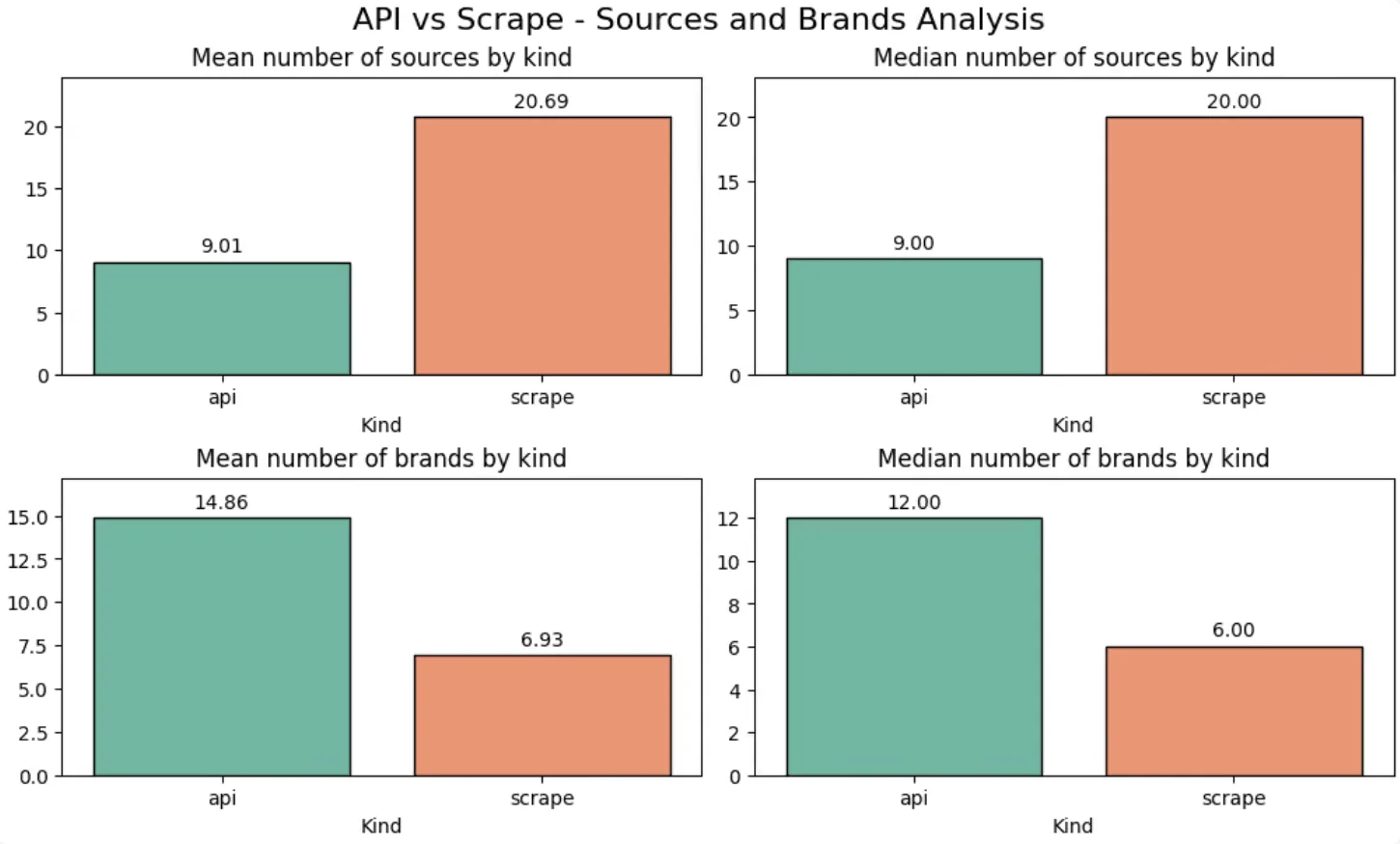
Even if you only focus on one platform, you might see conflicting data. When we compared ChatGPT's API with its web interface, we found only 4% overlap in sources, and only 24% of brands mentioned in API results appear in scraped web results.
API responses also average 406 words against 743 for the interface, and provide no sources in about 25% of cases. So if a tool measures the API, it is not measuring what users see.
Different platforms also disagree with each other. Across tens of thousands of identical prompts, one study showed that 61.9% of queries returned different brand recommendations across ChatGPT, Google AI Overviews, and Google AI Mode. Only 17% returned the same brands across all three.
Brand density per query was:
- ChatGPT: 2.37
- Google AI Overviews: 6.02
- Google AI Mode: 1.59
To see this in action, I ran the same commercially relevant prompt ("best dialer software for cold calling") in ChatGPT, Google AI Mode, Google AI Overviews, and Perplexity.
ChatGPT recommended JustCall as the top choice and included:
- Orum
- Nooks
- CloudTalk
- Aircall
- PhoneBurner
- Kixie
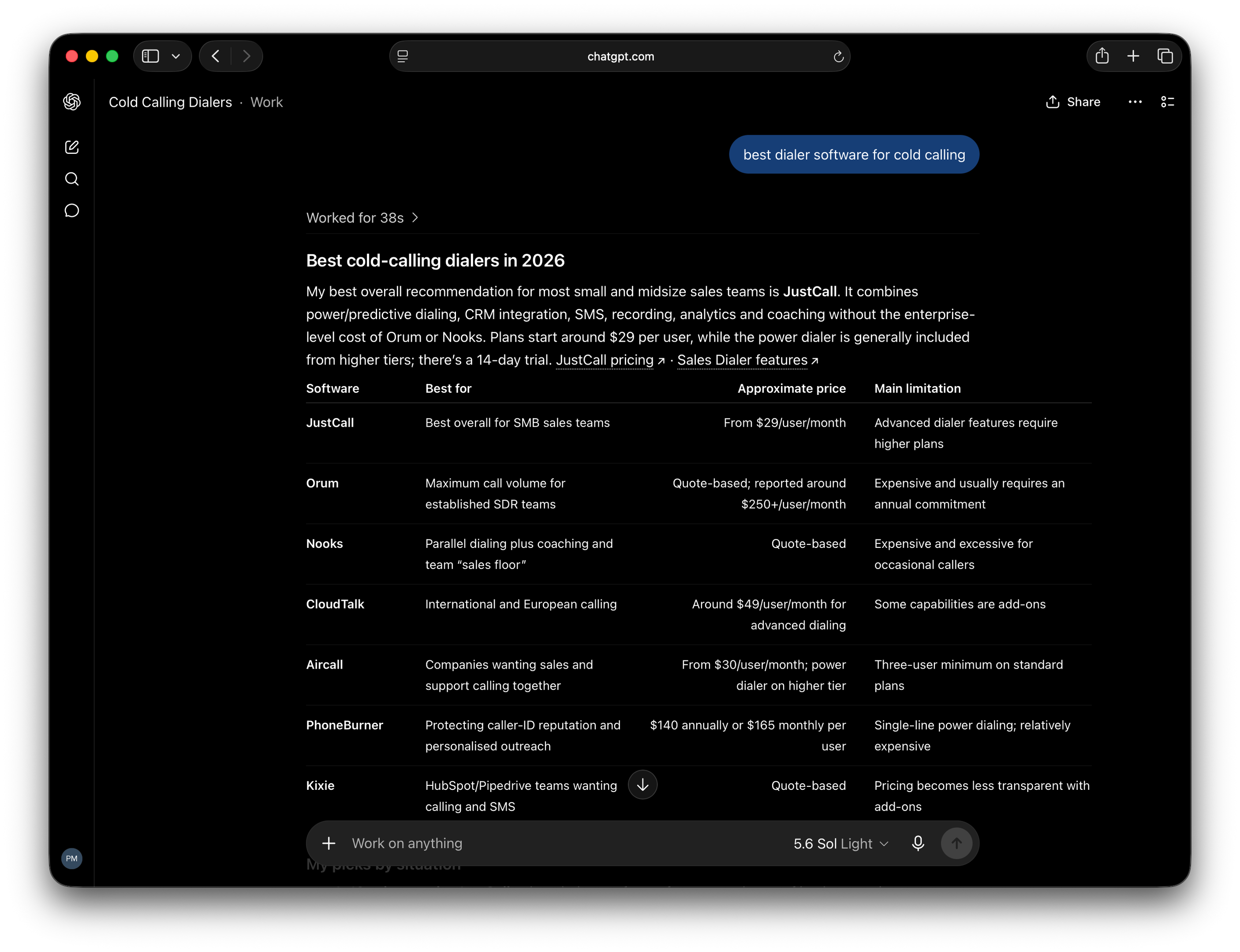
Perplexity agreed on JustCall, but it left out Nooks and Aircall and instead included Close.
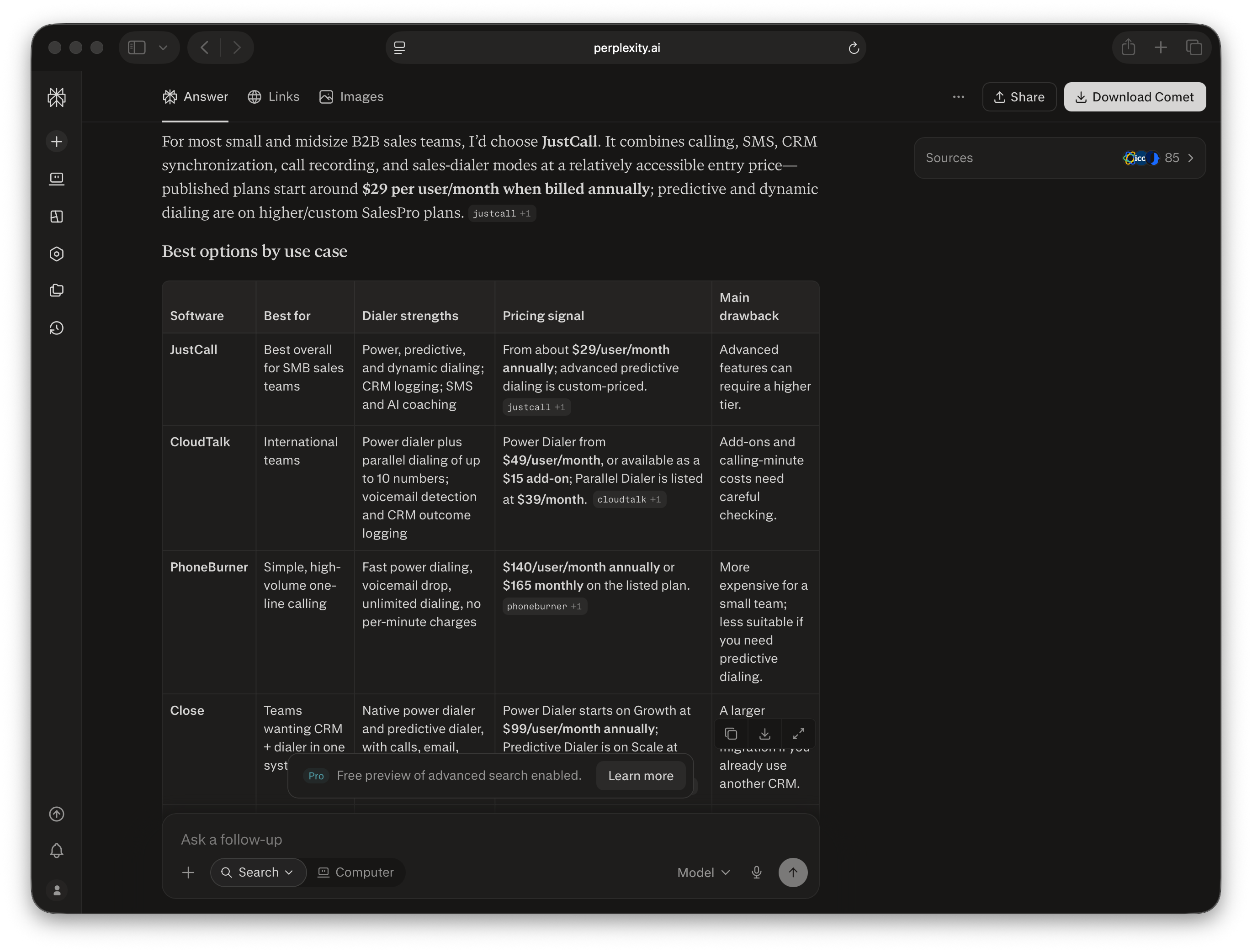
Funnily enough, the AI Overview didn't include ChatGPT and Perplexity's top choice at all. JustCall was never mentioned, while most other brands were.
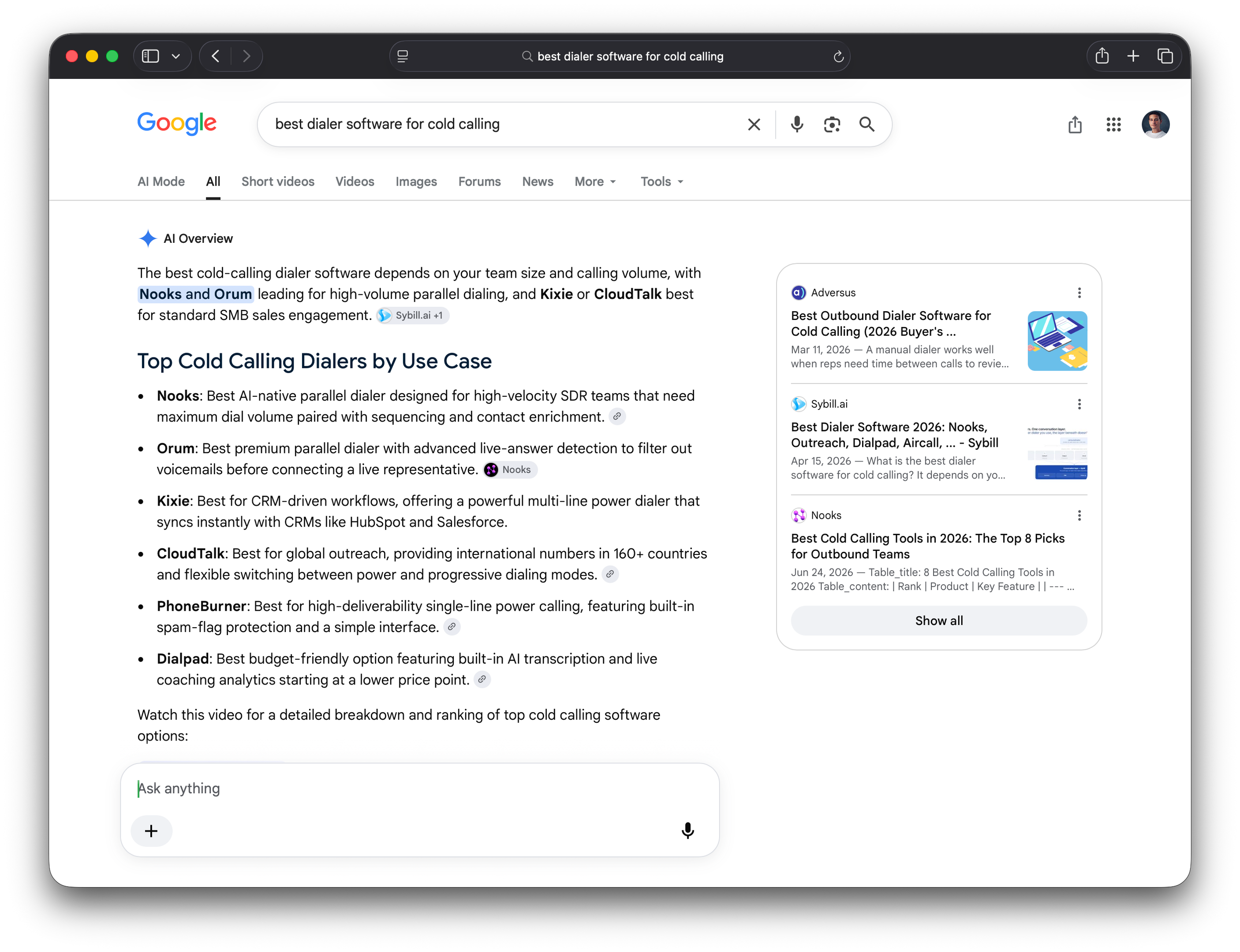
AI Mode took a more diplomatic approach without naming a clear recommendation, but it was somewhat aligned with other platforms on the general recommendations.
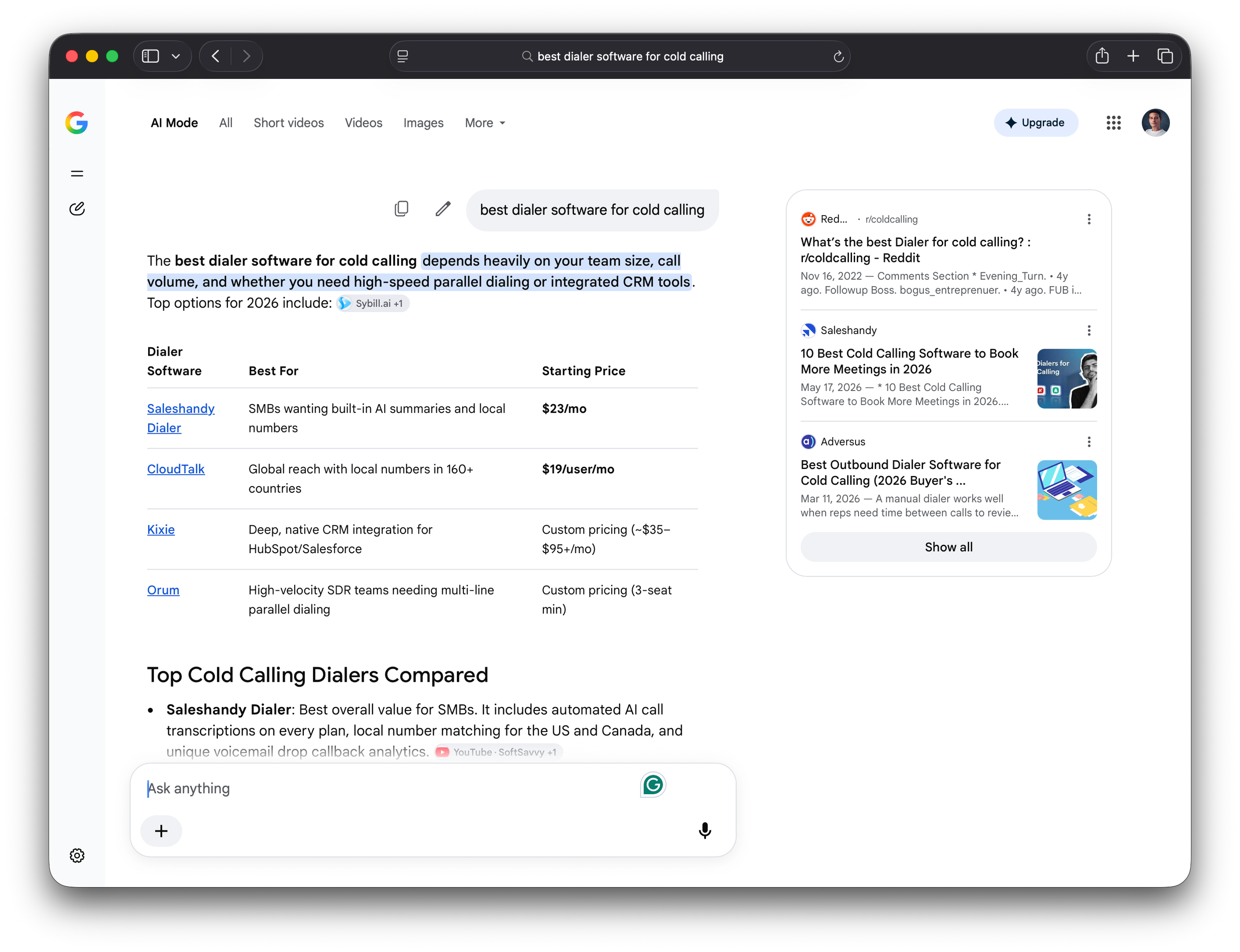
There were still some unique brands mentioned, such as Saleshandy Dial, which no other platform included in the list.
Because of these differences, you can't choose one platform to optimize for. This is maybe the biggest difference from traditional SEO, where we just had to think about Google SERPs. You now need to track how each platform sees your brand and how consistently you can show in it.
While achievable, cross-platform presence is rare. An index of 126 million AI search prompts found only 36 brands held top-100 visibility across all four major platforms. So while it should be your long-term goal, don't expect it to happen overnight.
Instead, gather all the major platforms your audience is using, and track your performance in each.
Surfer's AI Tracker lets you do this without having to look at each platform separately. It offers prompt-level tracking that measures both your overall presence and visibility in specific models, including:
- ChatGPT
- Perplexity
- Gemini
- AI Overviews and AI Mode
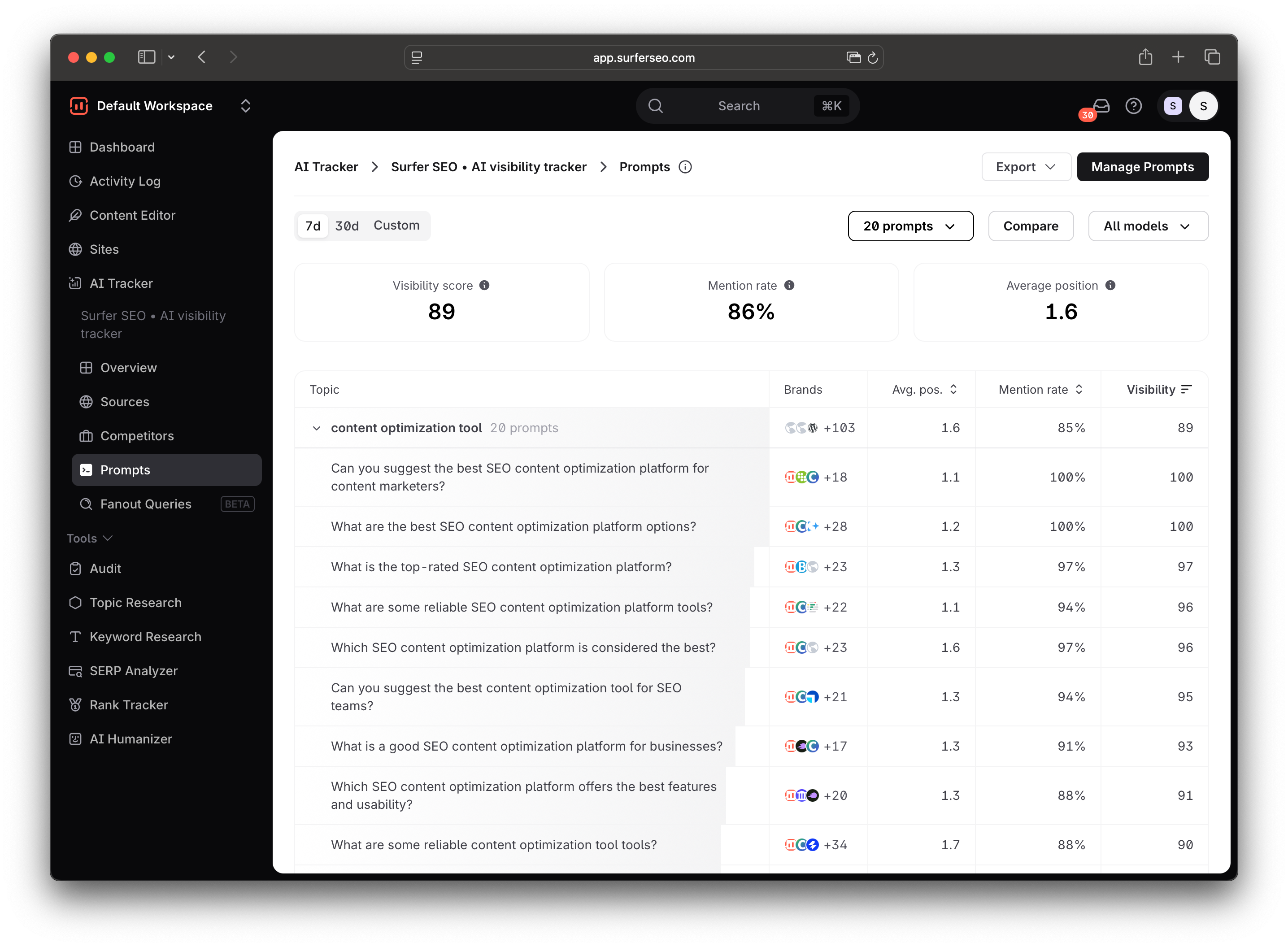
You get all the data in a single interface from which you can manage your visibility without juggling different platforms.
11. AI search sends less traffic but converts better
Click-through rates drop when AI Overviews shows up because of zero-click searches, but the visitors who do arrive convert much better. That's why you should judge AI search on conversions and signups, not sessions.
Pew tracked 68,879 real searches and found users click a traditional result in 8% of visits when an AI summary is present versus 15% when it is not, and click a link inside the summary in just 1% of visits.
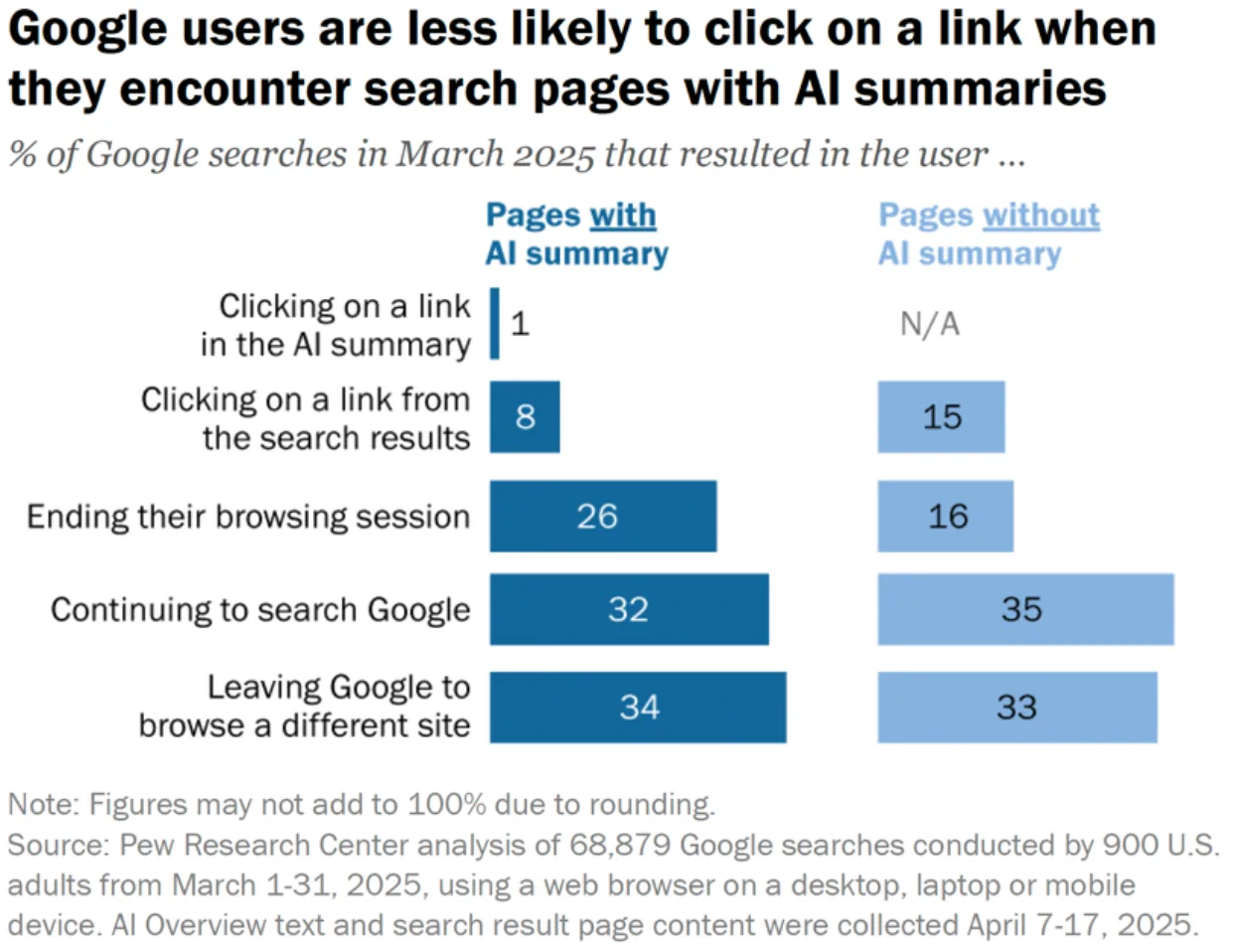
On the flipside, Vercel published on its engineering blog that ChatGPT refers around 10% of all new Vercel signups, up from 4.8% the previous month and 1% six months earlier. Keep in mind that is a share of signups, not a conversion rate, so make sure to separate the two.
Still, the trend is clear: while AI-generated content that appears in search reduces traffic, it makes each visitor more qualified. Weigh the two metrics accordingly when tracking your AI performance.
12. Sentiment scores are too noisy to track
As much as you should aim for AI platforms to recommend you, brand sentiment is too unstable to report as a KPI. Presence across many prompts run repeatedly is stable enough to act on, but the position and sentiment are not.
Kumar's aforementioned dataset puts numbers on that instability. Across repeated identical runs, brand sentiment flipped 45.5% of the time against 6.8% for whether the brand was mentioned at all, roughly 6.7 times noisier. 77.5% of brand-prompt combinations are strictly always-mentioned or never-mentioned.
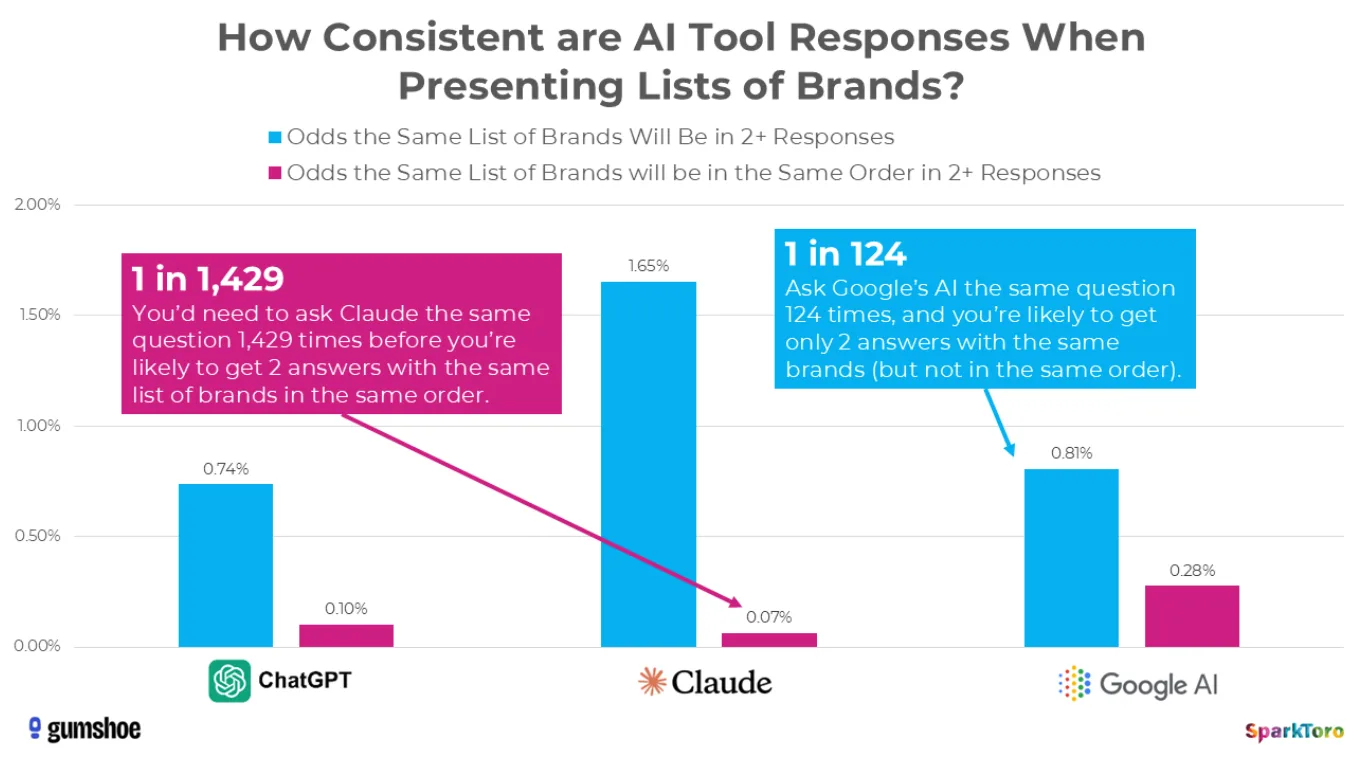
Rand Fishkin (SparkToro) and Patrick O'Donnell (Gumshoe.ai) also ran an experiment that confirmed the volatility. They had 600 volunteers run 2,961 prompts in total, which were 12 identical prompts across ChatGPT, Claude, and Google's AI.
There was under a 1-in-100 chance of getting the same brand list twice, and roughly 1 in 1,000 of getting the same list in the same order.
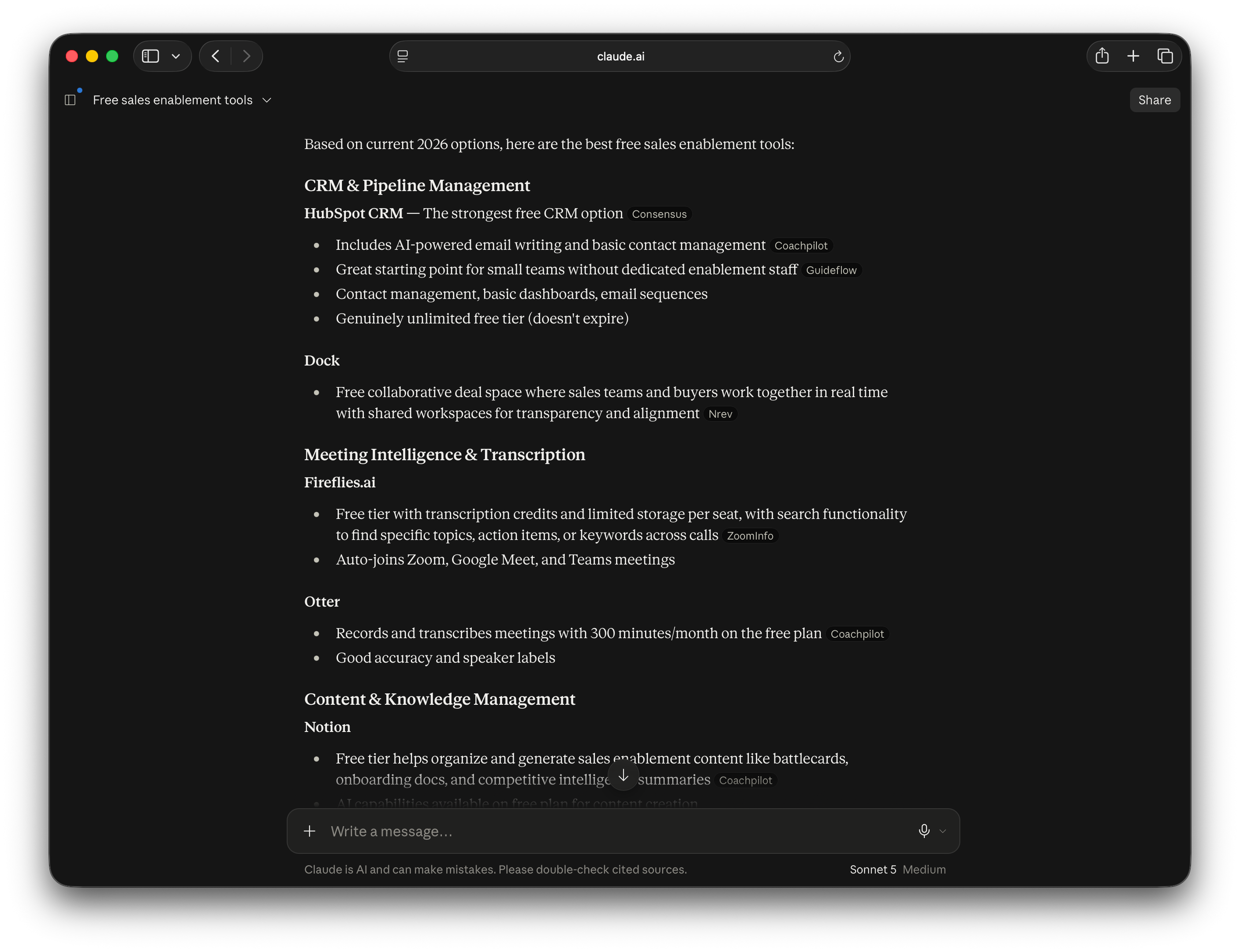
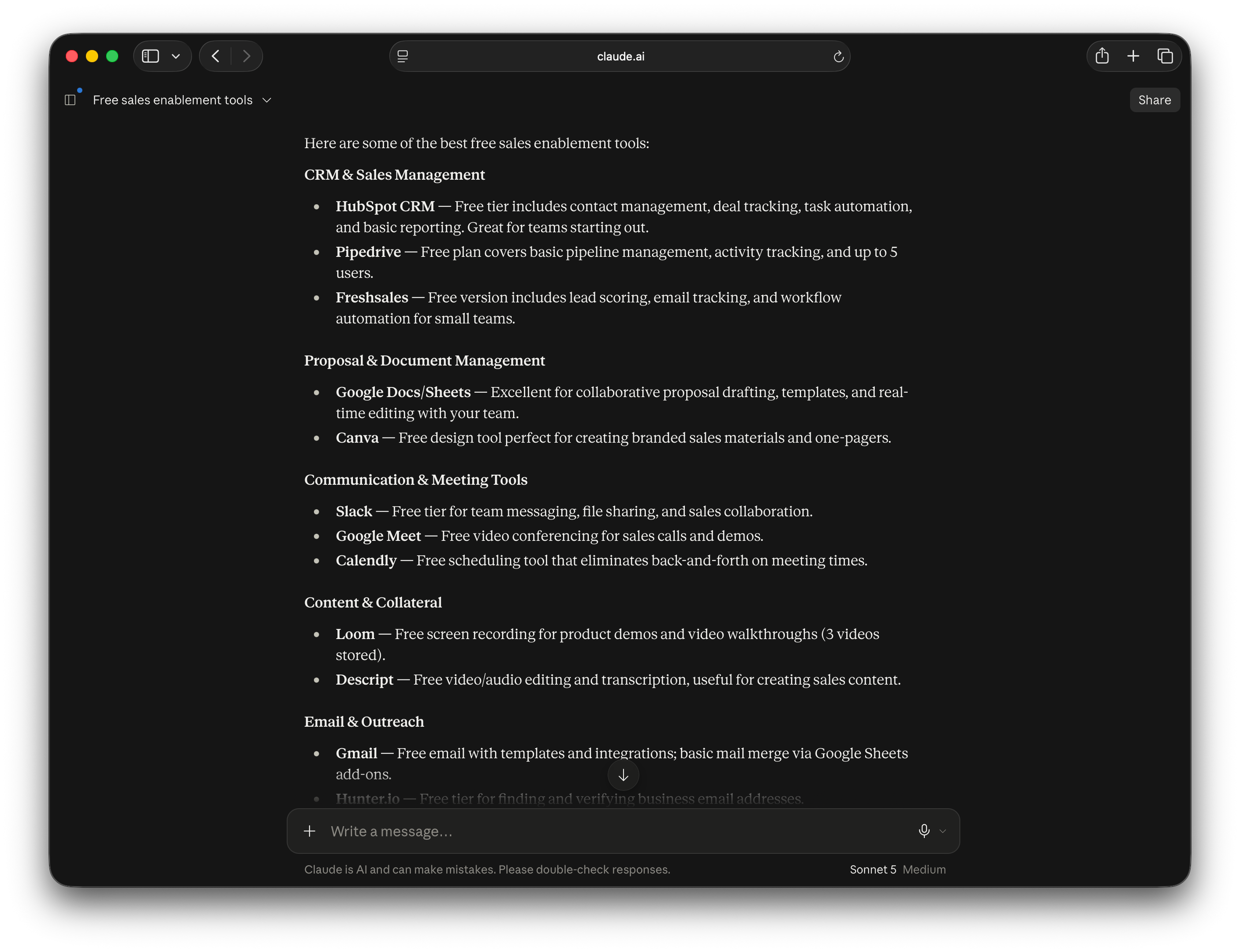
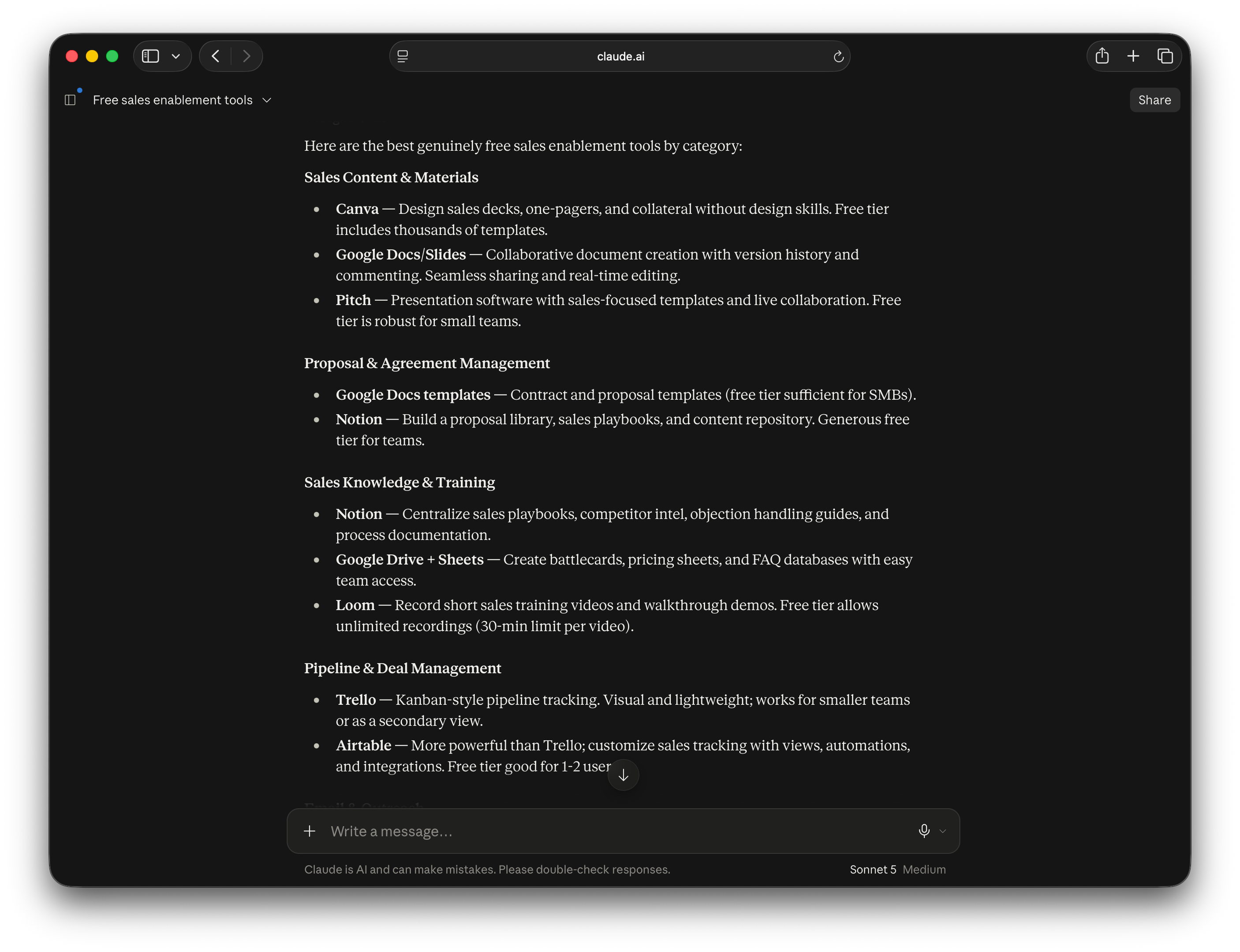
I ran the experiment at a smaller scale by using the identical prompt ("best free sales enablement tools") five times in Claude, in fresh sessions. Even where there was some repetition of brands, they were never recommended in the same order.
The first answer recommended HubSpot CRM as the main choice alongside brands like Dock, Otter, and Notion.
While the second answer stuck to HubSpot as the top pick, pretty much all other brands were replaced with others.
In the third run, HubSpot CRM was overthrown by Canva, with many of the same brands being carried over from the previous answer (though in a completely different order).
Run #4 went back to HubSpot CRM, but there were fewer other brands on the list, with some (e.g., Microsoft Bookings) showing up for the first time.
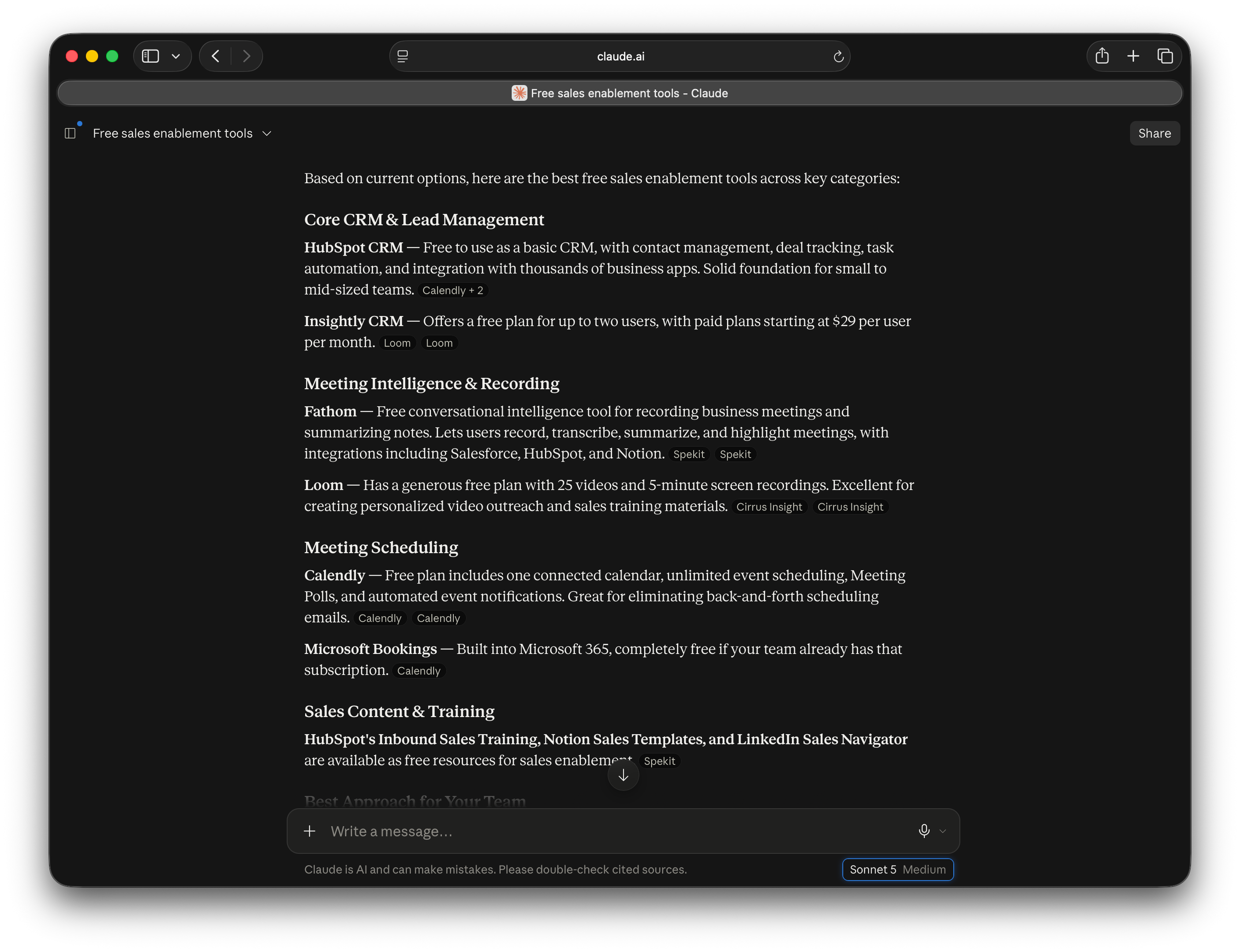
The list was shortened even more in run #5, with Insightly being replaced by Calendly as the HubSpot runner-up and disappearing from the list altogether.
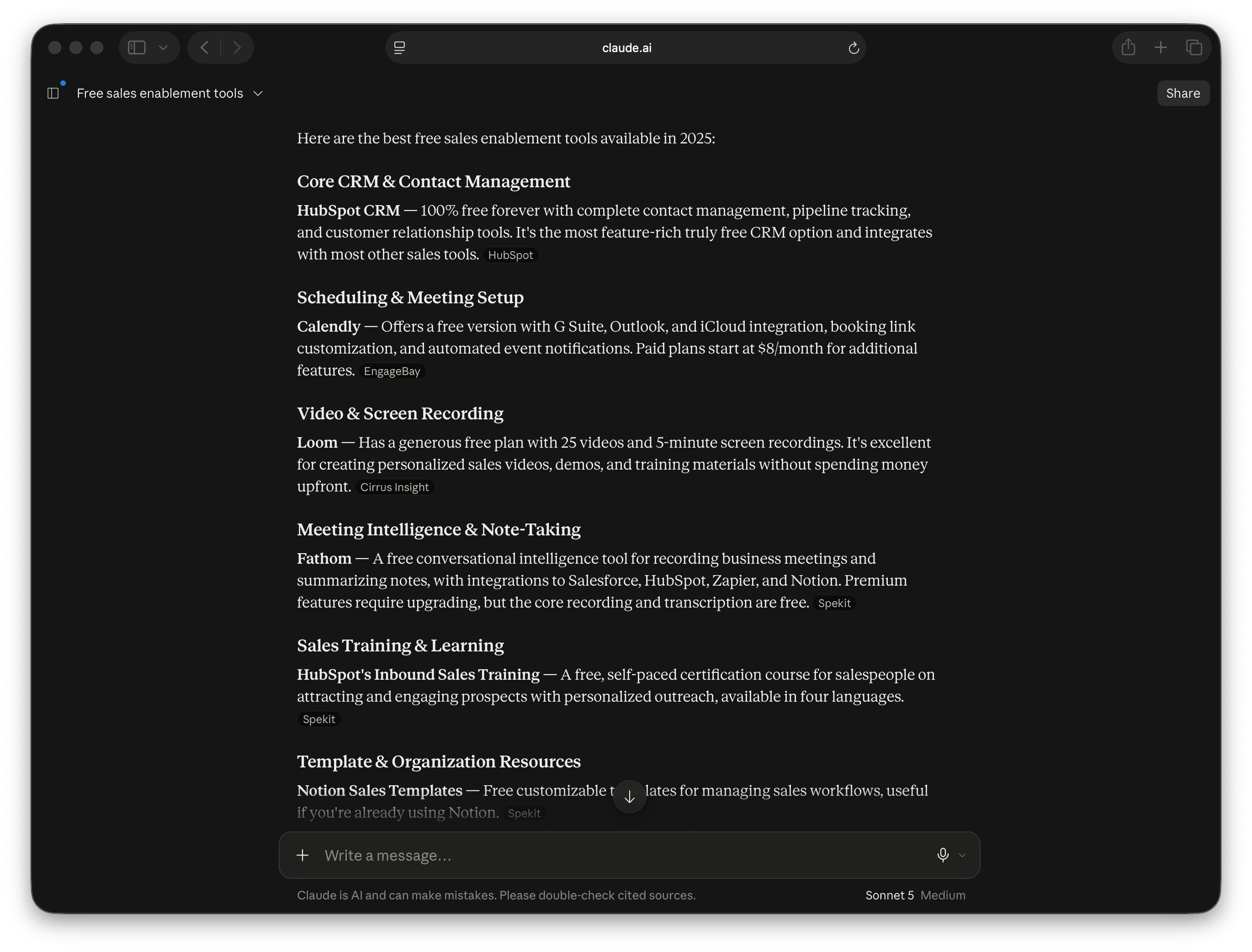
So while there's some consistency among brands that tend to dominate a niche, the overall sentiment and recommendations can be wildly unpredictable. You should still track them, but take the results with a grain of salt and don't make major decisions solely on sentiment.
Do Google rankings still matter for AI citations?
Yes, but ranking for the head term alone is no longer enough. In Surfer's research, 51.2% of cited pages that rank in organic search rank for both the main query and its fan-outs, and ranking for both makes a page 161% more likely to be cited than ranking for the main query alone.
Does llms.txt help a page get cited by AI?
No evidence shows that it does. Across 137,210 domains, 97% of llms.txt files received zero requests in May 2026, and Google's AI optimization guide says Search does not use special machine-readable files or markup for its generative AI features.
What is the difference between an AI citation and a brand mention?
A citation is a source link in an AI answer. A mention is the brand being named in the answer text. Most appearances are one or the other: in a study of 3,981 domain appearances, 61.7% were source links where the brand was never named.
Do backlinks help with AI visibility?
Link-based authority is a weak predictor. Across roughly 5 million citation source URLs, domain authority metrics showed near-zero correlation with AI citations. Branded web mentions and YouTube mentions correlated far more strongly with AI visibility than raw backlink count, though correlation does not prove that either causes citations.
Which AI platform should you optimize for first?
No single platform is enough. In one study, 61.9% of identical prompts returned different brand recommendations across ChatGPT, Google AI Overviews, and Google AI Mode, and only 17% returned the same brands on all three. Track every platform your audience uses and measure your visibility in each.